How to Make Tomatillo Pizza Sauce for Canning | Tomato-Free
This post contains affiliate links. If you buy through them, I earn a small commission at no extra cost to you. (Read my full disclosure policy).
Homemade tomatillo pizza sauce offers a unique twist to a classic Italian meal popular in most American homes. This sauce embraces the traditional savory herbal flavors we all know and love with the same delicious texture as its tomato counterpart. Its perfect for those with a tomato sensitivity who still crave the iconic slice for pizza night.
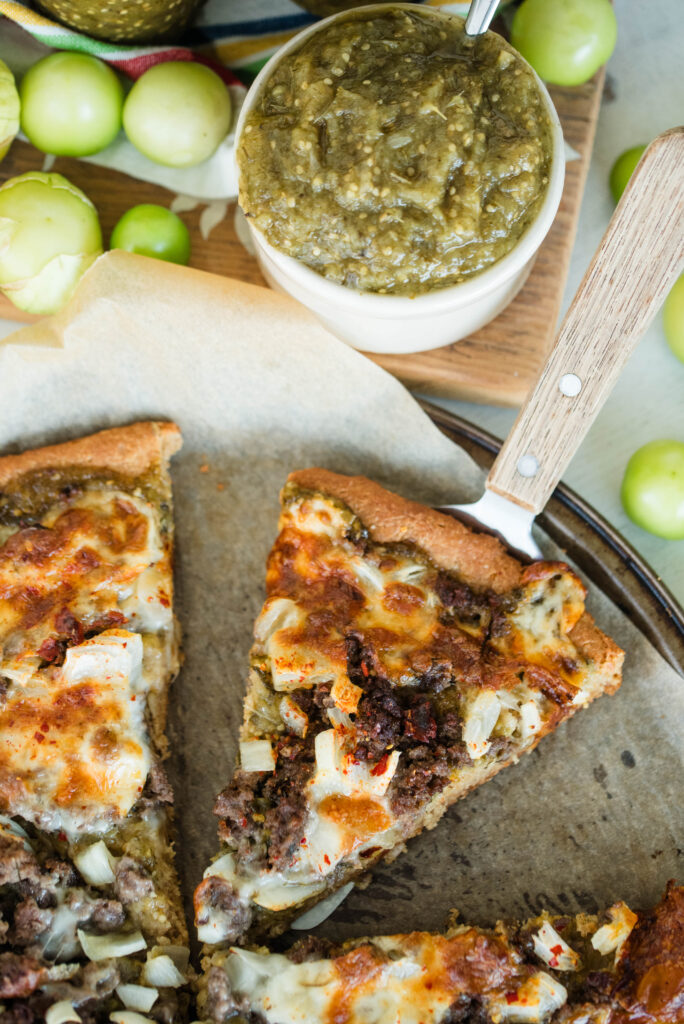
I started growing tomatillos a couple years ago when I found out I have a tomato sensitivity. It was quite a disappointment for this pizza and pasta loving gal.
If you’re like me, you know the agonizing anguish of watching everyone else eat pizza and just longing for one cheesy delicious bite. Well this year with my abundance of tomatillos, I decided to try a tomatillo pizza sauce with the same combination of ingredients as my traditional pasta and pizza sauce recipe.
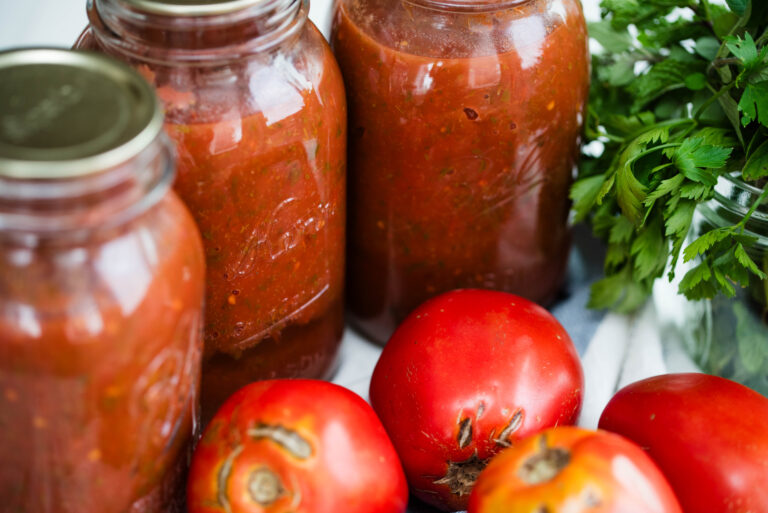
To my delight, it simmered into the same familiar lip-smacking tomato-based sauce we all love. Aside from the color, you would never know it’s made with tomatillos instead of tomatoes.
This tomatillo pizza sauce is the perfect alternative for those who wish to eat pizza again after a tomato sensitivity diagnosis. It pairs well with sausage and pepperoni, a thick cheesy layer and all the traditional toppings sprinkled in between.
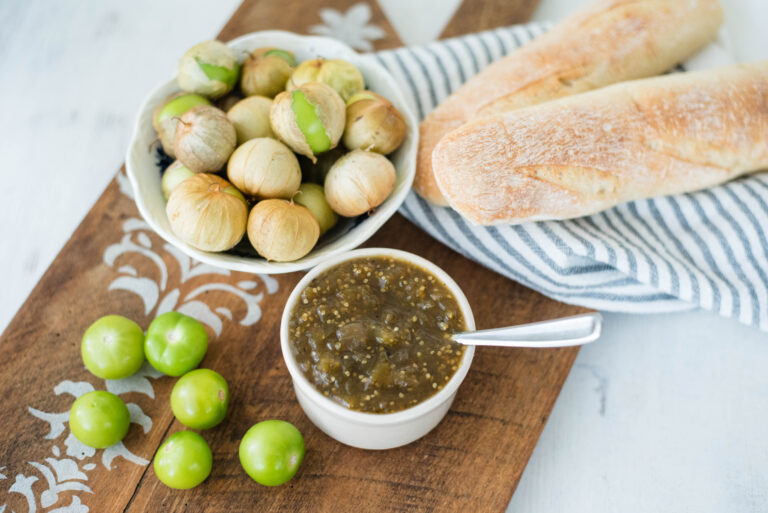
Even better, I include safe water bath canning instructions so you can pull a jar off the shelf on a busy week night and quickly bake up supper. Or if you know someone with a tomato sensitivity, surprise them with a jar or two for the holidays. They might also like a jar of tomatillo jam for their next charcuterie board.
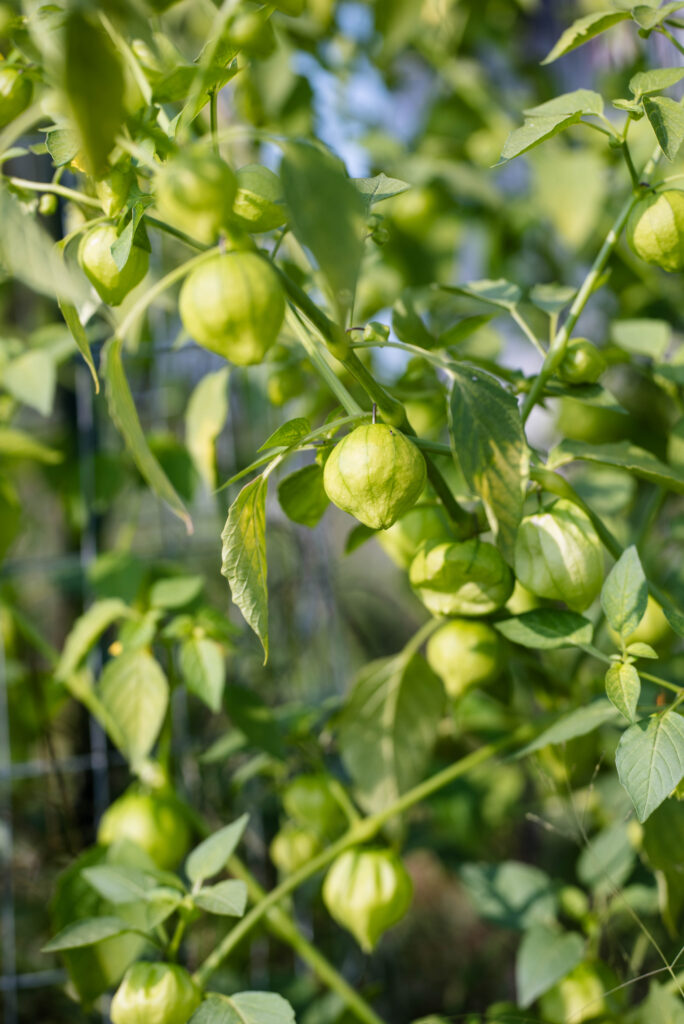
Why You’ll Love This Recipe
Tomato-free, same Italian flavor – Tomato sensitivity got you down? Me too, but there’s no need to miss out on your favorite Italian meal! Made with the same savory herbs and ingredients as a classic tomato sauce, your pizza will still taste the same without missing a beat.
Tomatillos are still a nightshade, so if you have a sensitivity to all nightshades, consume with caution.
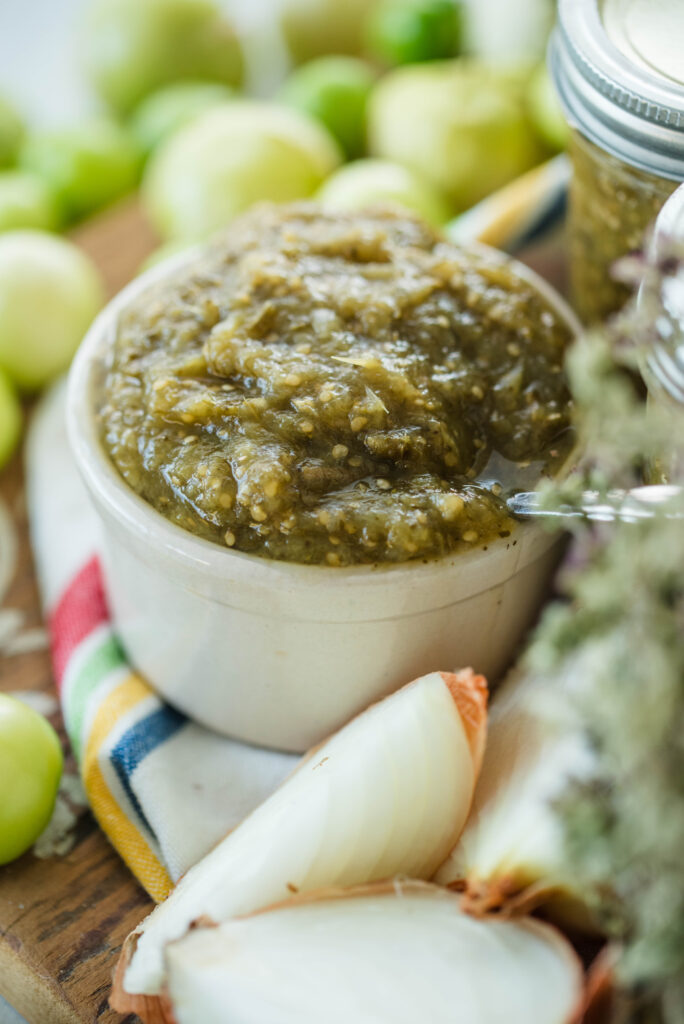
Homemade is healthier – Homemade pizza sauce allows you to control the quality and amount of ingredients. Each component can be organic and you determine how much sugar you want in your sauce.
Versatile – This recipe is a guideline for the herbs and spices. The beauty of homemade is that you choose your preferred flavors and make it your own. However, for safe canning it’s important to use the exact measurements for the salt and acid (vinegar or bottled lemon juice).
Helpful Hints for the Best Tomatillo Pizza Sauce
- Roasting the tomatillos and onions in the oven is important for the classic savory taste of pizza sauce. By nature, tomatillos are both slightly sweet and tart and roasting mellows that flavor profile.
- For the health conscious, it’s tempting to skip the sugar in this recipe. However, sugar is what makes a sauce “saucy.” It caramelizes the ingredients together for a traditional texture. The amount used is minimal for the number of servings per batch, but it has maximum impact.
- For safe canning purposes, use the appropriate amount of salt and acid for the jar size used. I prefer lemon juice verses vinegar since it doesn’t affect the flavor as much. Vinegar adds a slightly sour taste. Bottled store-bought lemon juice provides the 5% acidity needed for safe canning compared to fresh squeezed.
- If you forget to add salt and acid to the jars before canning, all is not lost. Simply store in the refrigerator instead of the pantry. Since the jars seal and keep the oxygen out, the cool temperature prevents spoilage and allows for longer term storage. Nothing goes to waste!
- If you use dried herbs instead of fresh, the ratio is 1 teaspoon dried per 1 tablespoon of fresh.
Ingredients for Homemade Tomatillo Pizza Sauce
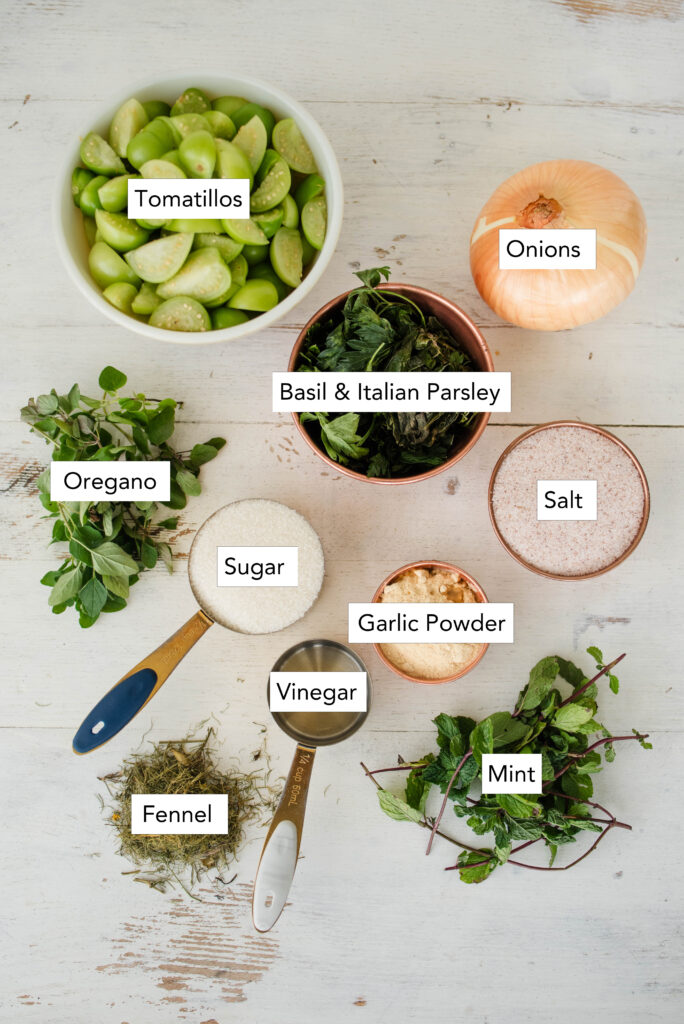
Tomatillos – Grow your own or barter with someone who does in exchange for another type of garden produce. They grow big and hearty with little to no maintenance. When they’re in season, larger grocery stores tend to carry them as well.
Herbs – I grow all the herbs myself to save money and the flavor is also more robust when they are fresh. However, dried herbs also give a great flavor if you don’t grown your own. Purchase these organic herbs in bulk from Azure Standard for an economical price.
Sugar – Use your preferred type of sugar. While I like raw local honey the best, I use organic cane sugar in canning recipes for its neutral flavor. Honey and maple syrup have distinct flavors that could throw off the flavor profile of the tomatillo pizza sauce.
Vinegar or bottled lemon juice – 5% acidic vinegar provides the correct pH level for safe canning. Bottled store-bought lemon juice does the same, but fresh squeezed does not.
A full list of ingredients is listed in the recipe card down below.
Equipment Needed
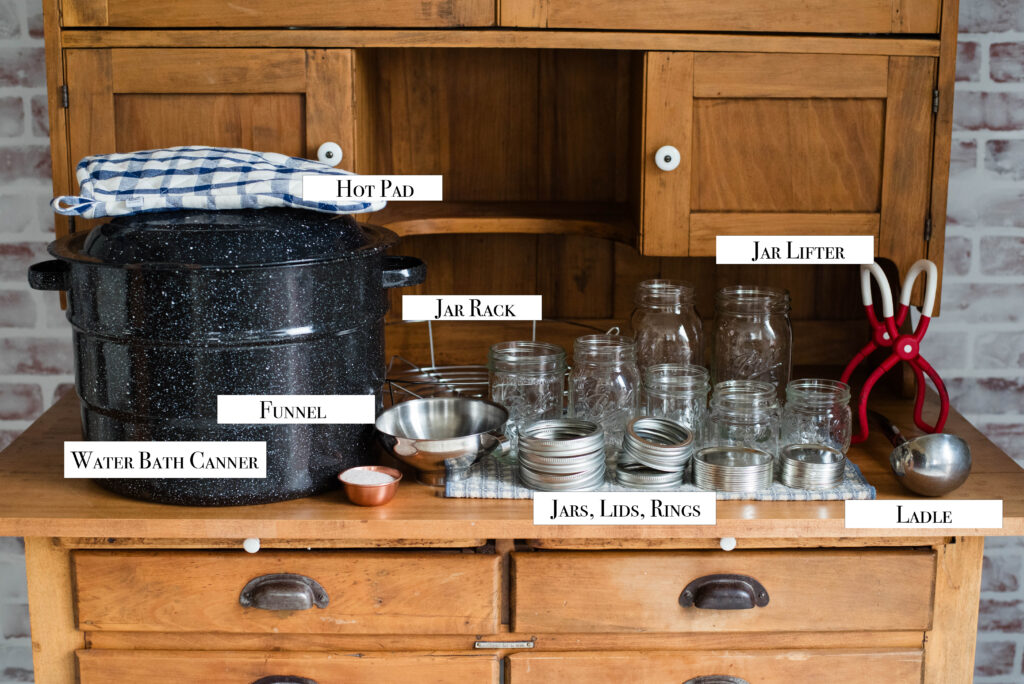
Large saucepan or dutch oven
Wooden stir spoon, jar lifter and water bath canner
Jars, lids, rings and funnel – Source jars from garage and estate sales, community members who no longer can or purchase new from grocery stores and various other big box stores. Azure Standard also sells high-quality jars and lids for a competitive price.
Serrated knife and cutting board
How to Make Tomatillo Pizza Sauce for Canning
Step-by-Step Instructions
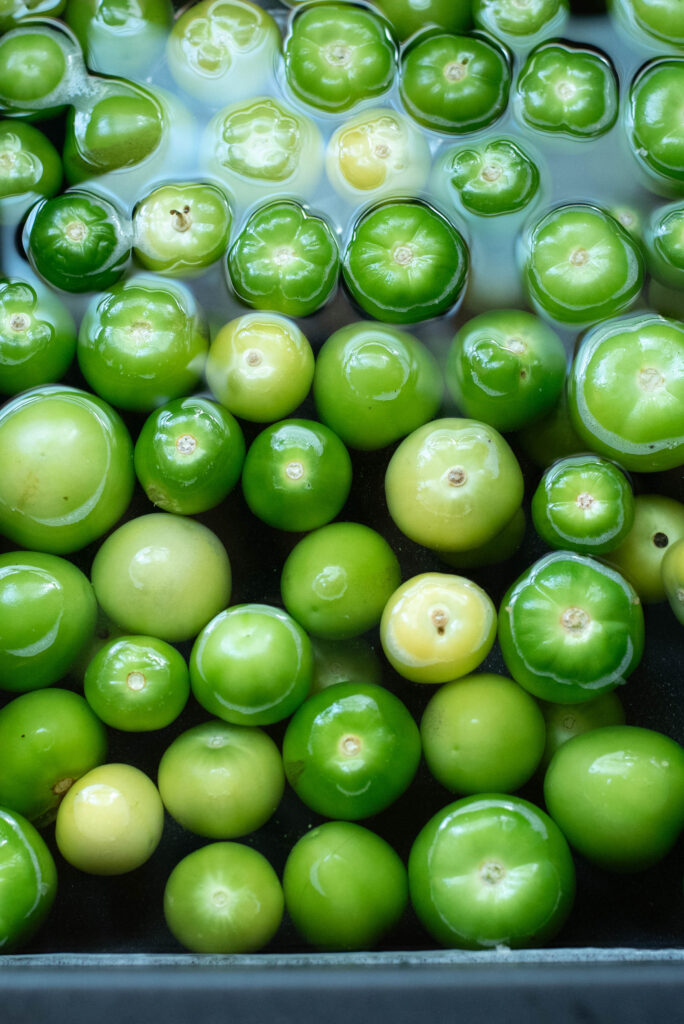
1.) Peel the skins off the tomatillos and wash in warm soapy water. Use a natural soap like Branch Basics or Dr. Bronner’s.
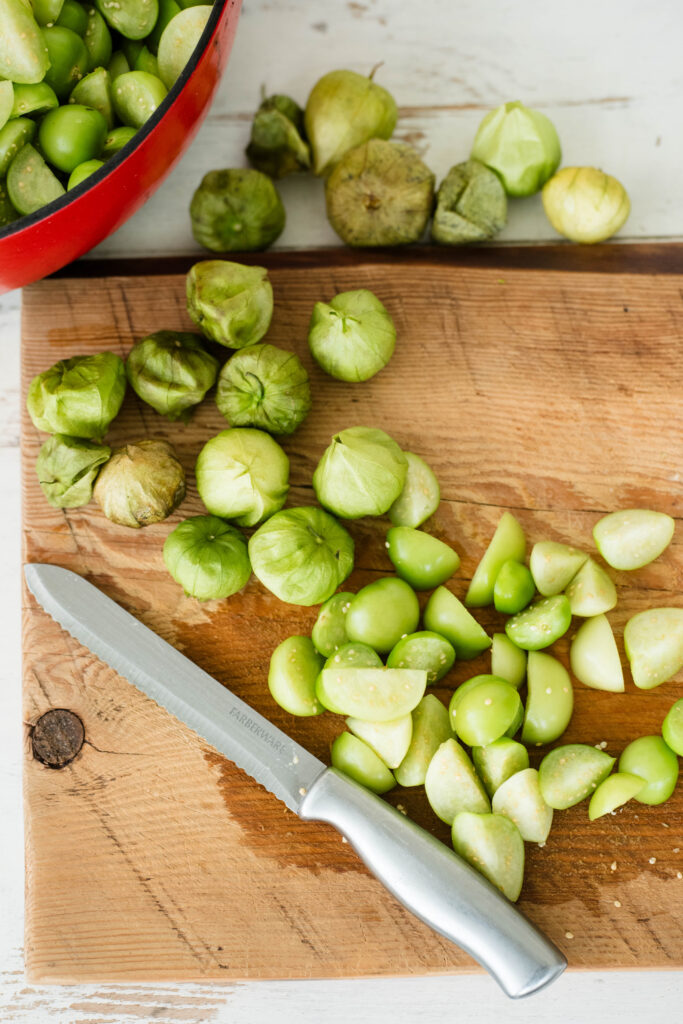
2.) Pre-heat oven to 375 degrees.
With a serrated knife, dice each tomatillo into quarters.
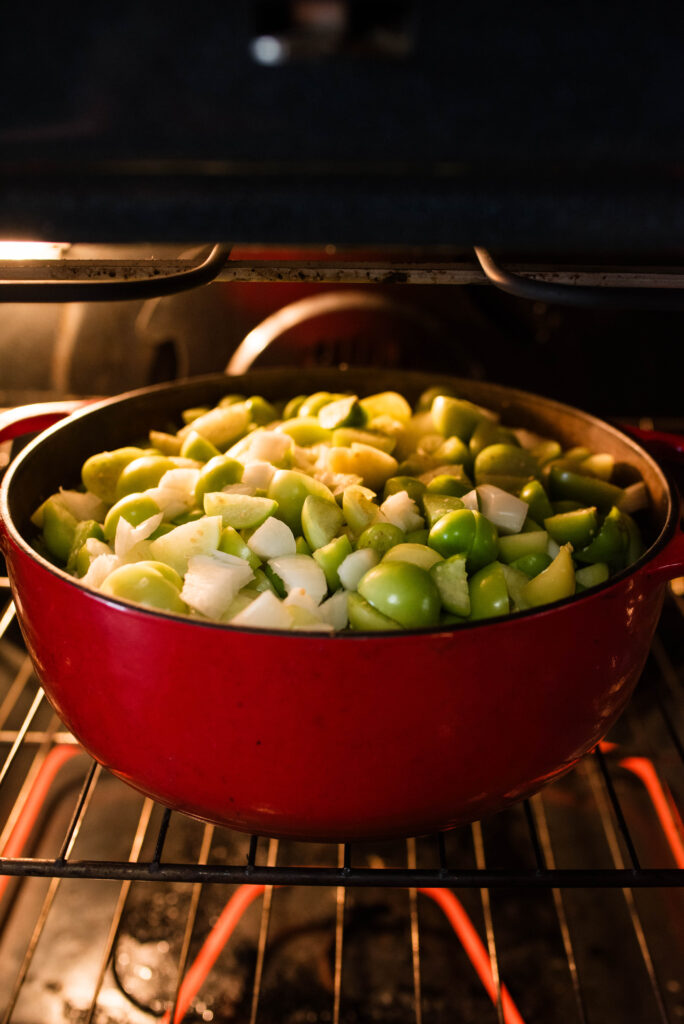
3.) Add diced tomatillos and onion to a large saucepan or dutch oven.
Mix together and roast in the oven for 1 1/2 hours. Stir halfway through cooking.
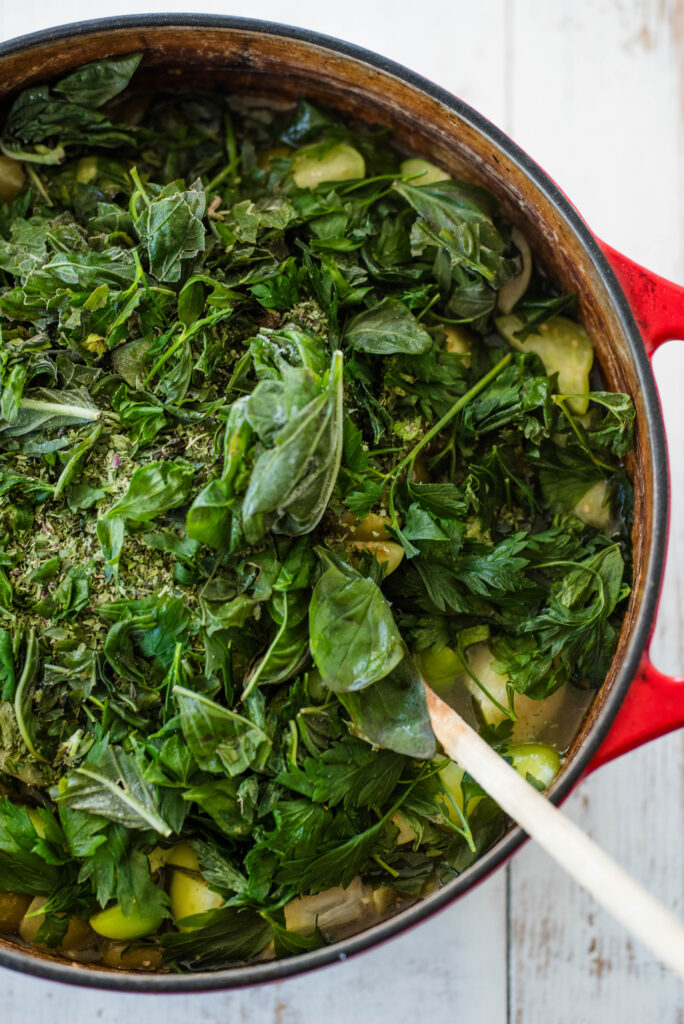
4.) Remove tomatillos from the oven and add remaining ingredients.
Cook on medium to low heat until all the herbs soften and blend together.
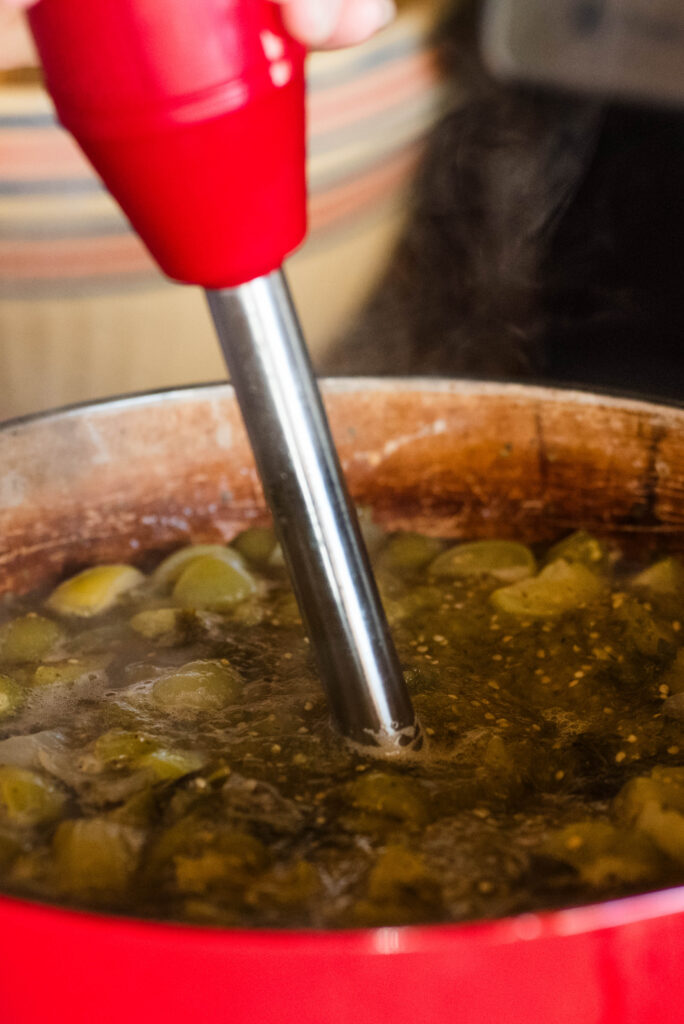
5.) When the mixture softens enough, puree with an immersion blender.
Or transfer to a regular blender, puree and return to the saucepan to keep cooking.
Simmer until the sauce thickens to a spreadable consistency for a pizza crust.
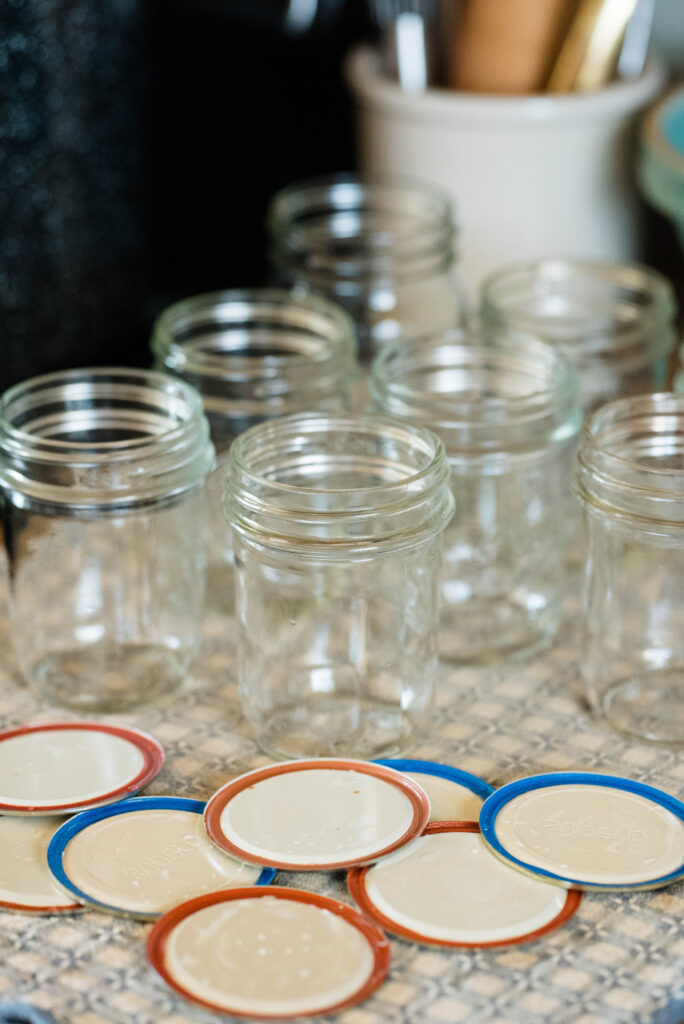
6.) If you can your sauce, begin the water boiling in the canner while it simmers down.
Wash all jars, lids and rings in hot soapy water and set aside to dry.
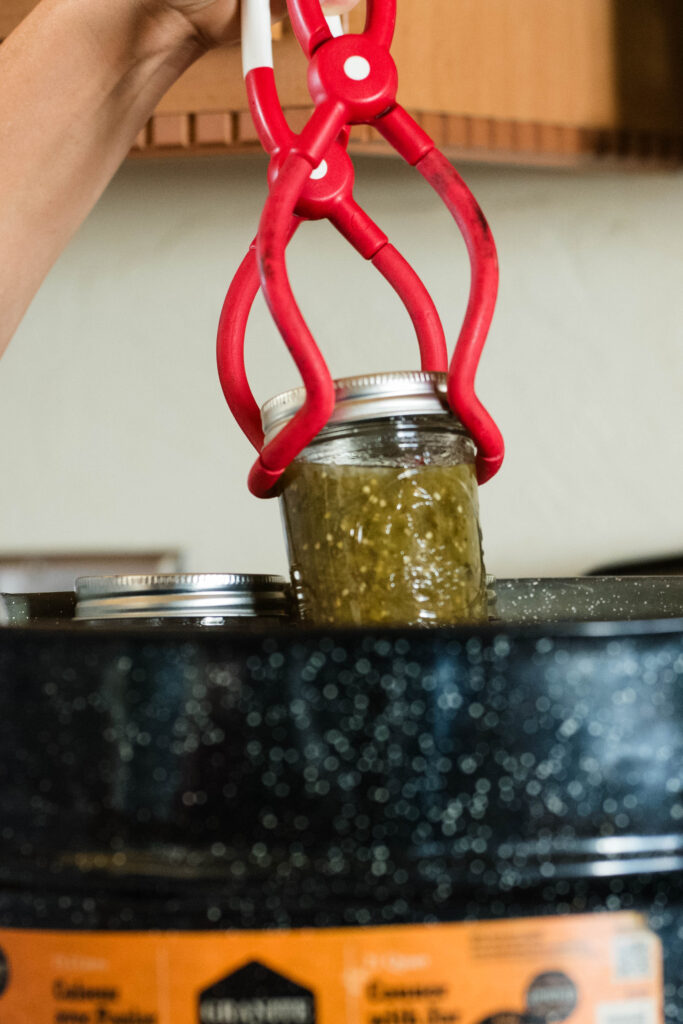
7.) Add salt and lemon juice or vinegar to each jar.
Half-pint jars = 1/4 teaspoon salt and 1 teaspoon vinegar or lemon juice One-pint jars = 1/2 teaspoon salt and 1/2 tablespoon vinegar or lemon juice Quart jars = 1 teaspoon salt and 1tablespoon vinegar and lemon juice
Ladle in the sauce to the rim of the jar, about one inch from the top.
Add lids and tighten rings gently with your fingertips. Do not over tighten. Use a jar lifter and place in canner.
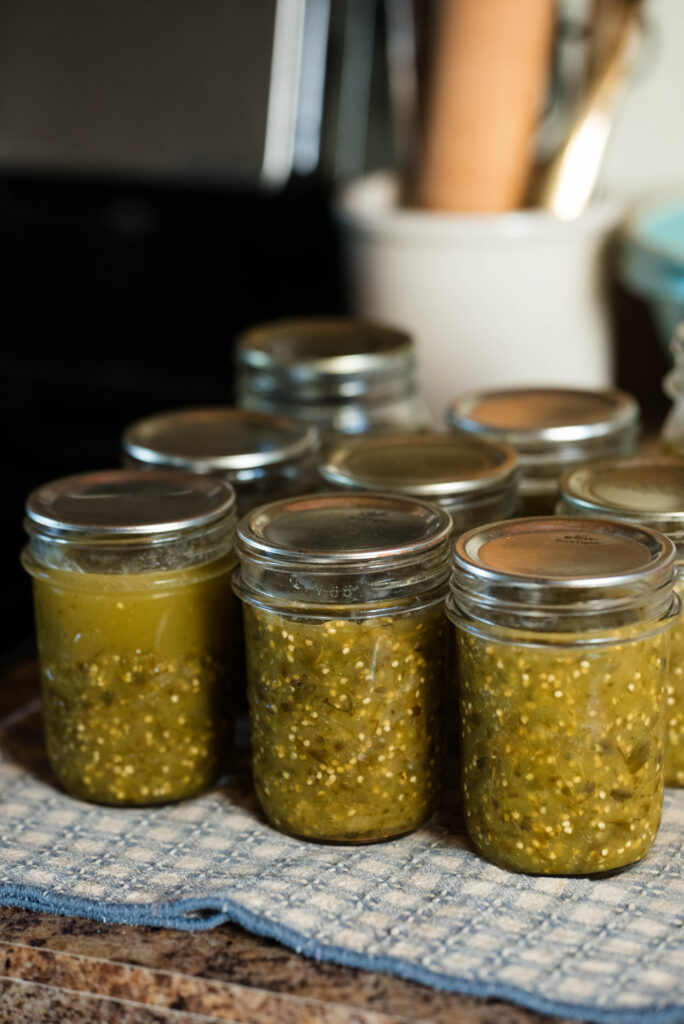
8.) Bring water to a full rolling boil then start the timer to process the jars. Do not start the timer until the water fully boils.
Process the jars as follows: Half pint jars = 15 minutes One pint jars = 20 minutes Quart jars = 30 minutes
When the timer goes off, turn off the heat and let the jars rest inside the canner for an hour.
Remove onto a towel and let the jars rest for 12-24 hours. Remove the rings and store in a single layer in a pantry or cupboard.

FAQ’s for Tomatillo Pizza Sauce
Why does my sauce taste sour or bitter?
To avoid this unpleasant taste, it’s important to roast the tomatillos and onion in the oven before cooking with the remaining ingredients. Roasting cooks away the natural citrusy flavor that may not pair well with Italian based ingredients.
Why is my sauce watery and how do I thicken it?
After roasting, there is a large amount of water released from the tomatillos. Once you add the other ingredients and simmer them together that tends to thicken the sauce. The texture also thickens after it’s pureed and simmered down to a spreadable consistency for a pizza crust.
How long does tomatillo pizza sauce store for?
In the fridge, it lasts about two weeks. When properly water bath canned, it stores shelf-stably for up to 18 months (although I tend to have safely canned food for years on my shelves.)
More Recipes From Becky’s Kitchen
Tomatillo Jam | Easy to Make Small-Batch with 4 Ingredients
The Best From-Scratch Cheesy Sourdough Pizza Rolls
The Best Homemade Pumpkin Sausage Soup for Fall
How to Make Bone Broth: A Beginner’s Guide
Savory Sourdough Pumpkin Ravioli | Simple and Made From Scratch

Homemade Tomatillo Pizza Sauce for Canning
Homemade tomatillo pizza sauce offers a unique twist to a classic Italian meal popular in most American homes. This sauce embraces the traditional savory herbal flavors we all know and love with the same delicious texture as its tomato counterpart. Its perfect for those with a tomato sensitivity who still crave the iconic slice for pizza night.
Ingredients
- 4.5 lbs. diced tomatillos
- 1/2 cup (100g) sugar
- 1/3 cup (10g) dried fennel leaves and seeds
- 2 teaspoons (3g) garlic powder
- 1 1/2 tablespoons (27g) salt plus more for the bottom of each jar
- 1/2 cup (30g) tightly packed diced fresh Italian parsley
- 3/4 cup (45g) tightly packed diced fresh basil
- 1/2 cup (30g) tightly packed diced fresh mint
- 1/2 cup (30g) tightly packed diced fresh oregano
- 1 large diced onion
- Vinegar or bottled store-bought lemon juice
Instructions
1.) Peel the skins off the tomatillos and wash in warm soapy water. Use a natural soap like Branch Basics or Dr. Bronner's.
2.) Pre-heat oven to 375 degrees. With a serrated knife, dice each tomatillo into quarters.
3.) Add diced tomatillos and onion to a large saucepan or dutch oven. Mix together and roast in the oven for 1 1/2 hours. Stir halfway through cooking.
4.) Remove tomatillos from the oven and add remaining ingredients. Cook on medium to low heat until all the herbs soften and blend together.
5.) When the mixture softens enough, puree with an immersion blender. Or transfer to a regular blender, puree and return to the saucepan to keep cooking. Simmer until the sauce thickens to a spreadable consistency for a pizza crust.
6.) If you can your sauce, begin the water boiling in the canner while it simmers down. Wash all jars, lids and rings in hot soapy water and set aside to dry.
7.) Add salt and lemon juice or vinegar to each jar.
The ratios are as follows: Half-pint jars = 1/4 teaspoon salt and 1 teaspoon vinegar or lemon juice One-pint jars = 1/2 teaspoon salt and 1/2 tablespoon vinegar or lemon juice Quart jars = 1 teaspoon salt and 1 tablespoon vinegar and lemon juice
Ladle in the sauce to the rim of the jar, about one inch from the top. Add lids and tighten rings gently with your fingertips. Do not over tighten. Use a jar lifter and place in canner.
8.) Bring water to a full rolling boil then start the timer to process the jars. Do not start the timer until the water fully boils.
Process the jars as follows: Half pint jars = 15 minutes One pint jars = 20 minutes Quart jars = 30 minutes
When the timer goes off, turn off the heat and let the jars rest inside the canner for an hour. Remove onto a towel and let the jars rest for 12-24 hours. Remove the rings and store in a single layer in a pantry or cupboard.
Notes
1.) Roasting the tomatillos and onions in the oven is important for the classic savory taste of pizza sauce. By nature, tomatillos are both slightly sweet and tart and roasting mellows that flavor profile.
2.) For the health conscious, it's tempting to skip the sugar in this recipe. However, sugar is what makes a sauce "saucy." It caramelizes the ingredients together for a traditional texture. The amount used is minimal for the number of servings per batch, but it has maximum impact.
3.) For safe canning purposes, use the appropriate amount of salt and acid for the jar size used. I prefer lemon juice verses vinegar since it doesn't affect the flavor as much. Vinegar adds a slightly sour taste. Bottled store-bought lemon juice provides the 5% acidity needed for safe canning compared to fresh squeezed.
4.) If you forget to add salt and acid to the jars before canning, all is not lost. Simply store in the refrigerator instead of the pantry. Since the jars seal and keep the oxygen out, the cool temperature prevents spoilage and allows for longer term storage. Nothing goes to waste!
5.) If you use dried herbs instead of fresh, the ratio is 1 teaspoon dried per 1 tablespoon of fresh.
I’m a wife and homemaker inspiring old-fashioned skills for a homemade, self-sufficient lifestyle, always with a warm beverage in hand. Homemade Recipes. Gardening. Preserving. Healthy Living.
Want More Recipes from Becky?
Sign up to receive exclusive recipes only for subscribers! Plus you’ll get the latest blog posts straight to your inbox!