How to Make Easy Homemade Pectin for Jam
Sweet and delectable, there’s nothing quite like a spoonful of homemade jam. Preserve your favorite fruit the old-fashioned way with this easy homemade pectin recipe. Perfect for gifting, share your love of a nostalgic era gone by with your homemade pectin or jam. Truly Americana!
The tepid winds of spring are whispering here in Wisconsin and summer peeks around the corner. Yes!! My favorite time of year is close by.
In this season of waiting, one of my main goals is to prepare the freezers and pantry for the busy summer ahead.
A Bulk Solution
Enter Azure Standard, my newfound favorite company as the modern day homemaker! They are an online co-op where you order almost any type of food you can think of in bulk, making it easy and affordable to stock a pantry. Think flour, sugar, cheese, spices and herbs, and produce.
Lemons are my go-to for nutritional purposes, but the cost for a small handful of organic lemons lately is quite unaffordable. Tag on the fact that most organic produce is now sprayed with the same disturbing substances as conventionally grown produce, and I have quite a dilemma on my hands.
Then I got the idea to start ordering from Azure Standard since they vet their vendors to make extra sure they have organic farming methods. Many of the online homesteading influencers I follow highly recommended Azure and so far I’m happy with everything they have to offer.
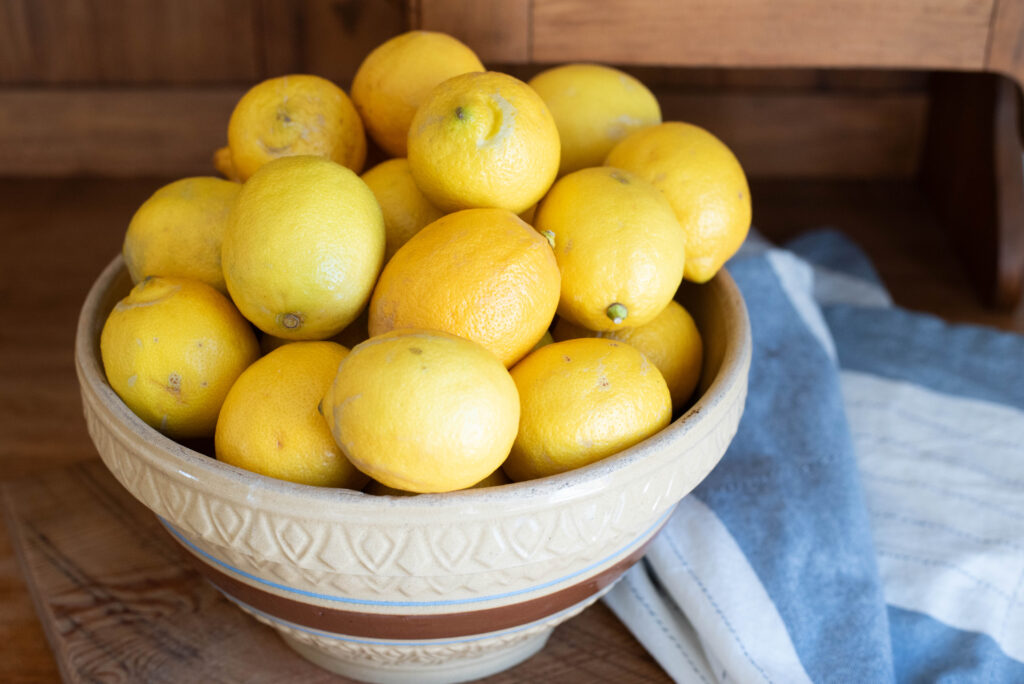
My big, beautiful box of lemons recently arrived and I was immediately thrilled, yet daunted by the task ahead. The box contained approximately 70 lemons. I’m finally going to have lemon juice in bulk, but what to do with all those leftover lemon rinds?!
Well, I finally had a solution to another dilemma.
As you follow me and my blog writings, you’ll know a home-grown, homemade, whole food lifestyle is very important to myself and Luke.
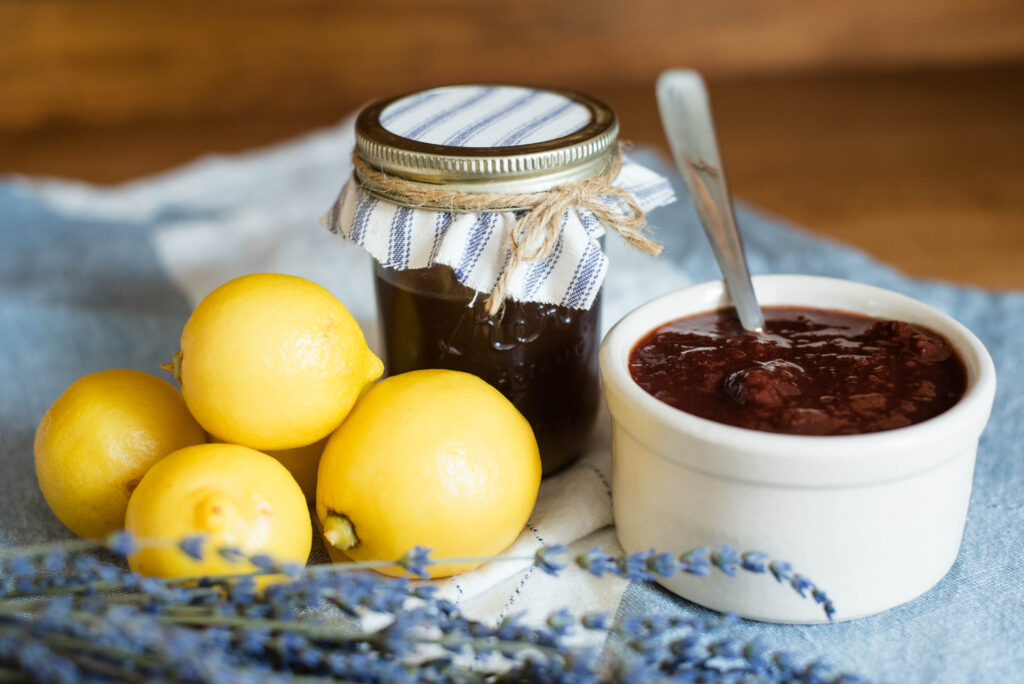
It’s our mission to spread that lifestyle to others as well. That said, I pride myself on my jam making and strawberry is my favorite! (Check out my strawberry jam recipe here.) And you guessed it, all my jam ingredients need to be organic including my pectin.
A Brief History and Science of Pectin
What is pectin and why is it necessary in making jams and jellies? I didn’t quite understand it’s importance until recently, after growing weary last jam making season from too many hours behind a hot stove top.
According to the International Pectin Producers Association, pectin is a naturally occurring sugar acid, comprised of several different types of sugar molecules.
Pectin is structurally long with galacturonic acid as the main component with the other molecules branching off, essentially tangling with each other (source). This tangling in food creates a thickening effect.

Within the plants themselves, pectin molecules hold the cells together, thus maintaining the shape of each plant. Pectin is particularly high in apples, lemons, limes and oranges.
Typically within the commercial food industry, pectin is made with leftover rinds and pulp from juice making. This is a great way to reuse raw materials and reduce food waste around the world.
When Was Pectin First Referenced?
According to the International Pectin Producers Association, pectin was first referenced approximately in the mid-18th century in 1750. Recipes for apple, currant and quince jellies were printed in the Country Housewife’s Family Companion (from London).
You can read the book for more details on how housewife’s back then preserved food including jams and jellies. On page 235, there is a mention of making Jelly Liquor from quince parings, cores and kernels (seeds), which is how homemade pectin is made today.
Sounds like the old world meeting the new world for the modern homemaker!
About 1820, pectin was first isolated and recognized as being the key to making a great batch of jam or jelly. Folks began to mix pectin rich fruits with less pectin fruits such as strawberries and gooseberries.
Commercialization of pectin first began in Germany in 1908. Apple producers in Germany saw a money making opportunity as commercial jam companies wanted to utilize pectin as a thickener. They began selling the leftover pomace (cores, pulp and seeds) from juice making, and the business grew worldwide from there.
Store-Bought Pectin vs. Homemade Pectin
Now that you know a brief history and science of pectin, the next question is why would anyone spend the time to make their own when you can easily buy it at the store? Isn’t it the same?
A Toxic Load
I would argue that they are not. Avoiding toxic overload from pesticides, herbicides, fungicides and insecticides is my main priority when it comes to our food. Why? Simply put, these dangerous chemicals cause cancer and a long list of other health problems.
Apples are a major source in the global production of pectin, and they often contain heavy layers of chemical sprays. Other sources of pectin including lemons, limes and oranges also have these toxins.
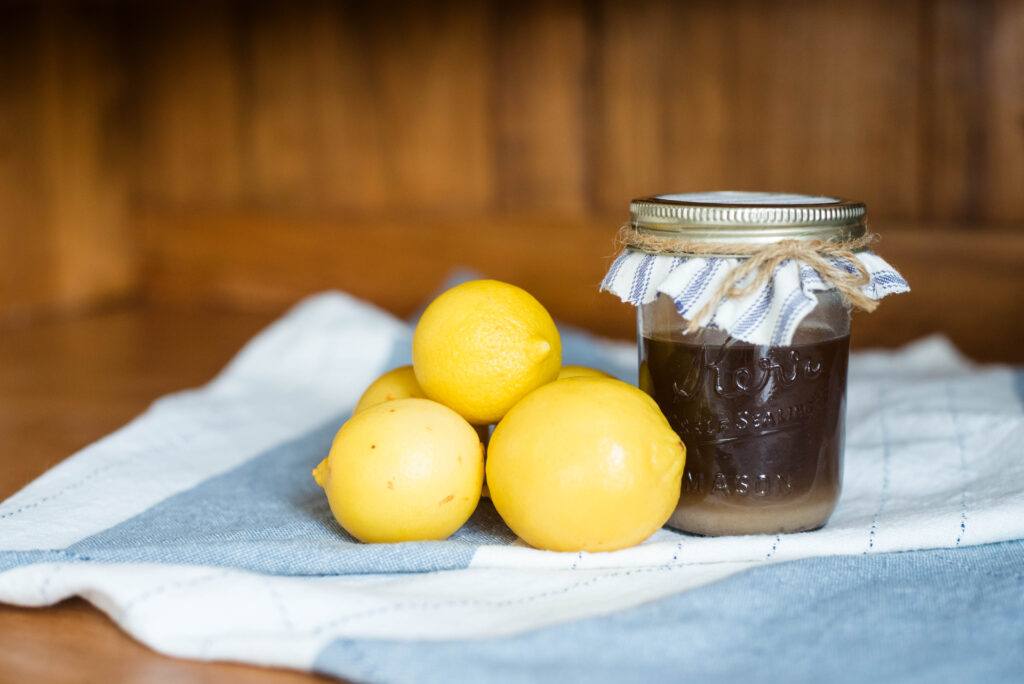
In addition to their chemically burdened growth, leftover apple pomace and citrus rinds from juice making mixes with other toxic chemicals such as hydrochloric acid and sulfuric acid to commercially extract pectin.
Sulfuric acid is also used to make fertilizers, iron and steel amongst other uses (source).
Hydrochloric acid, used in metal and petroleum refining and cleaning products, is a corrosive and dangerous substance (source). In addition to these and other chemicals used in commercial pectin production, a form of rubbing alcohol dries the mixture out to create the powder bought in the store by consumers (source).
Ummm, no thank you! I don’t want these toxins in my body or in my loved ones for that matter. Even though a small amount mingles inside a jar of jam or jelly, the toxins throughout a person’s life add up to health problems. That’s why I put forth the effort to make homemade citrus pectin.
And the ingredients? Just water and organic apple peels or citrus rinds and a little bit of time. Simple, affordable and healthy!
Helpful Hints for the Best Homemade Pectin
- When saving piths and seeds, remove the citrus peel to reveal the white pith below. The peel contains lots of flavor and could alter the taste of the jam. Save lemon peels to dry for homemade teas or cooking or in a stove top potpourri.
- Best practices recommend cutting the white pith away from the inner pulp also not to alter the flavor of the jam. However, to save time I generally don’t do this and I haven’t noticed a difference in taste in my jams.
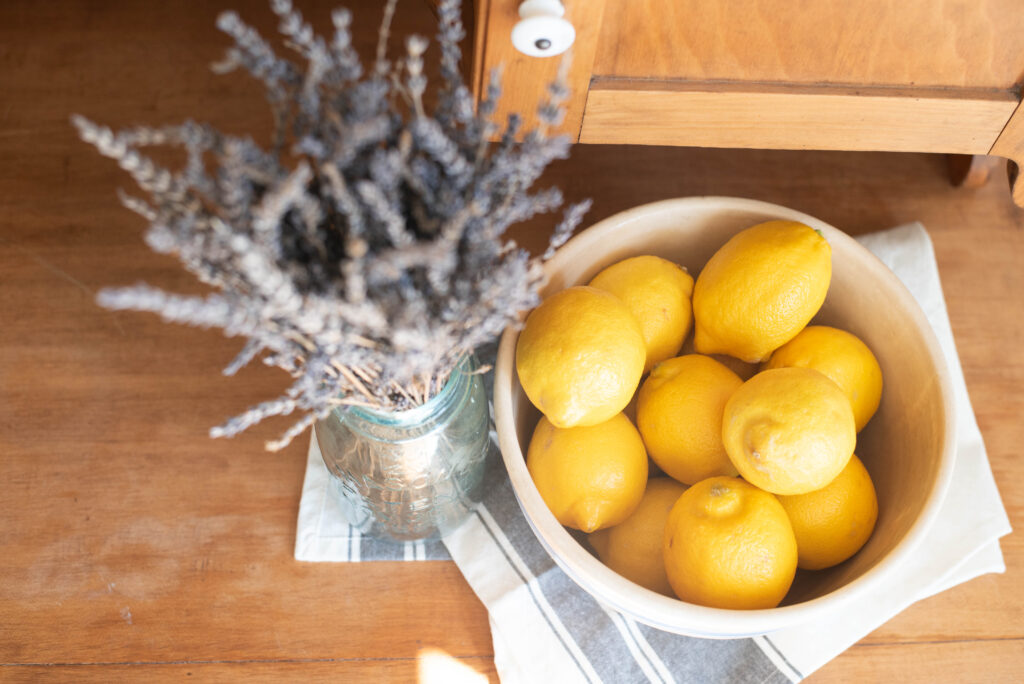
- Use apple scraps including peels, seeds and cores to make homemade pectin using the same steps below.
- If you use your cheese cloths and butter muslins to strain homemade dairy in your kitchen, don’t use them to strain your pectin. Purchase separate cloths so the smell from used cloths doesn’t alter the taste of your pectin.
- While the liquid strains through the cheesecloth, don’t squeeze the bundle because sediment can end up in your final product. That’s not important for the average jam maker, but if you’re looking to win a blue ribbon at the county or state fair for a clear jar of jelly, it is!
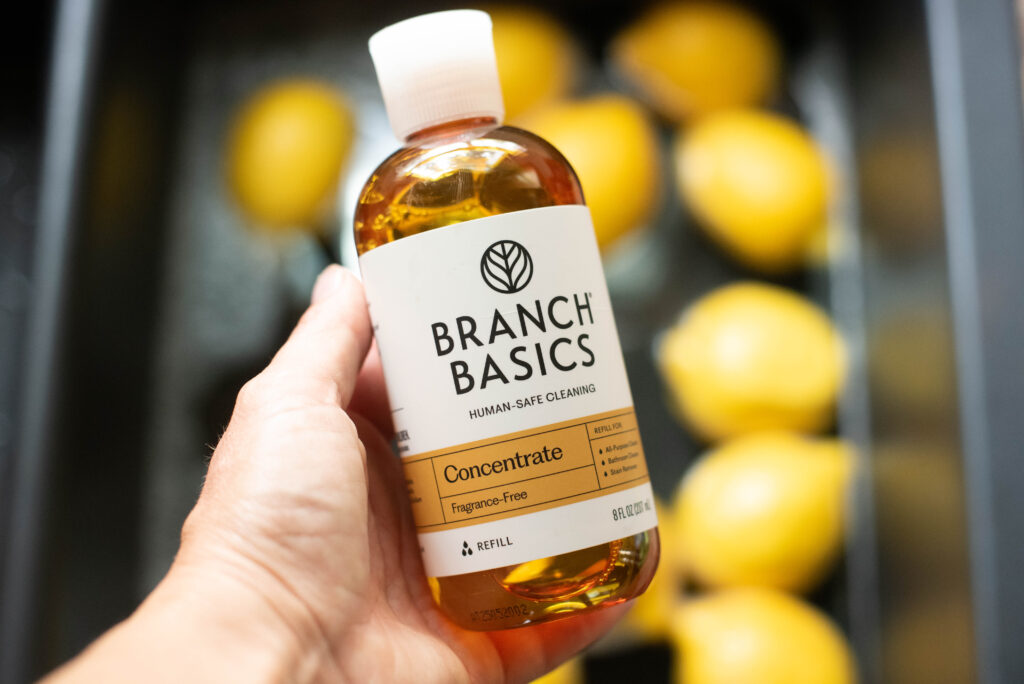
- It’s important to wash and scrub the produce you’re using for homemade pectin. This goes for both organic and conventionally grown produce since both have waxy coatings with unhealthy ingredients that could end up in your final product. I use a few drops of concentrate from Branch Basics, but any natural soap like Dr. Bronner’s work’s as well.
- Make sure to have half to one pound of citrus rinds and seeds. Either collect them as you use individual lemons or oranges in a bag in the freezer, or buy in bulk from an online co-op such as Azure Standard or the grocery store.
How to Make Easy Homemade Pectin
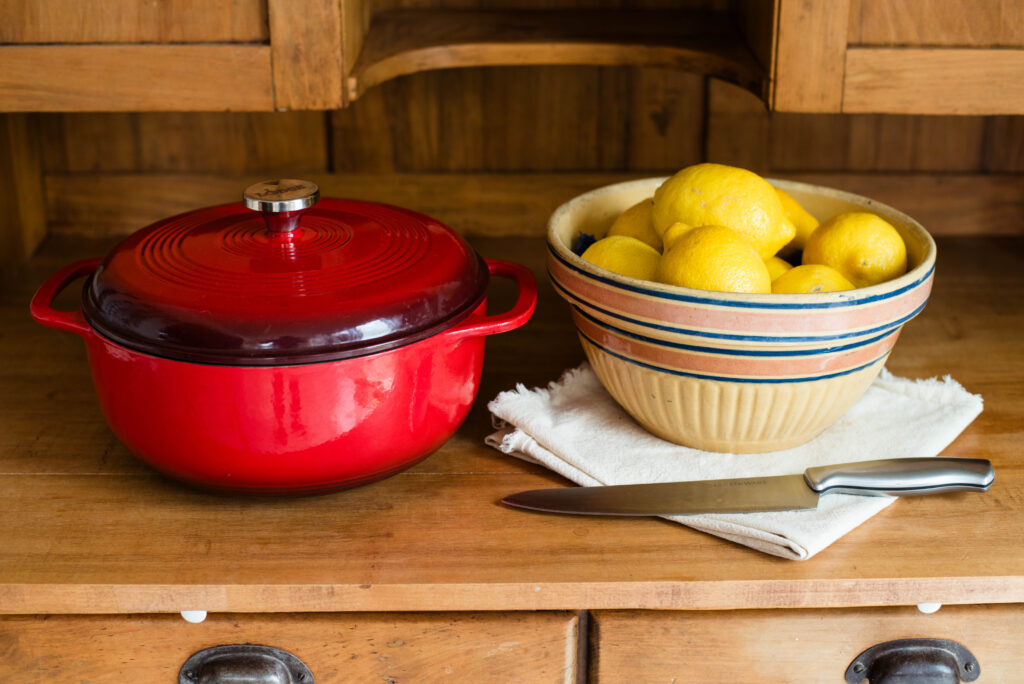
Ingredients
- Filtered water
- Apple pomace (peelings, seeds and core) or citrus rinds and seeds
Tools Needed
- Non-reactive pot
- Wooden spoon
- Clean cheese cloth or butter muslin for straining
- Medium-sized bowl
- Small jars with lids and rings
- Container for water bath canning (if you choose to can your pectin vs. freezing it)
Step-by-Step Instructions
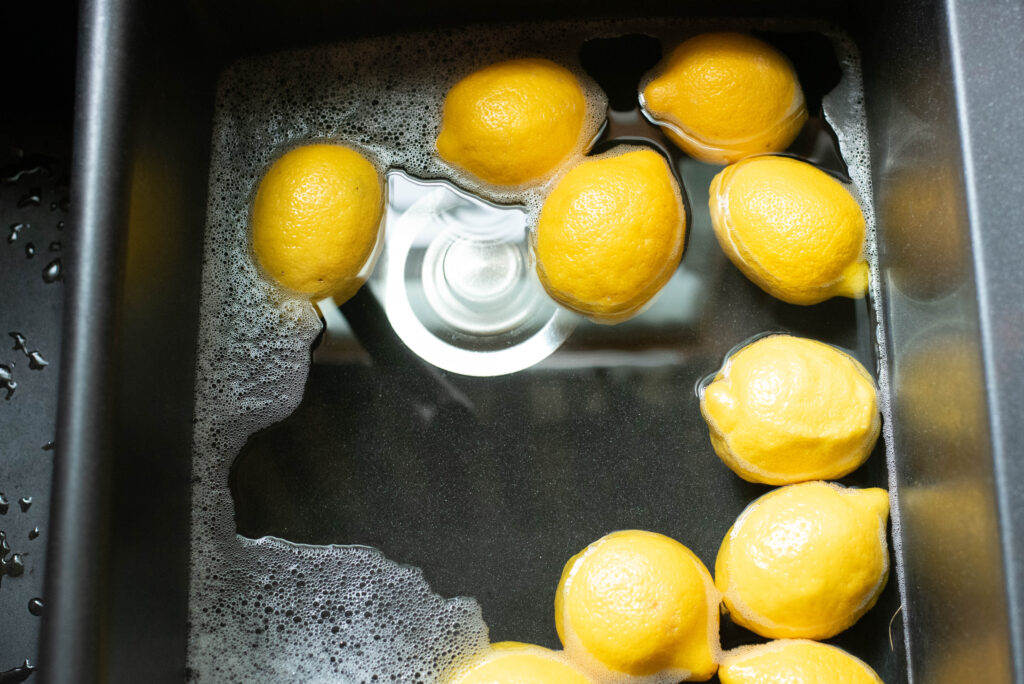
1.) To begin, wash produce with a natural soap such as Dr. Bronner’s Castile soap or a few drops of Branch Basics concentrate.
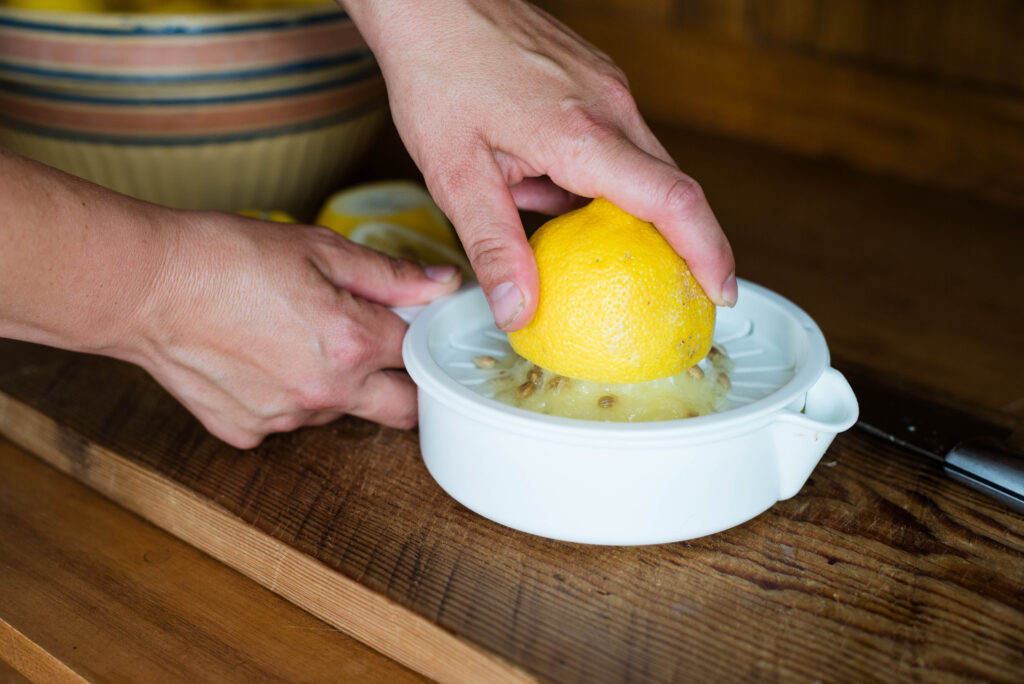
2.) Next, use a juicer and extract as much pulp, seeds and juice as possible.
Store the juice in the refrigerator for another use.
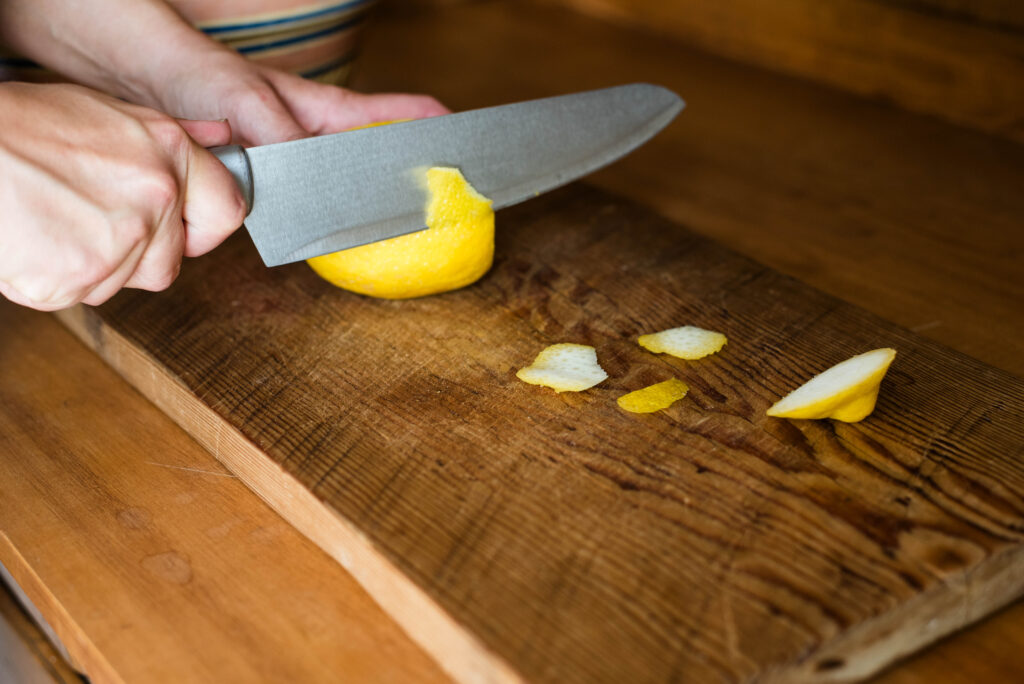
3.) With a sharp knife, carefully cut the rind away from the white pith. Set aside the peels for another use.
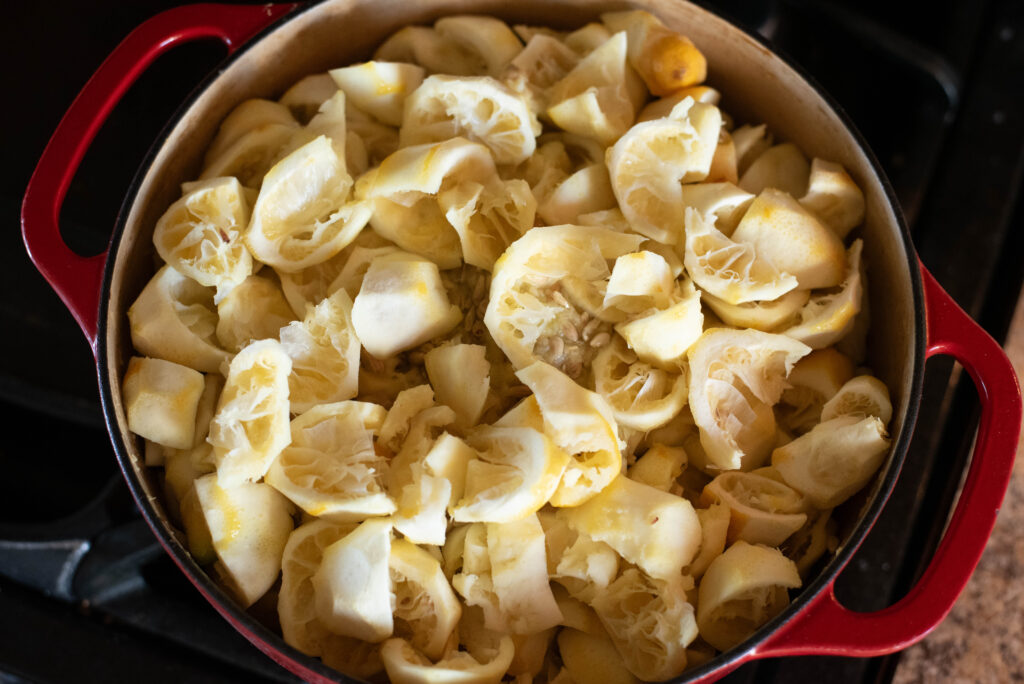
4.) Place the piths and seeds in a non-reactive pot and pour enough filtered water to just cover the mixture. Let stand for a minimum of one hour or up to eight hours.
Then bring to a boil, reduce heat and simmer for 15 minutes. Let the mixture cool to room temperature.
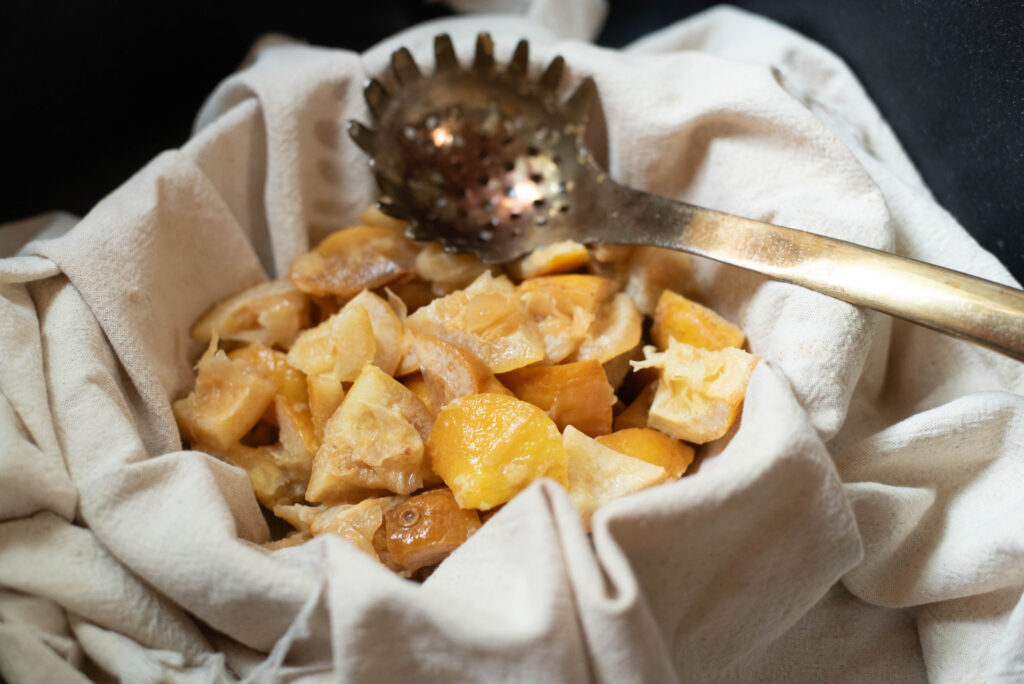
5.) Once cooled, carefully scoop the mixture into a bowl lined with a cheese cloth or butter muslin cloth.
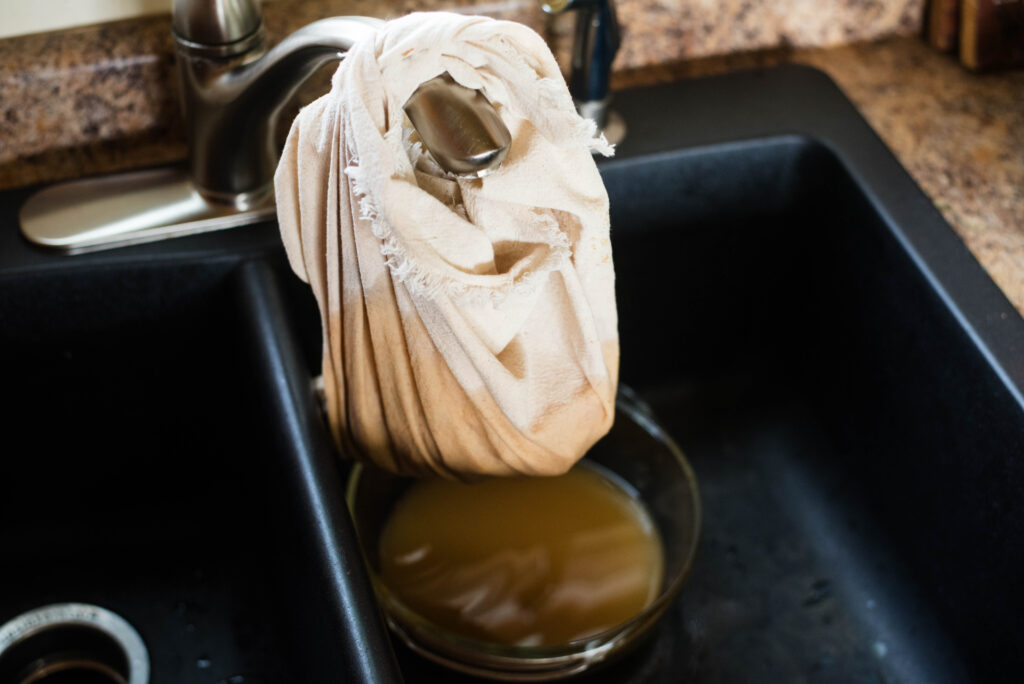
6.) Gently gather the corners of the cloth and hang from the sink faucet to drain all liquid.
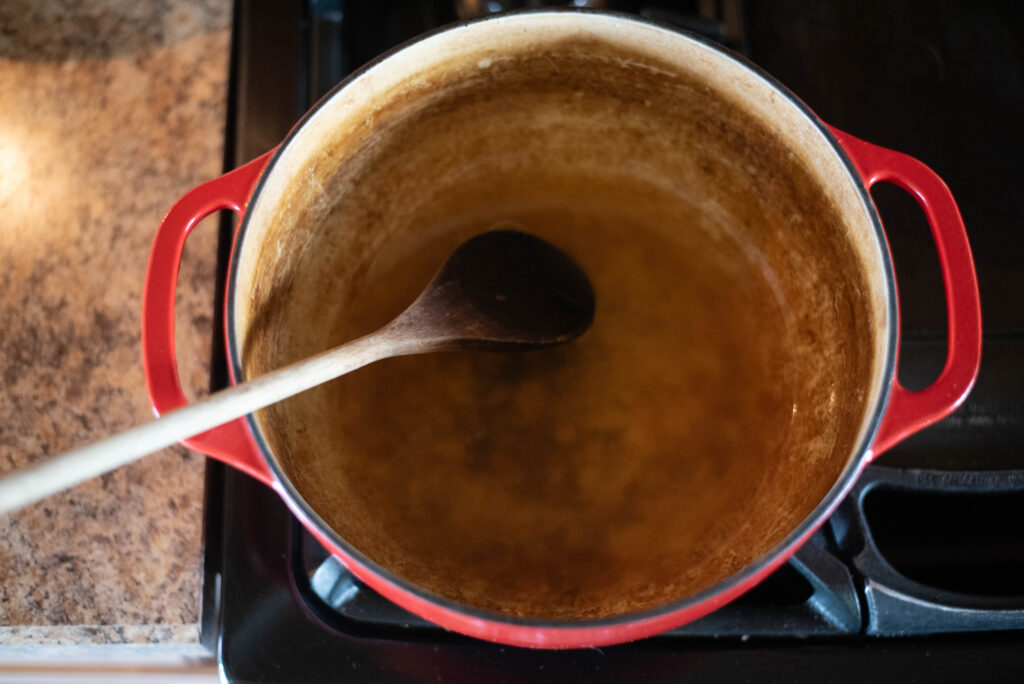
7.) Return liquid back to the non-reactive pot and bring to a boil. Reduce heat and simmer until the amount of liquid reduces by half.
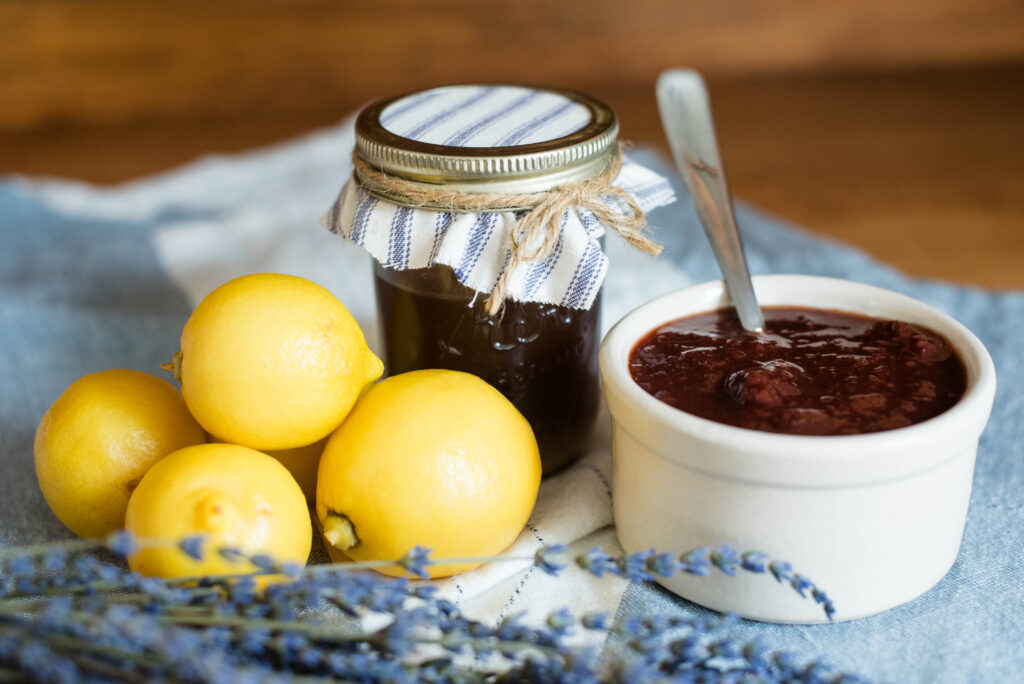
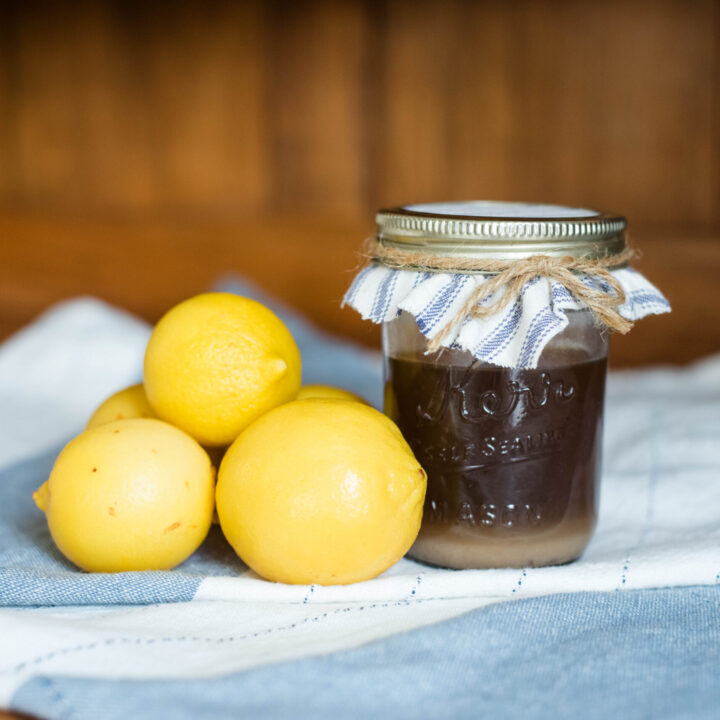
8.) Place three-quarters of a cup of pectin in clean half-pint jars. Either water bath can or store in the freezer.
When ready to use for jam making, simply stir in with the other ingredients according to the recipe.
Jam Recipes from Becky’s Kitchen
Spiced Cranberry Christmas Jam | Irresistibly Easy and Delicious
Easy to Make Small-Batch Huckleberry Jam Sweetened with Honey
Small-Batch Tomatillo Jam | Easy to Make with 4 Ingredients
How To Make Low-Sugar Strawberry Jam
FAQ’s for Homemade Pectin
What is a non-reactive pot?
A non-reactive pot is either stainless steel, enamelware or enameled cast iron. Acidic foods cause an unpleasant taste in reactive cookware such as copper and regular cast iron because the acidity draws out the metal atoms.
Can any residual juice, pulp or lemon rind be in the pectin mixture?
Traditionally speaking, it’s not preferred because they can alter the flavor of your jam. However, I do tend to keep some of each in my mixture and I don’t notice a difference in taste in my jams.
Can extra liquid be squeezed through the cloth when straining the pectin mixture?
It’s not advised because the final product isn’t clear and the sediment settles to the bottom of the jar. However, if you’re not taking a jar of jelly to the county or state fair for judging, a little extra sediment won’t affect the final flavor of the jam.
I hope I’ve inspired you to try making homemade pectin. If so, please let me know in the comments below! Tag me with your photos on Instagram @beckybuttlesamericana
–Becky
Easy Homemade Pectin for Jam
Turn bright and tangy citrus fruits into an easy homemade pectin for jam. A resourceful way to use the leftover pith and seeds, this healthy pectin recipe saves you money and makes a great gift for the jam maker in your life. Truly Americana!
Ingredients
- Filtered water - enough to just cover the amount of piths and seeds in the pot
- Citrus pith and seeds - minimum 1/2 lb., preferably 1 lb. or more
Instructions
- Gather a minimum 1/2-1 lb. of citrus pith and seeds. Use a combination of lemons, limes, grapefruit or oranges OR all one flavor.
- Freeze pith and seeds as you buy for cooking or use fresh if fruit is bought in bulk.
- Wash lemons with a natural soap such as Dr. Bronner's or a few drops of concentrate from Branch Basics.
- Juice all lemons. Set aside for future use. Separate seeds from pulp and discard the pulp.
- Next, with a sharp knife, carefully cut away the rind from the pith. Save peels for future use.
- Place pith and seed mixture in a non-reactive cooking pot. Fill with filtered water until mixture is just covered. Let sit for minimum 8 hours or up to 24 hours at room temperature.
- Next, bring to a boil, turn heat down and let simmer for 15 minutes. Remove from heat and let cool to room temperature.
- Once cooled, place a cheese cloth or butter muslin over a non-reactive, medium-sized bowl. Carefully transfer mixture to the covered bowl.
- Gather ends of fabric to tie and hang on sink faucet and let liquid drain. This takes about 30 minutes. Be careful not to squeeze the bag.
- Next, transfer drained liquid back to a non-reactive pot and heat until liquid reduces by half the amount. Final product has a slightly thick viscosity.
- Pour 3/4 cup liquid into half-pint sized jars and cover with lids and rings. Place in water bath canner for 10 minutes then let cool to room temperature and store for a shelf stable storage option. Or once cooled, store in freezer.
- When making jam, use one jar of pectin in place of store bought pectin.
Notes
- When saving piths and seeds, remove the citrus peel to reveal the white pith below. The peel is very flavorful and could alter the taste of the jam. Save lemon peels to dry for homemade teas or cooking. Also use lemon peels in a stove top potpourri.
- Cut the pith away from the inner pulp also not to alter the taste of the jam. However, if you are a person that works outside the home or are a one person show in the kitchen like me, I don't do this since it's time consuming. I haven't noticed a difference in taste in my jams.
- Use apple scraps including peels, seeds and cores to make homemade pectin using the same steps below.
- If you use your cheese cloths and butter muslins for straining homemade dairy in your kitchen, don't use them to strain your pectin. Be sure to purchase separate cloths so the smell from used cloths doesn't alter the taste of your pectin.
- When straining the liquid through the cheesecloth, be careful not to squeeze extra liquid out because sediment can end up in your final product. Not important for the average jam maker, but if you're looking to win a blue ribbon at the county or state fair for a clear jar of jelly it is!
- It's very important to wash and scrub the produce you're using for homemade pectin. This is especially important if you're using conventionally grown fruit, but organic fruit also needs to be washed. Both have waxy coatings with unhealthy ingredients that could end up in your final product. I use a few drops of concentrate from Branch Basics, but any natural soap like Dr. Bronner's work's as well.
- Make sure to have half to one pound of citrus rinds and seeds. Either collect them as you use individual lemons or oranges in a bag in the freezer, or buy in bulk from an online co-op such as Azure Standard or the grocery store.

I’m a wife and homemaker inspiring old-fashioned skills for a homemade, self-sufficient lifestyle, always with a warm beverage in hand. Homemade Recipes. Gardening. Preserving. Healthy Living.
Want More Recipes from Becky?
Sign up to receive exclusive recipes only for subscribers! Plus you’ll get the latest blog posts straight to your inbox!