4 Simple Healthy Swaps for Non-Toxic Home Cleaning
Non-toxic home cleaning is simple to implement and essential for long-term health and vitality for you and your family. Make your home sparkling clean without harsh chemicals and a few basic inexpensive supplies.
My passion for health and wellness dates back to when I was a kid. But it wasn’t until I picked up a book in 2007 that really opened my eyes.
I was in my early 20’s working at Starbucks at the time. I had a couple of sweet girls I worked with that recommended a book titled “Skinny B***h.” Bad title, but great information!
Basically, it talked about just how toxic our world really is from food to the chemicals in our homes. The information was quite mind-blowing and ever since then, I’ve been on a journey to rid toxins from my life.
I say journey because a healthier, non-toxic life hasn’t happened overnight for me. With the explosion of information available on the Internet in the last 20 years, my knowledge of health and wellness expands every year.
I hope to inspire you to take action and make positive changes this year for the health and safety of you and your family. Beginning with non-toxic home cleaning is a great place to start.
Why You Should Implement Non-Toxic Home Cleaning
In the United States, there is an astounding number of chemicals allowed in our food supply, cosmetics, body care items and professional and home cleaning products. Overhauling your life and swapping out conventional products for non-toxic choices is overwhelming. Here we’ll stick to the topic of home cleaning and why it’s important.
Prevent Disease and Toxic Buildup in the Body – Fertility issues, skin problems like eczema, overall metabolic dysfunction and cancer are all related to toxic exposure to chemicals in household cleaners. Non-toxic home cleaning reduces many of these health concerns for adults, children and pets.
Reduce Safety Concerns – In 2023, according to Poison Control, incidents with household cleaners were the number one reason for calls amongst children. In 2024, household cleaners also made the top ten list of calls to Animal Poison Control Center for pets. Toss the toxins and switch to natural cleaning solutions for a safer home environment for children and pets.
Environmentally Friendly – Not only are non-toxic cleaners safer for humans and animals, they’re more environmentally friendly too. Conventional cleaning products contaminate soil and waterways when washed down drains and they also release VOC’s (Volatile Organic Compounds) in the air. VOC’s pollute the indoor air quality of your home causing respiratory issues like asthma. They also contribute to outdoor air pollution.
Dish Soap-A Partial List of FDA and EPA Approved Ingredients
In case I haven’t yet convinced you to swap out your conventional cleaning products for healthier alternatives, let’s dive deeper into a common household item.
Dish soap is in every kitchen in America. While a commercial brand is useful at times, here’s a partial list of ingredients and why you should use a safer soap.
- 1,4-Dioxane – This is an ingredient you won’t see on a package label, yet it’s considered a Class B possible carcinogen by the FDA, CDC, HHS and EPA. That’s because it’s considered a by-product of manufacturing. 1,4-Dioxane easily absorbs through skin and is used in many household products including dish soap and laundry detergent.
You are continuously exposed to this product every time you reach into a sink full of hot, sudsy water or put on a piece of clothing. What else do you wash? Bath towels, face cloths, bed sheets, etc. You get the idea.
- Formaldehyde – Formaldehyde has a strong odor and is colorless and flammable at room temperature. It’s typically used as a preservative or pesticide in many common household cleaning and furniture products. Short and long-term exposure causes asthma, headaches, contact dermatitis, joint pain and universal sensitization to all chemicals, just to name a few health complications.
- Phthalates – Phthalates are used to make plastics softer and are commonly found in fragrance ingredients inside untold numbers of products including dish soap, cosmetics and body lotions. They create endocrine-disrupting and metabolic syndrome issues including hormonal imbalances, birth defects, insulin resistance and diabetes, cancer and Alzheimer’s disease.
No thank you to any of this! Just think, these are only three of thousands of approved chemicals for household cleaners. Non-toxic home cleaning can help you and your family and pets avoid many health issues you might not even be aware of.
Basic Cleaning Kit for Non-Toxic Home Cleaning
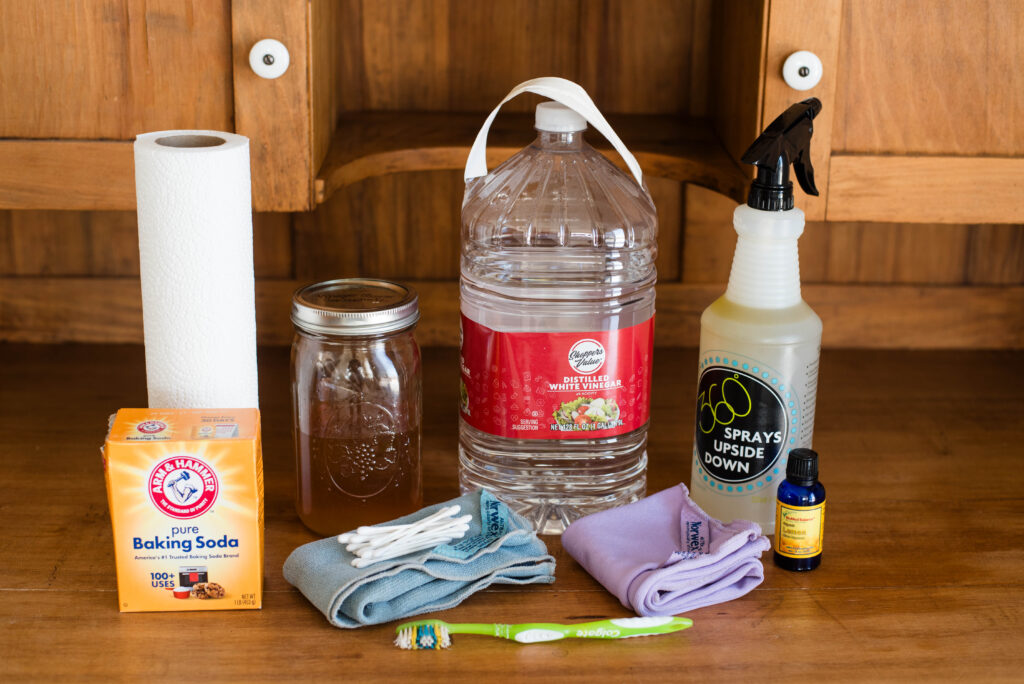
The tools I use for house cleaning are pretty simple and inexpensive. Not all are necessary, but they’re helpful. Gather and store them in a container with a handle for easier carrying around the home.
- Spray bottle with all-purpose cleaner (homemade or natural brand, discussed below)
- Microfiber cloths – I use Norwex brand, but any brand works great
- Paper toweling and Q-tips – I realize they’re not environmentally friendly, but I do use them occasionally. The Q-tips are great for small crevices such as sink faucets.
- Toothbrushes – Again, great for crevices and rough surfaces like grout
- Baking soda and vinegar
- Essential oils – Lemon and lavender are my favorite for cleaning. Lemon cuts grime and lavender smells amazing.
4 Simple Swaps for Non-Toxic Home Cleaning
The following non-toxic cleaning swaps keep Luke, Sadie (our dog) and I healthy and prevent unwanted exposure to chemicals.
Please note, I’m currently not paid by affiliate links or brand sponsorships for any recommended products. I just really love them and think they work great!
Dish Soap and Dishwasher Detergent
Dish Soap
Based on the ingredient list above, that’s motivating enough to make the switch to a healthier dish soap. Keep in mind, residue from dish soap and dishwasher detergents linger on dishes. You ingest that residue every time you eat.
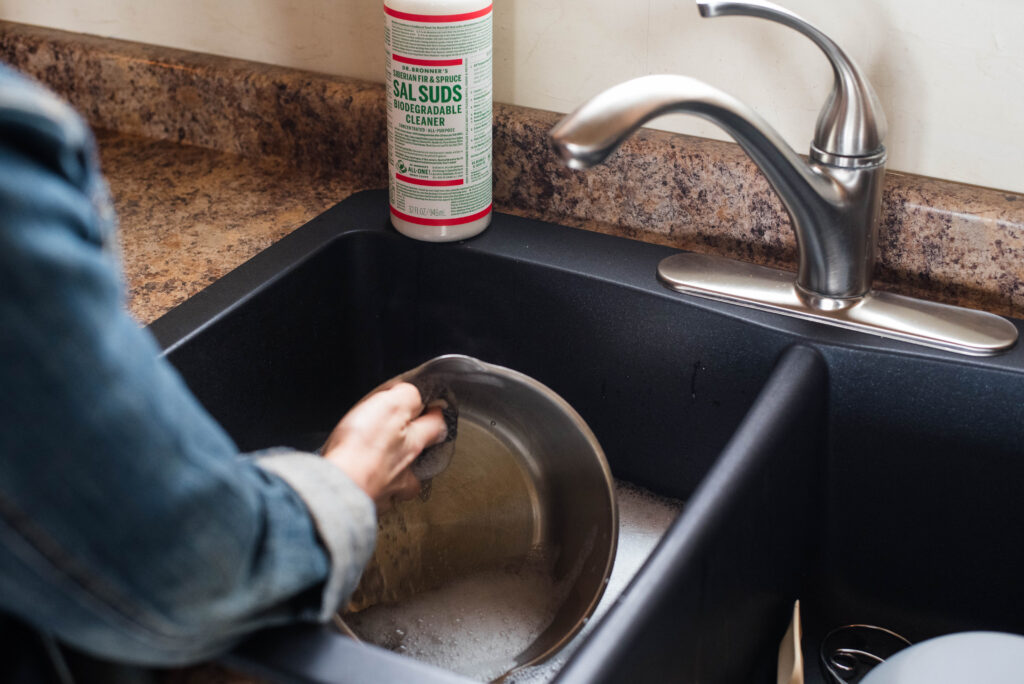
My personal favorite soap is Dr. Bronner’s Sal Suds. It’s made with plant based materials and essential oils and is EWG (Environmental Working Group) approved. I use it for washing dishes by hand and for hand mopping my floors.
Technically, Sal Suds is a multi-purpose cleaner for the whole home. It replaces many conventional toxic cleaning products from floor cleaners to laundry detergent, all-purpose cleaners and dish soap to name a few.
And since it’s concentrated, it’s a great bang for your buck. A small amount goes a long way and a whole bottle lasts quite a while depending on how much you use it.
My hands never get dry either since ditching Dawn dish soap and using Sal Suds, even in the winter. I use straight hot water and I’m amazed that I don’t need to apply excessive amounts of hand cream.
Dishwasher Detergent
As for my dishwasher detergent, I tried making my own, but I find Branch Basics dishwasher tablets more effective. We have really hard water here so that could be why.
I’ll talk more about Branch Basics in a moment, but I confidently use their tablets because the ingredients are human-safe and effectively clean my dishes and dishwasher. A bag of tablets is also cost effective and worth the investment for a healthier body.
**Bonus hack: If you cut the tablets in half, you’ll save even more money and the cleaning power is just the same as a full tablet. If you’re using a powder, use half a scoop instead of a full.**
I also recommend the following clean brands for dish washing and other cleaning products.
All-Purpose Cleaners
All-purpose cleaners are another product I encourage you to consider switching from conventional to non-toxic. The chemicals and fragrances used in commercial cleaning products cause numerous health issues especially skin rashes and respiratory problems including asthma.
In my home, I use a combination of homemade concentrates, Branch Basics and good old-fashioned water and “elbow grease”.
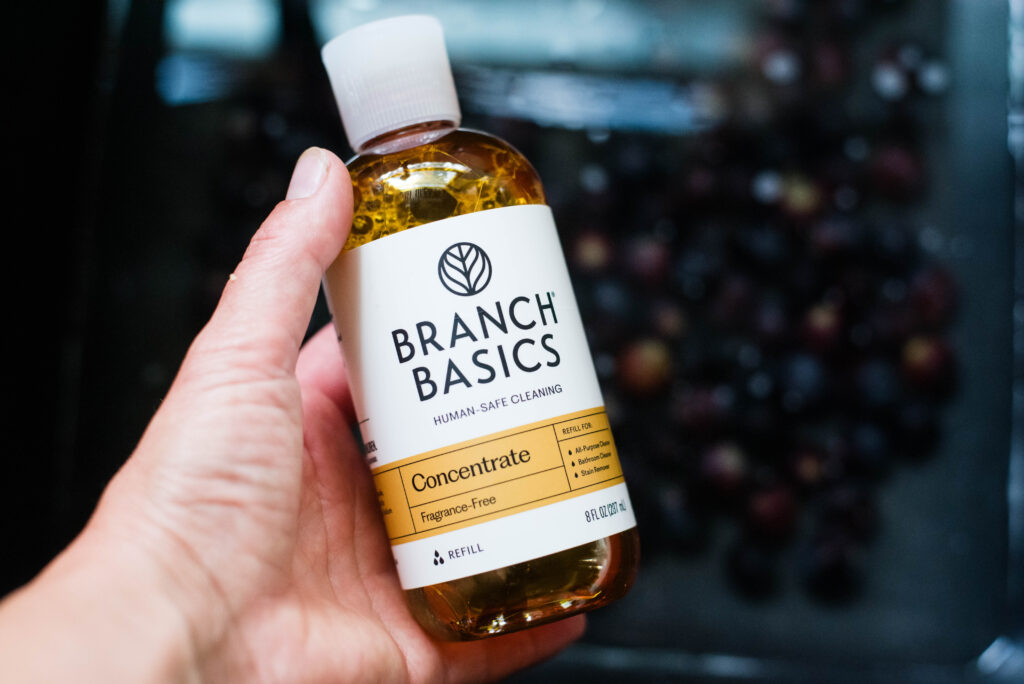
Branch Basics
Branch Basics is female owned and made in the USA. I find their products cost effective and they really work! I can’t say enough good things about them.
Basically, you buy an all-natural concentrate and dilute it with water. It’s unscented, but add essential oils if you’d like the “smell of clean”. I use it to wash produce, as a laundry detergent, a floor cleaner in my Bissell Crosswave Pro, and as an all-purpose spray.
I encourage you to invest in the starter kit they have available. It’s worth the money and the concentrate goes a long way. You can repurchase items on their website or the concentrate is also available in a smaller size at Target.
Water and “Elbow Grease”
This one might be a little cliche, but it’s the most cost effective and it works with a little bit of effort! Here’s how I make this work for the best non-toxic home cleaning.
Somewhere between 2011-2013, I bought a couple of Norwex microfiber cleaning cloths. I still have them and they’re in perfect condition. Any brand of microfiber cleaning cloths will work though.
Again, they were worth the investment because all you do is wet them with water and scrub the surface clean. Dry the surface with another cloth and that’s it. Your surface is squeaky clean! No additional cleaners needed.
Homemade Cleaner Concentrate
The previous two are my general go-to’s for everyday cleaning, but when I deep clean in the spring and fall, I love my homemade all-purpose cleaner. There’s even more surface to scrub with a deep clean so I save money on my Branch Basics by incorporating this homemade cleaner into my routine.
How to Make a Homemade All-Purpose Cleaner
Step-by-Step Instructions
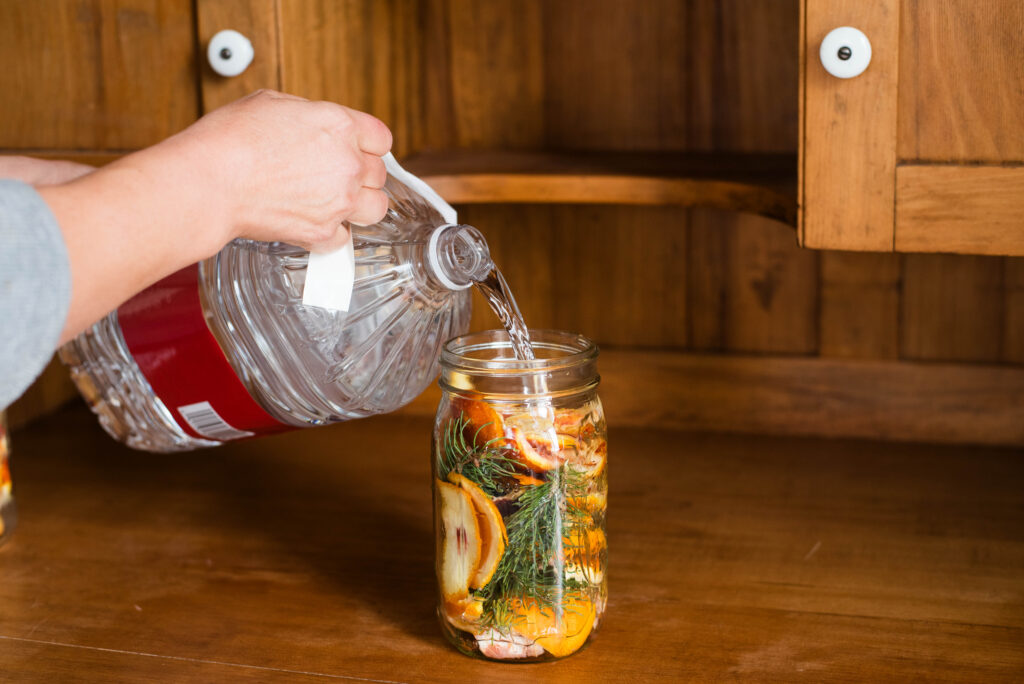
Fill a quart sized Mason jar with citrus peel rinds, pine branches and whole spices like cloves. Use individually or mixed together as shown here.
Pour in distilled white vinegar up to the top so all items are covered.
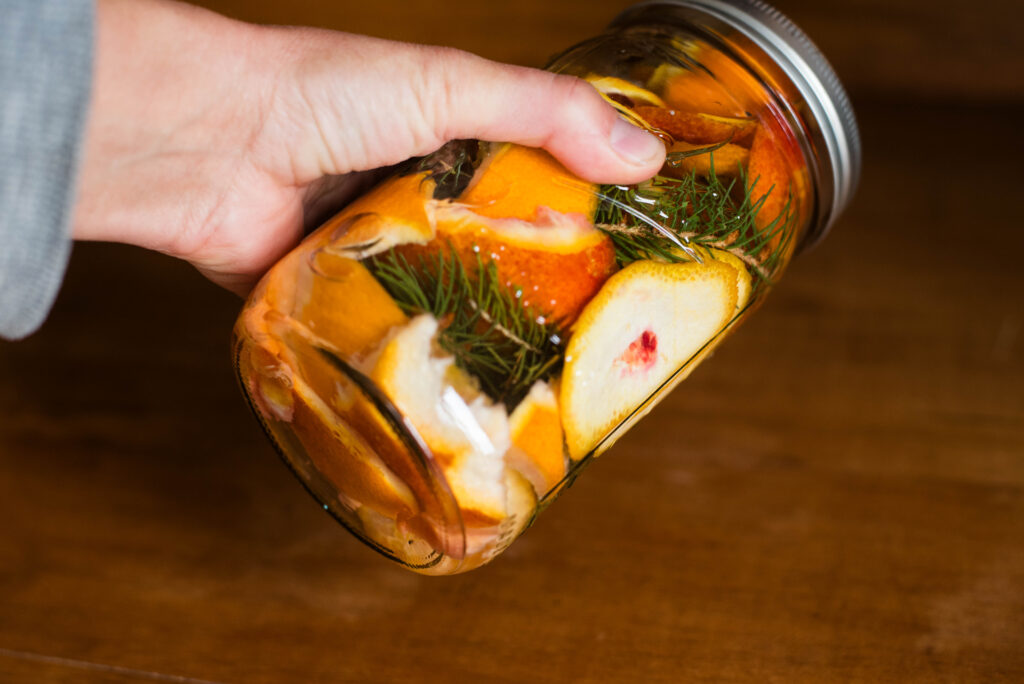
Give the jar a shake to better infuse the essential oils with the vinegar.
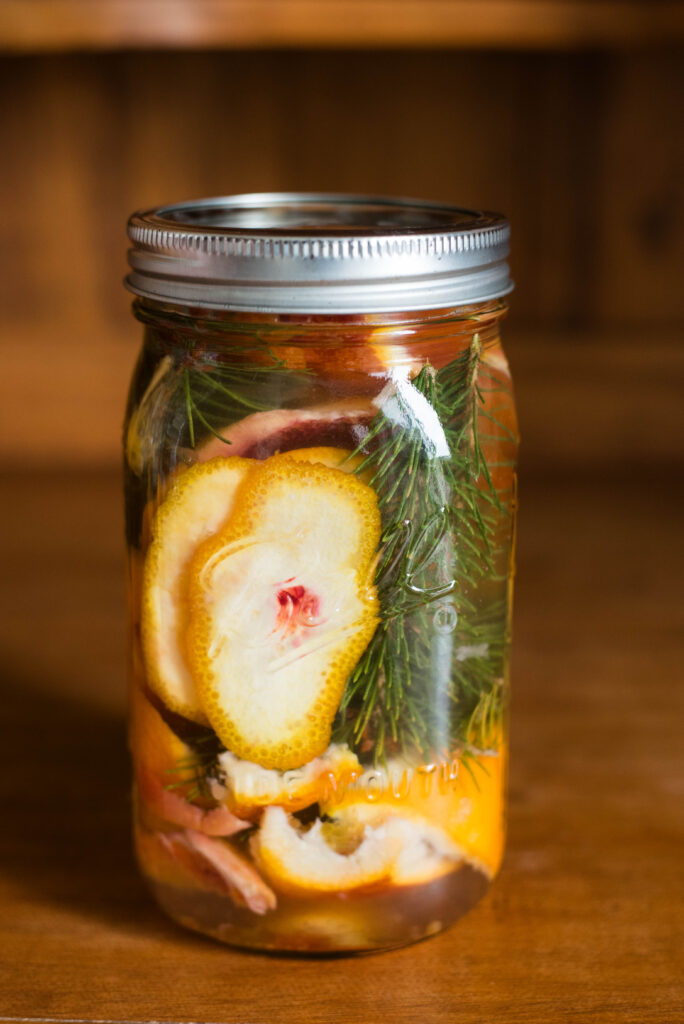
Set aside on the counter or in a cupboard to infuse for a minimum of two weeks. Give the jar a shake every few days.
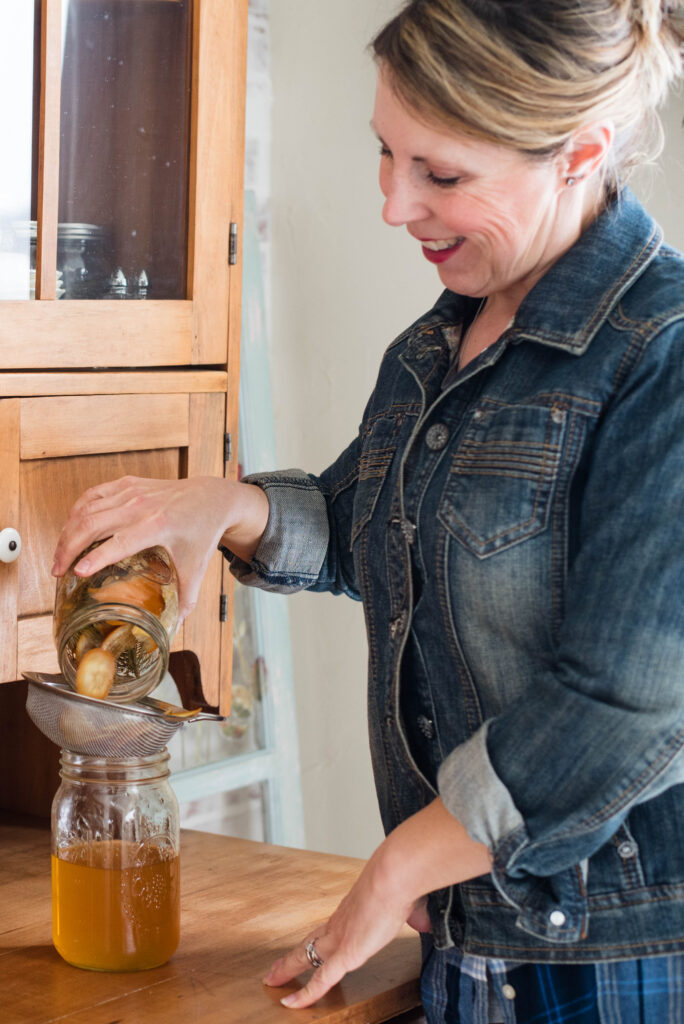
When you’re ready to use the concentrate, strain into another Mason jar. Use the solids in a stovetop simmer pot or discard.
Pour 1/2 cup of the concentrate into a spray bottle and top off with water. Use as an all-purpose cleaner.
Vinegar and Baking Soda
Everyone’s favorite grade school experiment makes an excellent non-toxic home cleaning mixture. It creates a gentle scrubbing action to easily and effectively remove buildup. It’s especially useful in sinks and bathtubs.
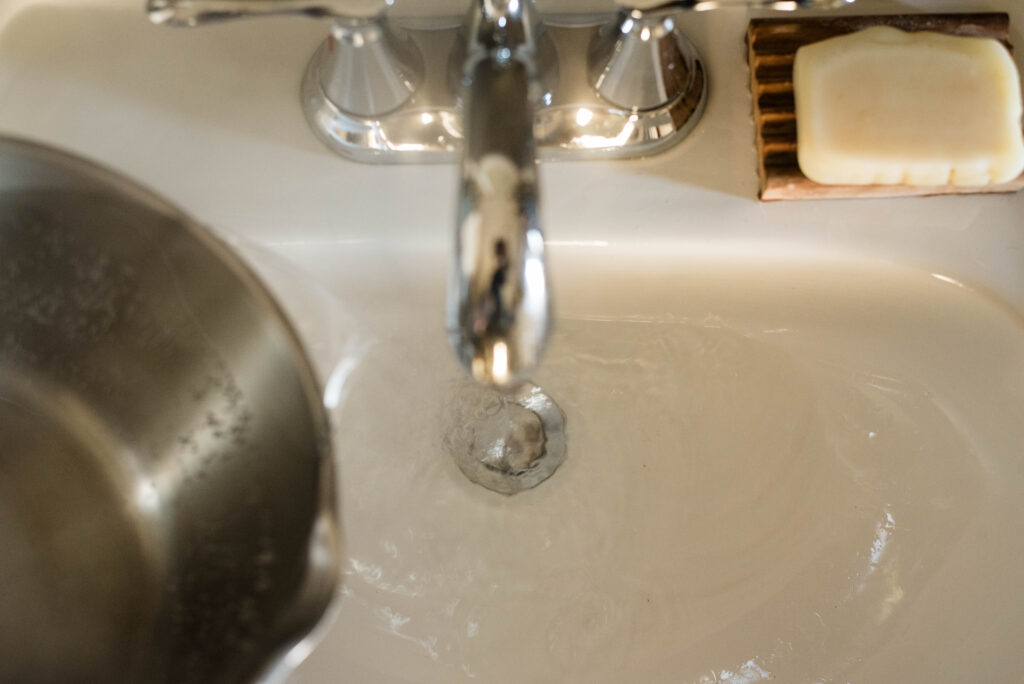
I like to use it as an alternative to Drano when my sinks back up. Sprinkle baking soda over the drain and pour vinegar on top of that. Once the sudsing action stops, follow up with a saucepan of boiling hot water. Repeat process until the drain flows freely.
Laundry Detergent
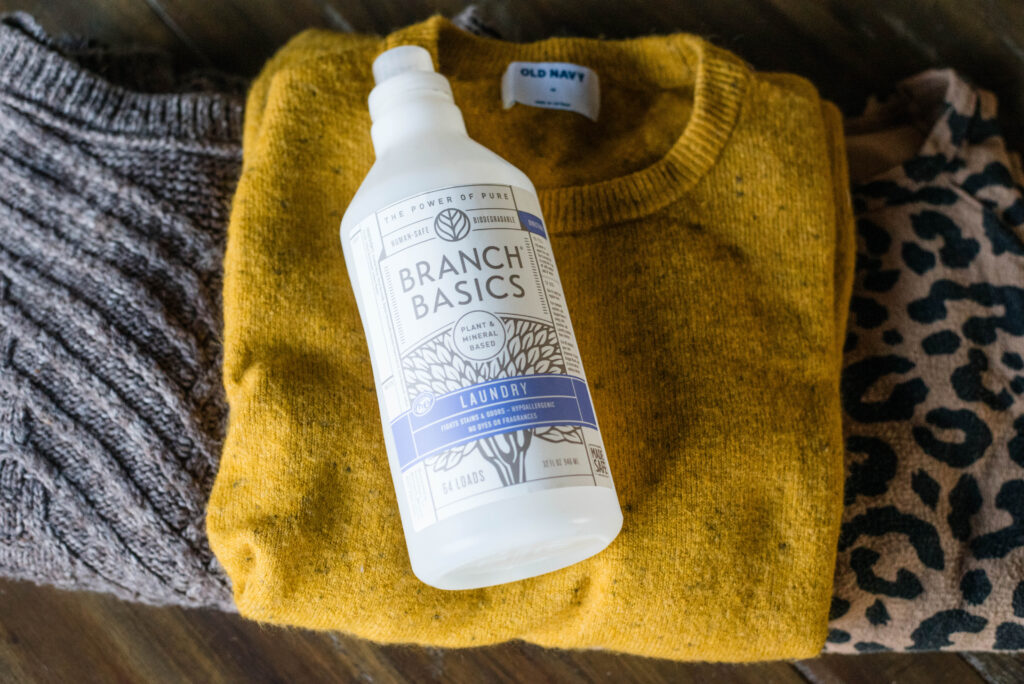
This one is just as important as swapping out dish soap for a healthier alternative. Commercial brands of laundry detergent contain many of the same harmful ingredients and leave residue on your clothing and other items washed.
Since your skin is in constant contact with your clothes and other items like bedding and bath towels, it’s super important to use a non-toxic laundry detergent.
Again, I’ve dabbled with making my own detergent, but I’ve currently found success with the Branch Basics cleaner. I’m a huge advocate for them because one bottle of concentrate effectively replaces many cleaners including laundry detergent.
I also recommend the following brands for safe detergents.
FAQ’s about Non-Toxic Cleaning
Are non-toxic cleaners effective at cleaning?
Yes, if you choose brands that are properly formulated they are effective at every day cleaning tasks like scrubbing sinks and tubs. You may need to scrub a little harder and use repeated applications.
What non-toxic cleaning products aren’t associated with a brand?
Common non-toxic cleaning products that aren’t associated with a brand include distilled white vinegar, baking soda, castile soap and essential oils. Microfiber cloths are also helpful for natural cleaning.
What qualifies a brand to be safe and non-toxic?
Be sure the ingredients are pronounceable and don’t include vague terms like “fragrance” or “dyes”. Be careful of green washed products that claim to be safe, but still contain harmful ingredients. Look for third party labels like EPA Safer Choice or Made Safe.
More Recipes From Becky’s Kitchen
5 Simple Peppermint Herbal Tea Blends to Try This Winter
How to Make a Simple Herbal Salve for Dry Skin
Homemade Apple Cider Vinegar | Healthy, Simple and Frugal
How to Make Homemade Shrub | A Dye-Free Beverage Flavoring
If you have any non-toxic cleaning tips, leave them in the comments below! Tag me with your photos on Instagram @beckybuttlesamerica
Happy Cleaning! –Becky
I’m a wife and homemaker inspiring old-fashioned skills for a homemade, self-sufficient lifestyle, always with a warm beverage in hand. Homemade Recipes. Gardening. Preserving. Healthy Living.
Want More Recipes from Becky?
Sign up to receive exclusive recipes only for subscribers! Plus you’ll get the latest blog posts straight to your inbox!