How to Design A Yearly Garden Plan
Implement a yearly garden plan to ensure the success of food growing goals and avoid costly mistakes. Plan now in the heart of winter to save time and money, increase production and stock your pantry with healthy, homegrown food during the fall harvest.
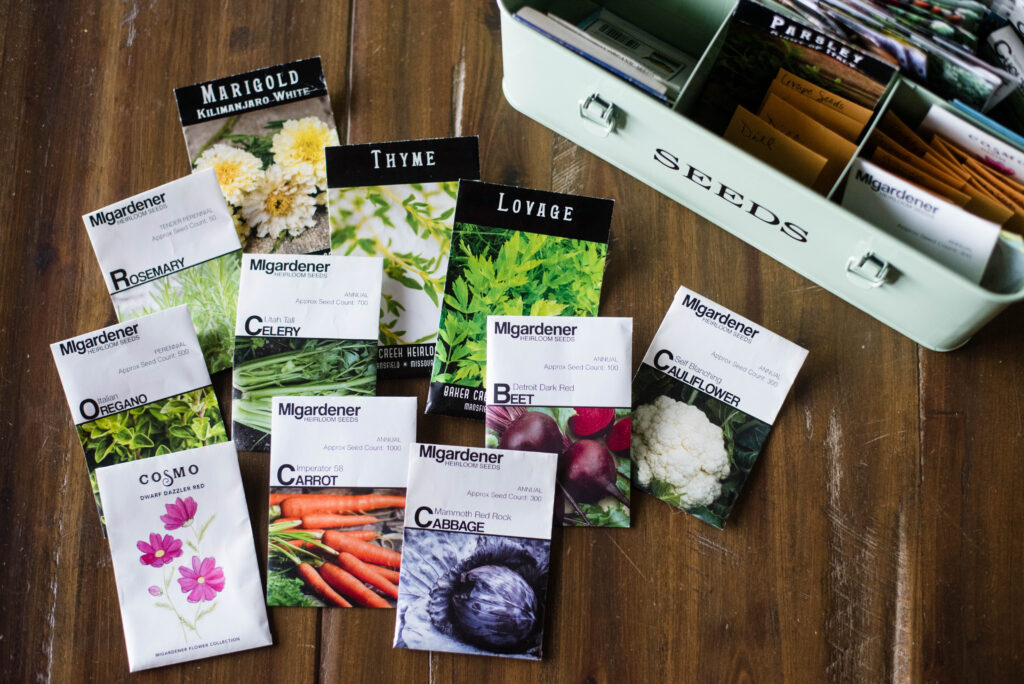
Here in Wisconsin, the holidays are now behind us and we’re all settled in for a long winter’s rest. But life clicks away faster than we think and in a few short weeks some gardener’s will be seed starting.
It’s easy to dig in with our eyes bigger than our stomachs, so to speak, in late February/early March when it comes to our garden dreams. After all, the seeds are tiny and it feels great to get our fingers in soil on a cold winter day.
But what a gardener does (or doesn’t do) now in January, has far reaching consequences in October and November. That’s why a yearly garden plan is essential for a positive gardening experience.
I’ll admit, gardening is a lot like life itself. Despite the best made plans, God is still in control of our lives and so too with gardens.
There will always be some aspect of your garden plan that doesn’t go right, but a valiant effort is worth the time now in January. You’ll thank yourself this fall!
Why You Should Create a Yearly Garden Plan
Creates focus – A yearly garden plan clearly outlines your food growing goals, not those of neighbors, friends or Pinterest photos. Every family’s food needs are different and a plan keeps you on the straight and narrow. It also helps with the next reasons why you need a garden plan.
Saves money – Depending on your gardening goals, growing food can save you money…eventually. There’s the cost of equipment and tools, containers and potting soil (for seed starting or container gardening), building materials for raised beds, plant starts at the nursery, etc. Not to mention all the equipment needed for preserving!
Essentially, a plan focuses on what you’re growing and how, preservation techniques and space and time limitations so that you don’t spend money on things you don’t need.
Appropriately manages your space – Your food growing goals need to properly align with your growing space. You may want a whole slew of pie pumpkins, but if you live in a high-rise apartment, your balcony only grows a few trellised treasures. Source those at a local farmer’s market instead and grow something more manageable. This same advice goes for backyard gardens too.
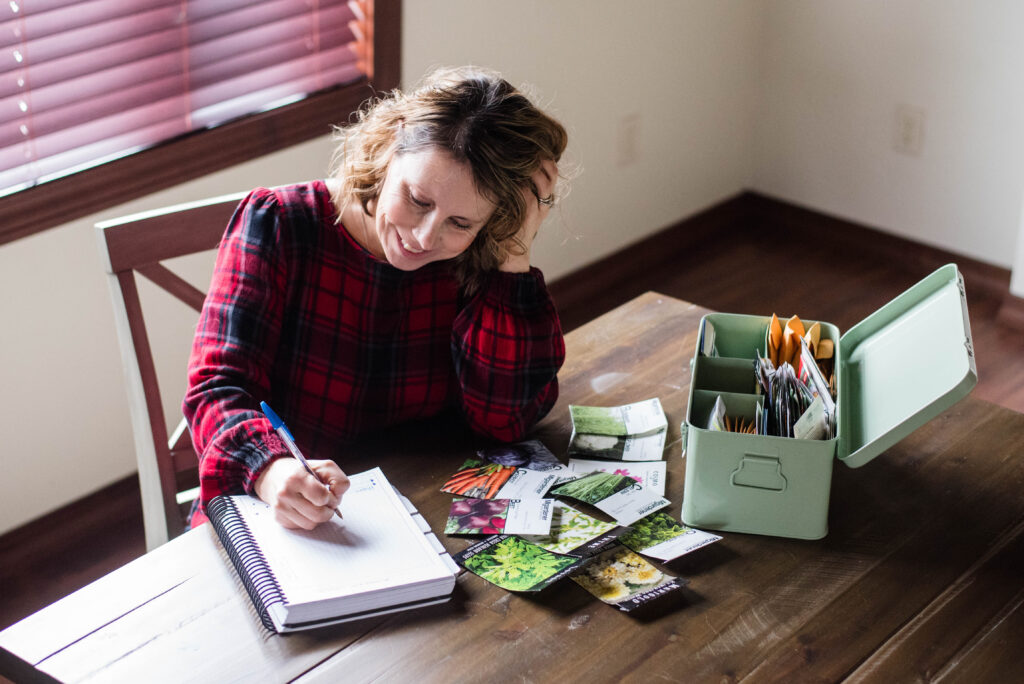
Outlines time management expectations – A yearly garden plan needs to start with food growing goals. But your goals need to parallel your allotted time for gardening. I’ll talk more in-depth about this in a moment, but only grow what you have time for or truly need in your pantry. That way you’ll avoid needless time spent seed starting, pruning suckers off tomatoes, preserving, etc.
Are you having a baby during garden season? Caring for an aging parent? Are you now an empty nester with more time to garden? All things to consider.
Adjusts for changes – Yearly planning allows for life changes. Perhaps your baby now eats solid foods or your 8-year old boy suddenly turned into a high-school football player. You’ll definitely need more food! Maybe now you’re an empty nester without as much need.
If you’ve moved to a bigger or smaller home or developed food sensitivities or allergies to certain foods, consider all this in your yearly garden plan too.
Helpful Suggestions for a Successful Garden Plan
Use the following suggestions as a guide to create your yearly garden plan. I’ve learned through the years and they’ve shaped a more positive gardening experience for me.
- Follow online garden influencers who live in or near your USDA growing zone. Their advice eliminates a lot of un-needed information on your behalf. They’ll have crop variety ideas for your area too.
- Decide if you’re seed starting, direct sowing or a combination of both. That decision is a factor when choosing what crops to grow.
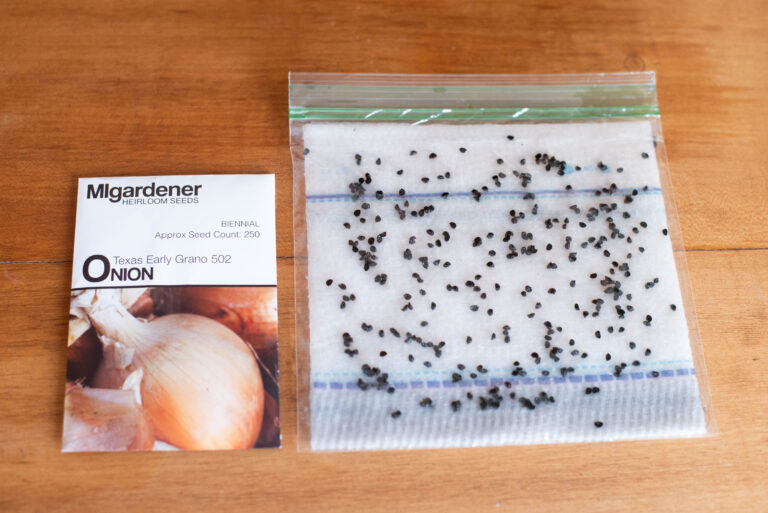
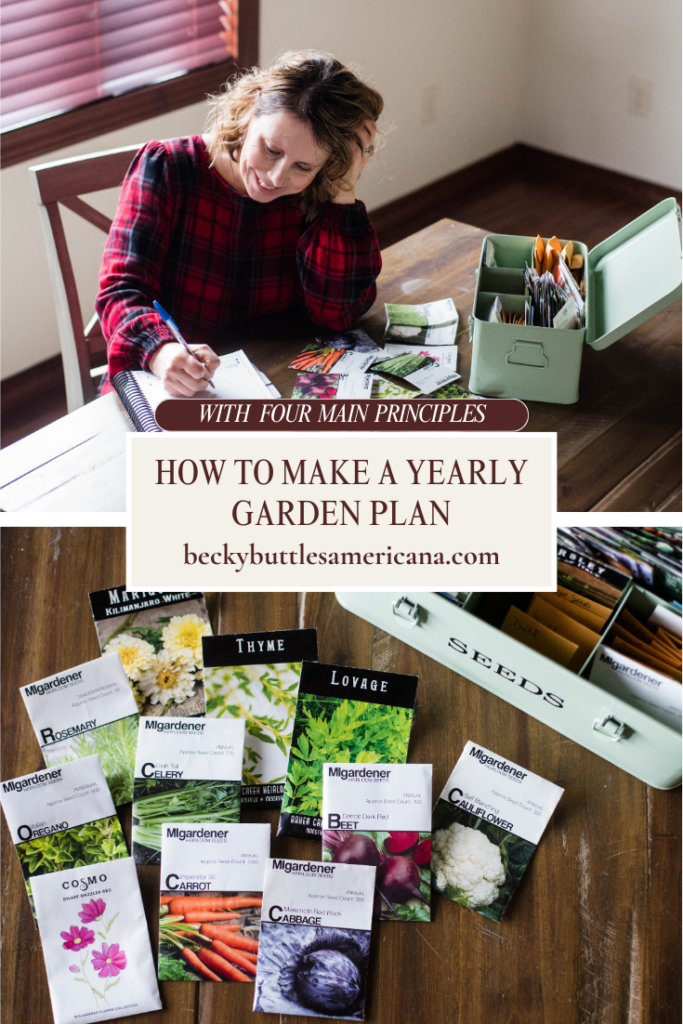
- Organize and inventory the seeds you have before drawing out your garden layout. That saves you money so you’re not ordering seeds you don’t need plus you’ll know what you have on hand. Inventory tools and equipment too. Include them in the budget if needed.
- Look through seed catalogs or their websites for ideas on varieties and new crops to grow for nutritional variety in your diet. The packets oftentimes list soil suggestions too. Check out MI Gardener, Baker Creek, Johnny’s or Seed Saver’s for high-quality seeds. Order seeds early to avoid sold out varieties.
- Start a gardening journal. This is critical for successful gardening! I promise you won’t remember year to year where you grew what, when you planted or harvested and how much of each crop. Include type of seed, variety, where you bought it from and other important details (when you planted, when it germinated, what soil amendments or pest control was used, etc.).
How to Make a Yearly Garden Plan
A garden plan now in January leaves behind the frustration and fills your pantry with healthy homegrown food in the fall. The following four principles guide your plan to ensure a successful growing experience.
Define Your Gardening Goals
This is the number one most important step when designing a garden plan. Why are you growing a garden? Your goals delineate the other three principles we’ll discuss. Here a few suggestions to help you out.
- Beauty – Perhaps a fresh cut flower garden is what your soul needs in the summer.
- Gifting or Selling – Maybe you want to save money on gifts and grow yourself food at the same time. Herbs make wonderful tea blends or soothing salves and lip balms. People also love a jar of homemade jam too!
- Herbs – They create a wonderful homegrown medicinal cabinet or culinary spice rack that turn ordinary homemade meals into five-star gourmet dishes.
- Save money – Your pocketbook thanks you and so does your health and vitality. A homemade, homegrown lifestyle reduces your long-term health care expenses. You don’t need to succumb to disease!
- Health – Store bought produce is expensive and laced with pesticides and toxic coatings, even that labeled “organic”. A garden provides the ability to eat organically without the cost and ups the nutritional density of your food.
- Educational – Maybe you want to provide an educational experience for your kids or grandkids or community members.
- Hobby – The slow-living experience of growing food, enjoying the seasons and being one with God’s earth. It can’t get much better than that!
Food Needs
- Fresh, seasonal eating
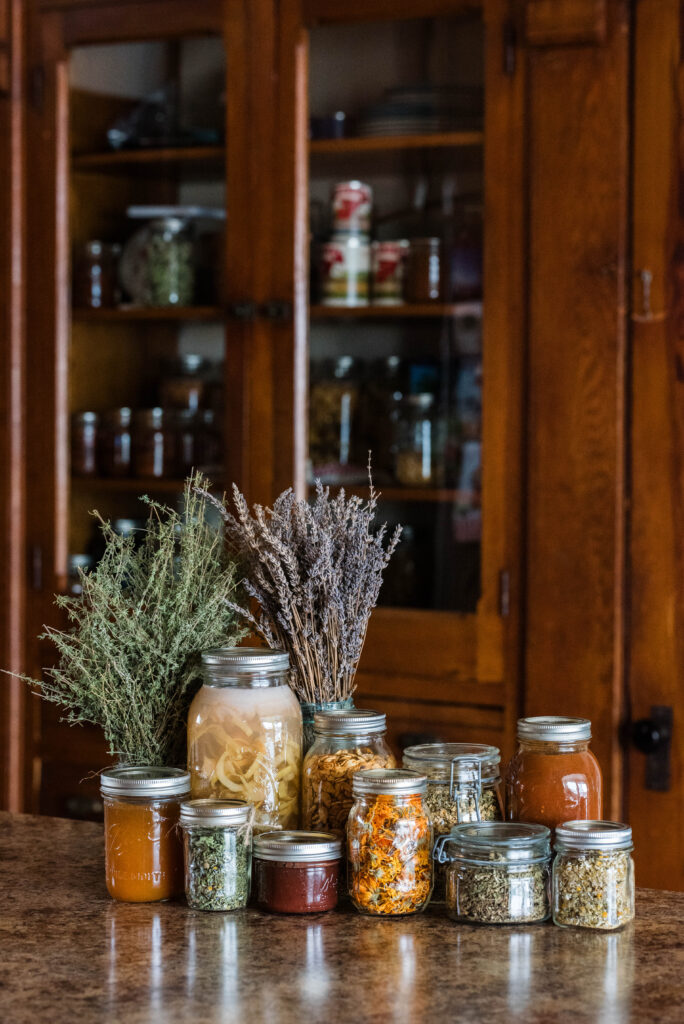
- Food preservation – Canning, freezing, dehydrating, pickling and fermenting are all preservation techniques. Consider what you already have in your pantry and if you need to grow more.
No matter what your food needs are, consider crops and varieties with deep colors for good nutrition, root crops that store well without the extra work of preserving and crops like sweet potatoes that provide calorie density. Lettuce provides vitamins and minerals, but you’ll need something heavier for a hearty meal.
Perhaps you only have one of these goals. For many, including myself, I have a combination of all of them.
Ability to Implement Goals
Once you’ve defined your garden goals, next you need the ability to implement them. You need to consider the ability to reach these goals to avoid disappointment and feeling like a failure.
Ability means space, budget and time. These are the next three principles in a yearly garden plan.
Don’t be discouraged though, if you’re limited on these principles. You never know when your circumstances will change. My gardening experience has slowly evolved over time!
Space | Growing, Preserving & Storing
Based on your garden goals, you’ll need the space to achieve them. Space refers to growing, preserving and storing food. This is the second most important principle in a yearly garden plan. You might have the budget and time, but without proper space for your goals and expectations, you’ll end up disappointed.
Growing Space
There are many things to consider when it comes to growing space and your food plan. A little bit of personality comes in to play too.
First, you need to know your USDA (United States Department of Agriculture) growing zone. If you live in another country, look up the growing zone from your Department of Agriculture. I’m located in Zone 5a.
Your growing zone determines plant hardiness, approximate first and last frost dates and length of growing season. If you have a short growing season, say in Alaska or Canada, you might want a lot of space to grow a large amount of food in a short period of time. Or adjust your expectations.
Succession planting is another thing to consider with your growing zone. If you have a shorter growing season, this might not be possible. Your growing zone also determines whether you plant cold hardy or hot weather varieties of crops. Don’t expect to plant oranges or avocados if you live in Wisconsin.
Second, consider where in your space gets the most sunlight. Most crops need eight or more hours of sun to properly grow. If your space is shady, choose shade varieties of crops.
Third, consider the actual size of your growing space. This also determines what crops you grow too, so be aware of that when purchasing seeds and starts.
- If you have a large growing space, how can you design a layout and succession planting plan to grow the most food? Do you want to plant in-ground or in raised beds?
- In a small space like a high-rise balcony, consider trellis’ for strawberries and pole beans, tomatoes and cucumbers. Grow potatoes in a grow bag. Use these techniques even if you live in the country with a big space, but don’t want to plant an in-ground garden. Grow on a patio or deck instead.
- If you’re looking for more growing space, consider another patch of lawn. Do you really need to keep mowing the grass there or could that space be put to better use? Maybe you like the idea, but if you like a nice manicured yard, maybe your personality isn’t okay tilling up another garden patch.
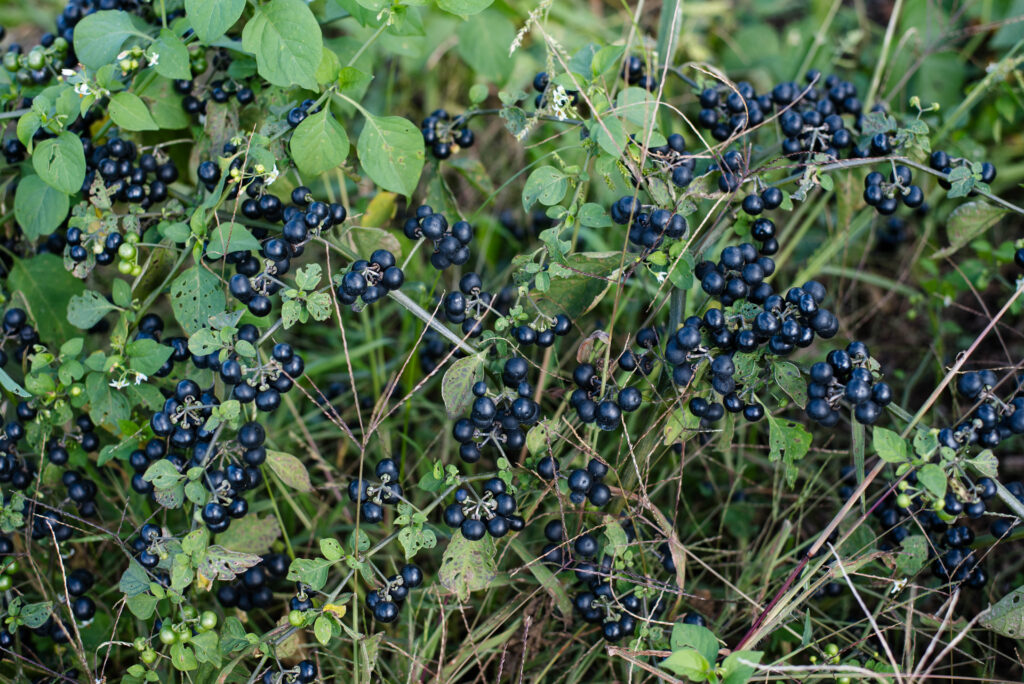
Next, consider the final size of the plants you’re growing. Remember, most plants sprawl quite a bit like pumpkins, tomatoes, beans, etc.
Also on that note, think about how much space you need to weed (you’ll need enough room for a tiller), prune and harvest the produce. You need space to walk around and the plants need adequate room to breathe and receive sunshine. If they don’t, they’re more susceptible to disease and dying.
Crop rotation is another aspect to consider. That’s important for pest and disease control and soil nutrients. Do you have enough space to rotate crops? Or are you limited by perennials like strawberries or asparagus? Read more about crop rotation from the Farmer’s Almanac.
Companion planting is another concept to consider when drawing out plans and ordering seeds. Certain plants benefit others when intercropped. Pest control is one of those benefits. Read more about companion planting here.
Preserving
This isn’t the most obvious point to consider, but do you have enough space in your kitchen to preserve food? Maybe, if you’re only making a small batch of strawberry jam.
But if your goal is large scale food production, you’ll need counter space for large baskets of apples and tomatoes, etc. Cutting for canning and freezing is also a messy job. Can your kitchen handle the mess or do you have enough space outdoors on a deck or balcony? I’ve learned over the years why our ancestors had outdoor kitchens!
Preserving Recipes from Becky’s Kitchen
Simple and Frugal No Sugar Applesauce Recipe
Homemade Apple Cider Vinegar | Healthy, Simple and Frugal
How To Make Low-Sugar Strawberry Jam
Storing
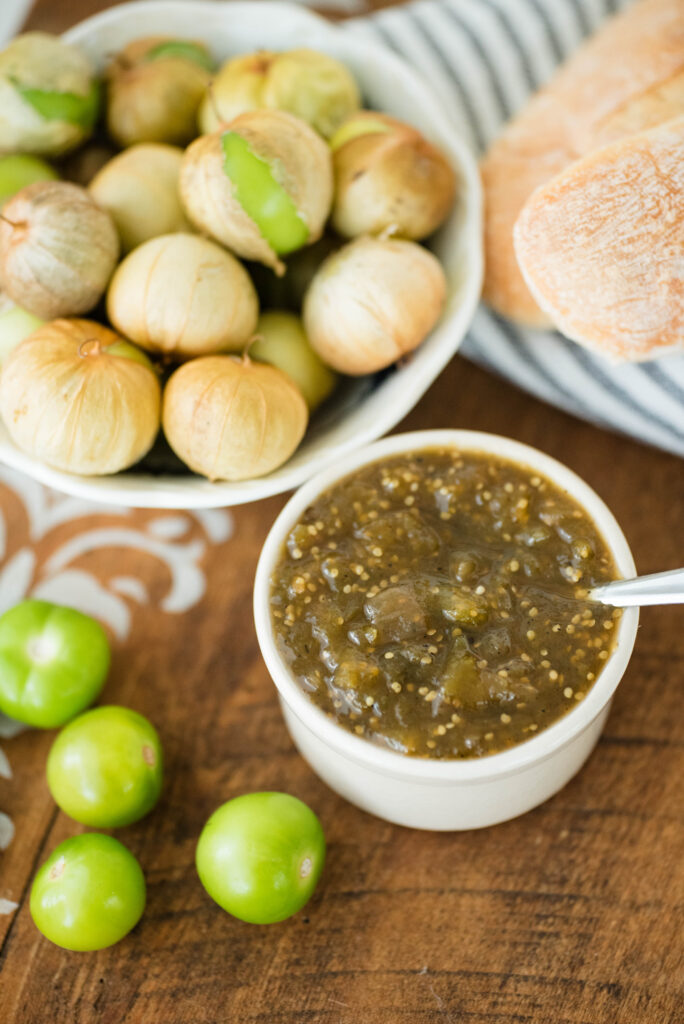
Storing walks hand-in-hand with preserving the harvest. No matter your preferred preserving technique, it all needs to be stored somewhere in your home.
Do you have enough freezer space? Enough refrigerator space for fermented veggies and fruits? How about shelf space for canned goods? A closet or under a bed works well for small spaces like apartments. You’ll also need space to store empty jars, lids and rings as well as the canners.
How about appropriate space for pumpkins, winter squash and potatoes? They all need a cool, dark place like a root cellar. Otherwise, they need a refrigerator.
Now you understand the importance of proper space when designing a garden plan. Plan accordingly to save time, money and effort.
Budget
Gardening is often associated with growing free food. Eventually that can be the case, but not without some monetary input first. Consider the following.
- Equipment and tools – You need a heavy duty tiller for in-ground gardens in the spring and fall. Either purchase or rent one from a local hardware store. If you’re lucky, borrow one from a friend or neighbor!
You’ll also want a shovel, a spade and a trowel for planting and weeding. Watering requires hoses and sprinklers. Pruning raspberry and elderberry bushes requires shears. Some crops require netting for protection against birds and pest infestations.
- Soil management is another expense. Again, hoses and sprinklers manage watering needs, nutritional and soil ph requirements of crops need bags of amendments like lime or calcium and overall soil health requires compost and mulch.
Compost and mulch is often made for free in the backyard or sourced for free, but in some circumstances it might need to be purchased. Wood chips are considered mulch and if you have a backyard raised bed garden in the suburbs, you’ll want to put that underneath the beds for weed control.
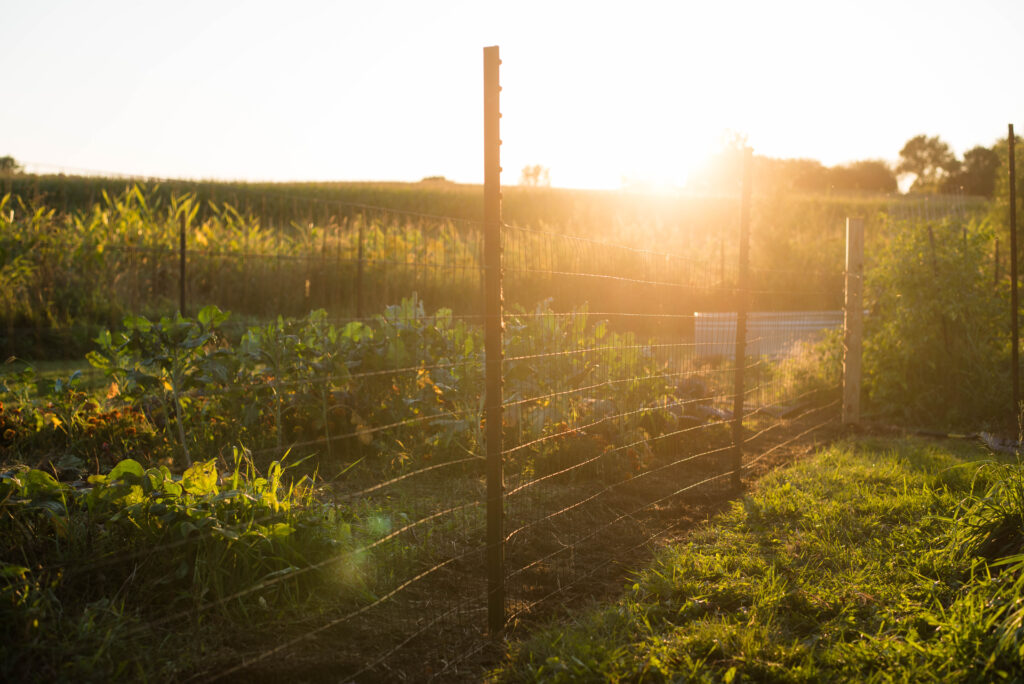
- Critter security and pest control – A fence is necessary to keep rabbits, coons and deer away from crops. Those supplies aren’t cheap. While we did source some of our fence materials for free, we still spent a lot of money.
As for pests, I highly encourage natural and organic means, but that still requires financial input whether it’s a big container of cayenne pepper or Bt spray, neem oil or diatomaceous earth.
- Seed starting verses plant starts from greenhouse – Depending on how large your garden is, each option requires financial input. Plant starts from a nursery are easier than starting your own seeds, but the cost quickly adds up if you have a large garden.
On the other hand, seed starting also has its pros and cons. There’s the initial investment of containers and equipment like grow lights, shelving and heat pads. Those are one time costs, but you’ll need to purchase seed starting soil every year and pay for the electricity to run the lights and heat pads or the extra heat to warm the room. Seeds are cheaper to buy than starts so you might think the start up costs are worth it in the long run.
- Unless you strictly grow for hobby and fresh eating, the harvest needs preserving. I use a combination of all preserving techniques. Therefore, I need both a pressure and water bath canner, jars, lids and rings, salt and sugar or honey for fermenting and vinegar and herbs for pickling. Some items are a one time investment while others need purchasing every year.
Time
Growing food is one of the most essential old-fashioned skills to learn. It’s satisfying to know your pantry and freezer are well-stocked with non-toxic homegrown food that you don’t have to buy.
That’s why I grow a garden and encourage everyone to do so as well. But it’s not without a price both literally and figuratively speaking.
Growing your own food is a huge time investment. The benefits are well worth it, but it’s time consuming. Here’s why.
- Weeding – Weeds steal nutrition and production from your crops. In order to produce an efficient harvest, it’s important to keep up with the weeding. And no matter what tools you purchase to make the job easier, it’s still a task that requires time. If you don’t, the money spent on seeds or starts and time invested in planting is wasted.
- Watering – Unless you consistently receive adequate rain, you’ll need to water your garden. A sprinkler makes this job fairly easy. All you need to do is remember to turn it on and move it if you have a large garden to water.
Sounds easy, but if you have plants in containers outside the garden area, those require watering by hand. Whether you use a hose or fill a watering can, either way it’s slower than an overhead sprinkler. For me, I enjoy the slowness of being with Mother Nature soaking in the summer warmth. It is a time commitment though.
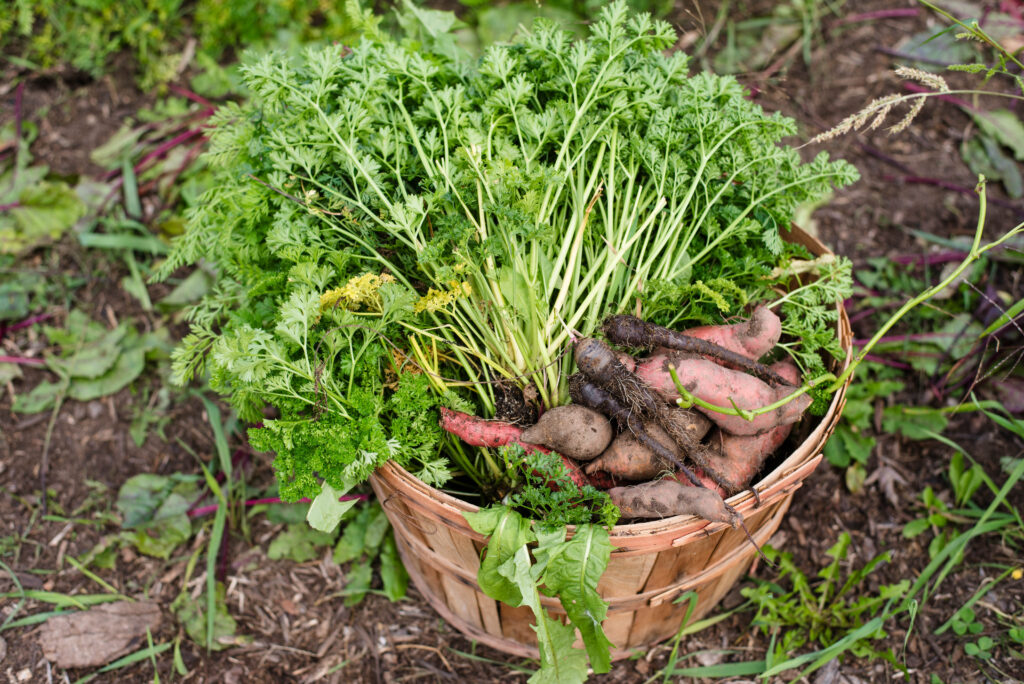
- Harvesting – Eventually the crops you’ve carefully tended all summer need to be picked off the vine. Some crops are easier to pick than others like tomatoes verses strawberries. The tricky thing about a lot of these crops is that they need harvesting all at the same time. That means they all need preserving at the same time too.
- Preserving – Just like harvesting, some crops are easier to preserve than others. Unless you want them fresh, tomatoes, grapes, strawberries, raspberries, etc. freeze well. That way you can make tomato sauce and jam in the winter. But sweet corn, pears and apples need immediate attention and some folks do all three at the same time!
Bottom line, growing your own food and preserving it requires a lot of time. If your schedule, especially during harvest season with kids’ fall sports, is jam packed, adjust the types and quantities of crops you grow. Maybe fresh summer eating is your best choice in that scenario.
I hope this article guides your yearly garden plan and creates a successful growing season without the overwhelm. No matter your goals or circumstances, growing your own food is possible!
If you have any questions or comments, leave them down in the comments below! Tag me with your photos on Instagram @beckybuttlesamericana
“For the LORD your God is bringing you into a good land, a land of brooks of water, of fountains and springs, flowing out in the valleys and hills, A land of wheat and barley, of vines and fig trees and pomegranates, a land of olive trees and honey, a land in which you will eat bread without scarcity, in which you will lack nothing, a land whose stones are iron, and out of whose hills you can dig copper. And you shall eat and be full, and you shall bless the LORD your God for the good land he has given you.” Deuteronomy 8:7-8
May your garden planning be peaceful and blessed! –Becky
I’m a wife and homemaker inspiring old-fashioned skills for a homemade, self-sufficient lifestyle, always with a warm beverage in hand. Homemade Recipes. Gardening. Preserving. Healthy Living.
Want More Recipes from Becky?
Sign up to receive exclusive recipes only for subscribers! Plus you’ll get the latest blog posts straight to your inbox!