Easy Fermented Strawberries with Honey | 3 Methods to Preserve
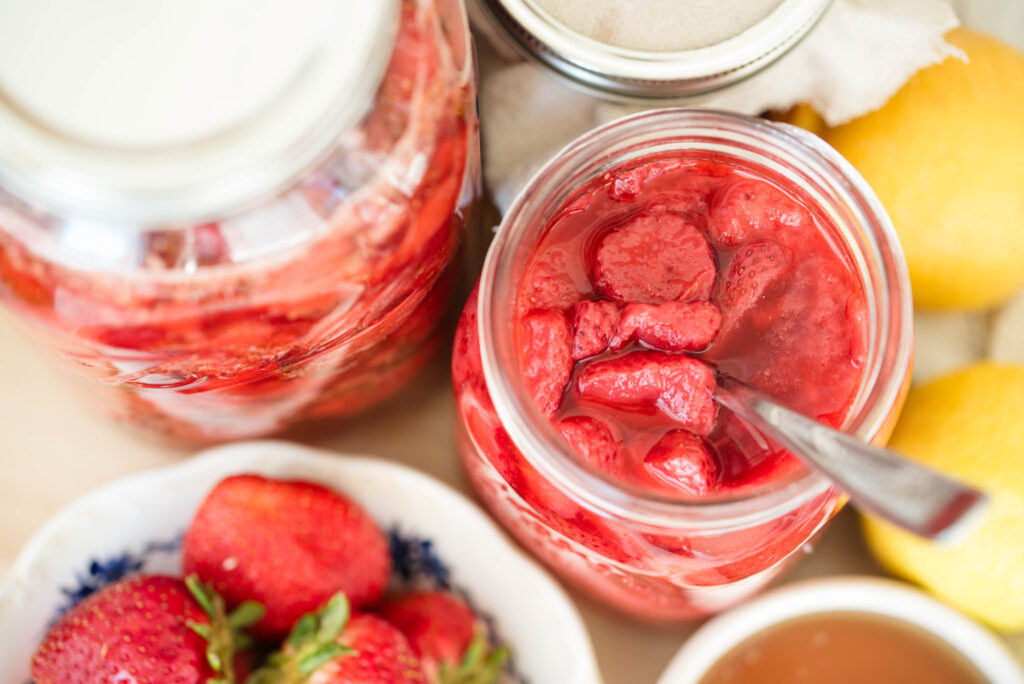
Fermented strawberries with honey are a delicious way to enjoy their fresh summer taste long after the season passes. In the heat of summer, this method preserves strawberries quick and easy without cooking over a hot stovetop. Once you try it, you’ll come back to this delicious preservation method every summer!
Anyone else love that popular country song “Strawberry Wine” by Deanna Carter? No matter what time of the year I hear it on the radio, I’m instantly taken to a warm June day filled with bright red juicy strawberries that taste like sunshine. I dream of those days all year long.
Strawberries are by far my favorite fruit, which is why I decided to grow them in my garden a couple years ago. They certainly aren’t the easiest perennial produce to grow, but for me they’re worth the effort. I also wish I could make their fresh summer taste last all year long.
Thanks to the ancient preservation method of fermentation, my strawberry dreams are a true possibility! And if you love them as much as I do, then you’ll want to learn how to make their flavor last at least a few months or more beyond the picking season.
Why You’ll Love This Recipe
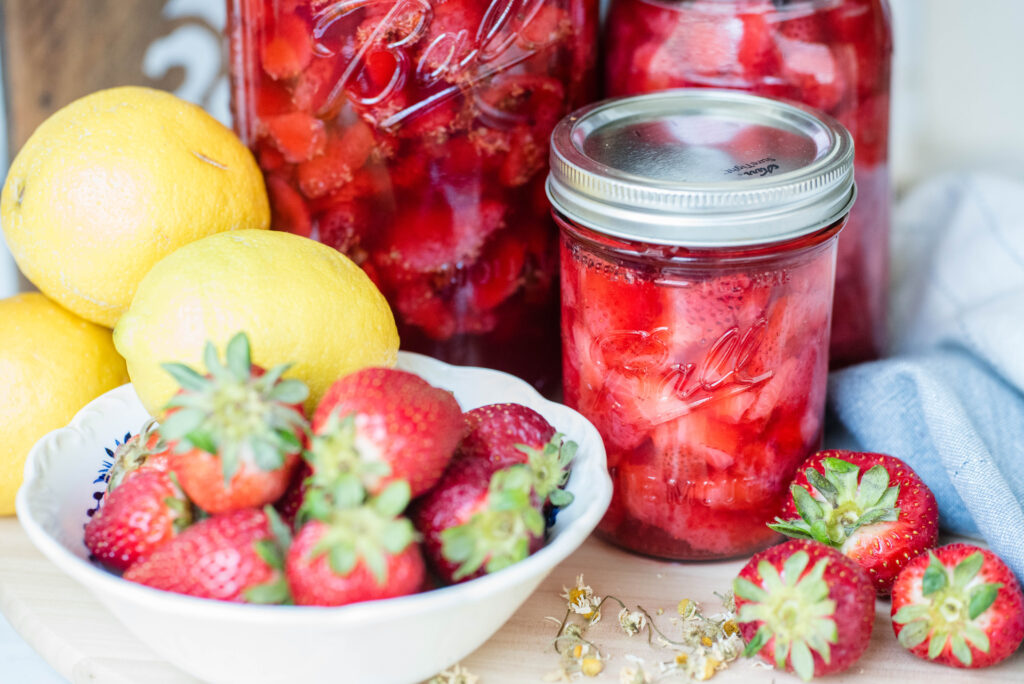
Quick and easy – Fermenting stretches the life of fresh strawberries and it’s super fast and easy to do. This is helpful if you can’t make strawberry jam right away when you pick them or simply want fresh strawberries to eat all summer long.
Probiotic-rich and gut-friendly – Fermented foods are alive with healthy bacteria and probiotics, which are necessary for a healthy digestive system. In a fast-paced world of overly processed foods with unhealthy ingredients and chemicals, foods like fermented strawberries with honey introduce cultures to repopulate the gut with good bacteria and improve your overall health.
Lowers sugar content – Properly fermenting fruit lowers its sugar content while the lactic acid bacteria leaves behind the full flavor. For those who want to better control their blood sugar including diabetics, fermenting strawberries is the way to go.
Versatile – Fermented strawberries with honey can simply be just that, or you can stretch your culinary imagination. My recipe down below uses mint and chamomile, but fresh basil or maybe even chili flakes sounds amazing too. Depending on how you want to use your final ferment, the possibilities are endless!
The Quick Basics of Fermenting
I’ve preserved my garden harvests through fermenting for several years now. That certainly doesn’t make me an expert, but Luke and I have eaten lots of high-quality meals over those years.
Over the winter, I introduced readers to the world of fermentation through my no-discard sourdough starter method. The world of fermentation is quite fascinating and creative, and now I would like to invite readers to learn food preservation with fruits and vegetables.
Preserving fruits and vegetables has lots of similarities, yet the sugar content of each makes a striking difference. Fermenting is both an art and scientific process, yet simple at its core. I will eventually delve deeper into the topic, but here I will keep the explanation simple and focused on fermented strawberries with honey.
What is Fermentation?
Fermentation is a process of preserving raw food in harmony with naturally occurring microbes present on the surface and in the environment. Salt and sugar along with wild bacteria and yeast are the catalysts for the process. Lactic acid bacteria is the main strain that outcompetes the bacteria that spoils food, allowing for safe preservation.
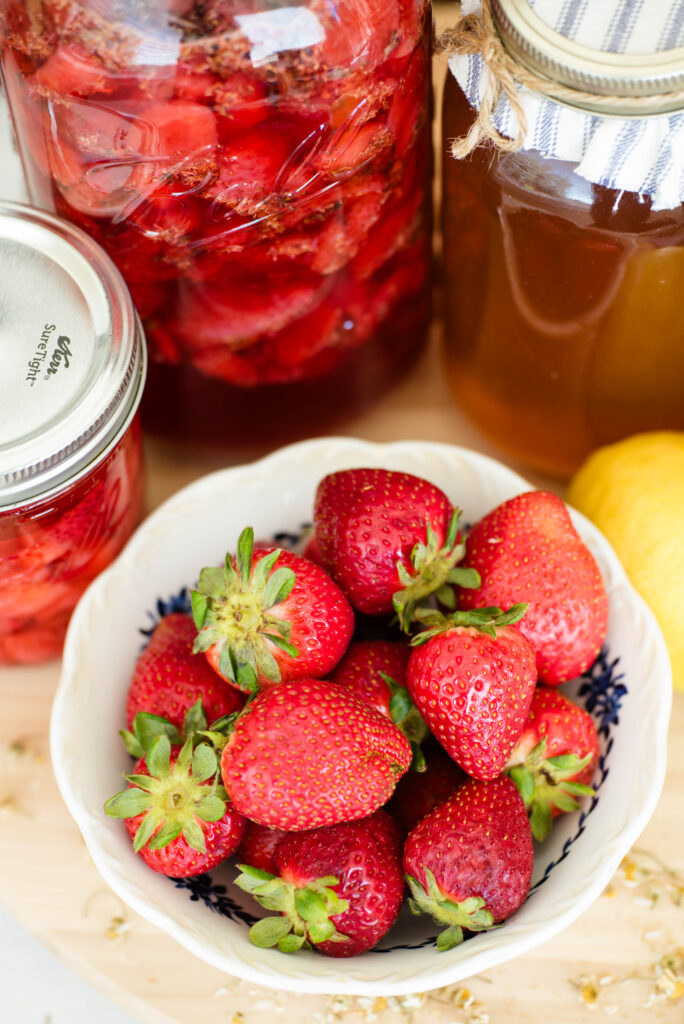
Bacterial vs. Yeast Ferments
Distinguishing between the two is a very science-based explanation, therefore, I’ll keep it super simple.
Vegetables like cabbage, for example, ferment with mostly bacteria. Fruit ferments mostly with yeast that naturally occurs on the skin. Some cultures like kombucha and water kefir ferment with a combination of both. Sourdough is also a combination of both bacteria and yeast.
Knowing this distinction is super important when fermenting strawberries because they will quickly turn from a delightful fizzy familiar sunshine flavor into alcohol or eventually vinegar. You may want all as a final product, so it’s important to know how to get there. The next section offers specific tips for fermenting jars of strawberries with their fresh summer taste.
Learn how to make your own raw apple cider vinegar with my easy recipe.
Helpful Hints for Fermented Strawberries with Honey
- While frozen strawberries can be used, you’ll have the best flavor with fresh berries. Choose ones without blemishes and soft spots since they are already exposed to microbes that spoil. Also, organic strawberries are the way to go since they contain no pesticides that harm human health or kill the naturally occurring yeast and bacteria on their skin needed for fermenting. Conventionally grown strawberries are always on EWG’s Dirty Dozen list.
- Soft skinned fruit like strawberries ferment into alcohol very quickly given the right temperature. While they need to start their fermentation process at room temperature (60-75 degrees Fahrenheit), taste after 12 hours to gauge where the flavor is at. Ferment a few hours longer if you want a slightly tangier flavor then move to the refrigerator to slow the fermentation process.
- To preserve the flavor even longer without the berries turning to alcohol, add a little whey from a dairy ferment in with the honey. It balances out the yeast.
- Prevent contamination by thoroughly cleaning and sterilizing all equipment including jars before using.
- Do not place strawberries near any other fermented culture like saurkraut, kombucha, sourdough, beer, etc. The microbes from each could cross-contaminate and create an imbalance that could alter the final product.
How to Make Fermented Strawberries with Honey in 3 Easy Methods
What You’ll Need
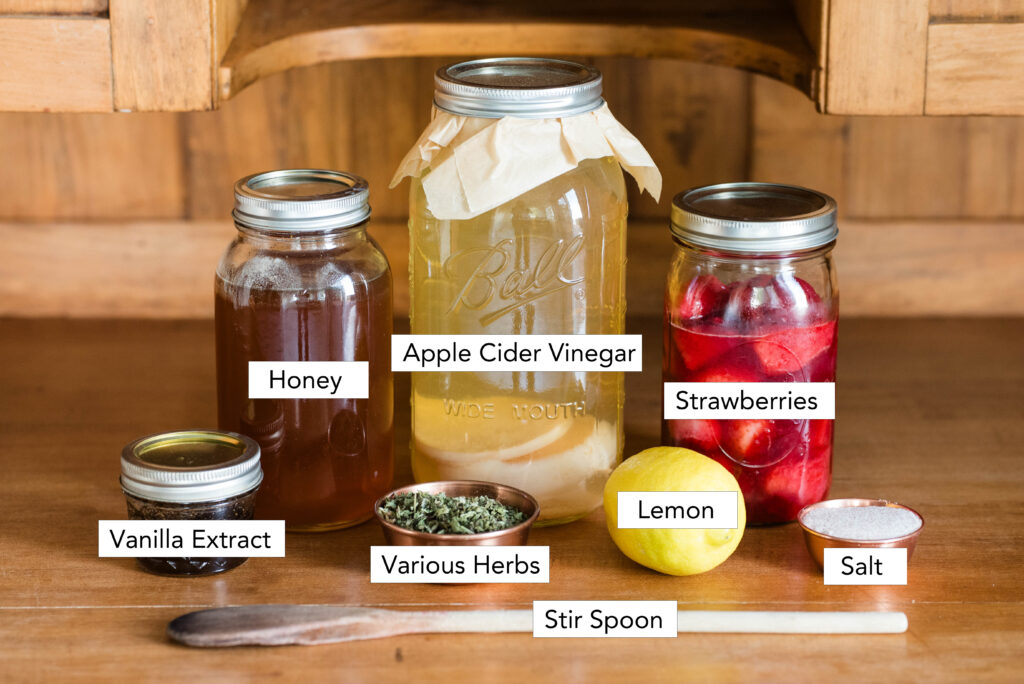
Ingredients
- Fresh organic or locally grown strawberries – These are best since there is no or low pesticides used to grow them. They are healthier for consumption and have more natural yeast and bacteria on the skin for a stronger ferment than conventionally grown.
- Honey – Locally produced, raw honey is the best. It’s also healthier for eating and has beneficial bacteria and nutrients for fermenting.
- Salt – I always recommend a high-quality salt like Redmond Real Salt for the best nutrients.
- Whey or raw apple cider vinegar – Optional, but aids in the fermentation process.
- Lemon juice/peel, mint, lemon balm, vanilla bean or paste or other flavor combinations of herbs (all optional).
Equipment
- Jars and lids
- Funnel, mixing bowl and stir spoon
- Kraut pounder (optional)
- Fermentation weights or quarter pint jars
Step-by-Step Instructions
First Method | Strawberries with Honey
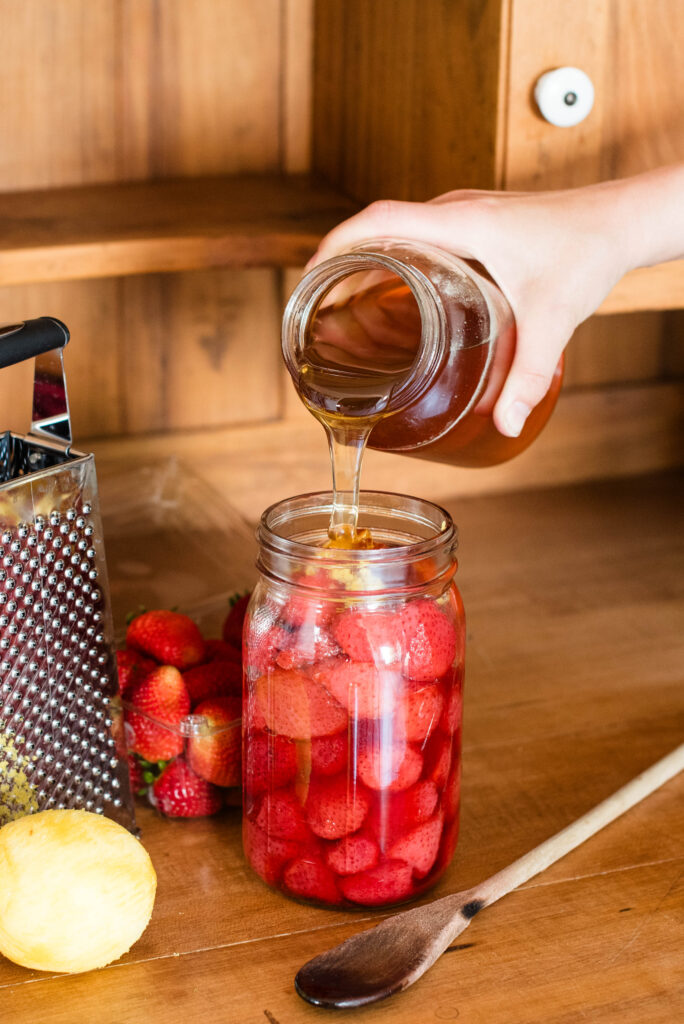
Place whole fresh or frozen strawberries and lemon peel (optional) in a clean sterilized quart size jar.
Pour in honey until all the berries are completely covered. Add whey if desired for longer term storage (optional).
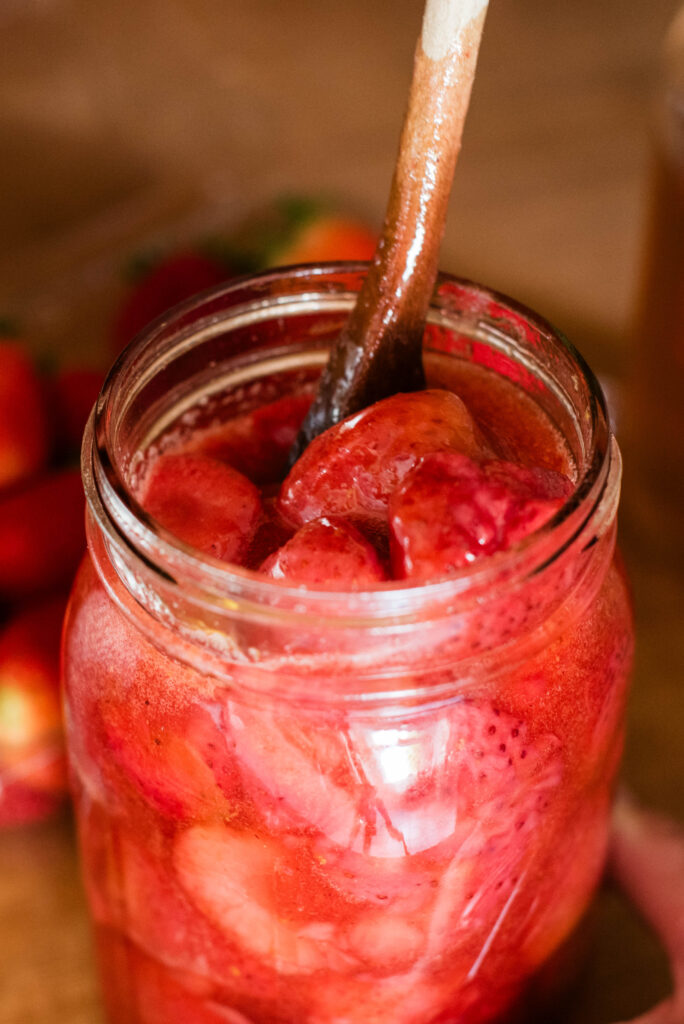
Stir well to incorporate the honey with the berries. You will use less honey with frozen strawberries since more juices are released.
Fully submerge the berries under the liquid with a fermentation weight. Place on a countertop out of direct sunlight.
Second Method | Strawberries with Salt & Honey
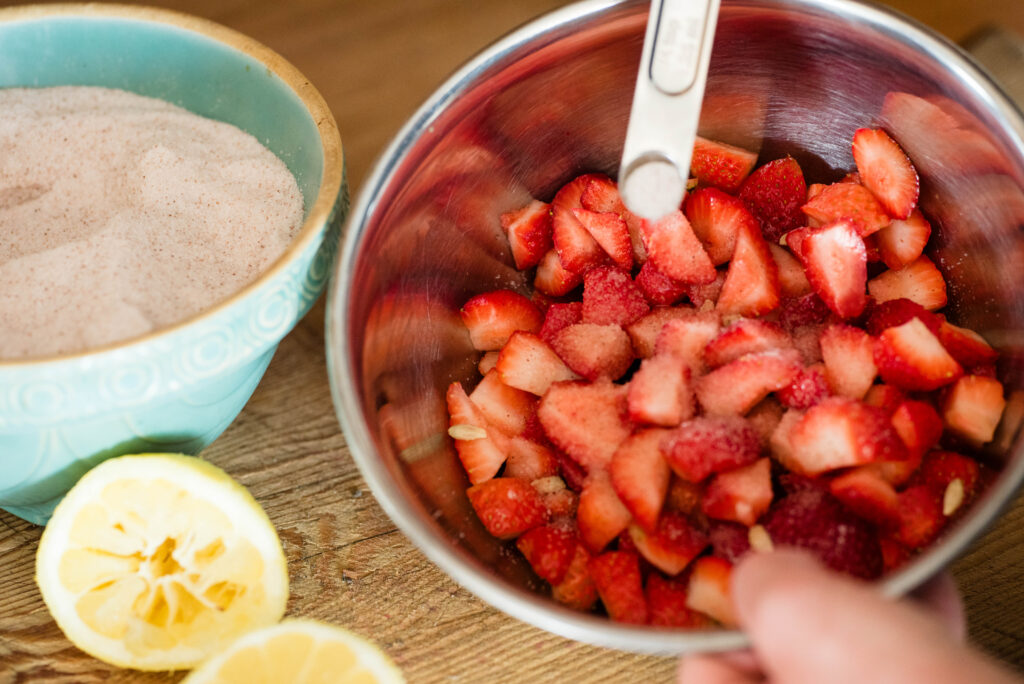
In a mixing bowl, stir together berries, lemon juice (optional) and salt.
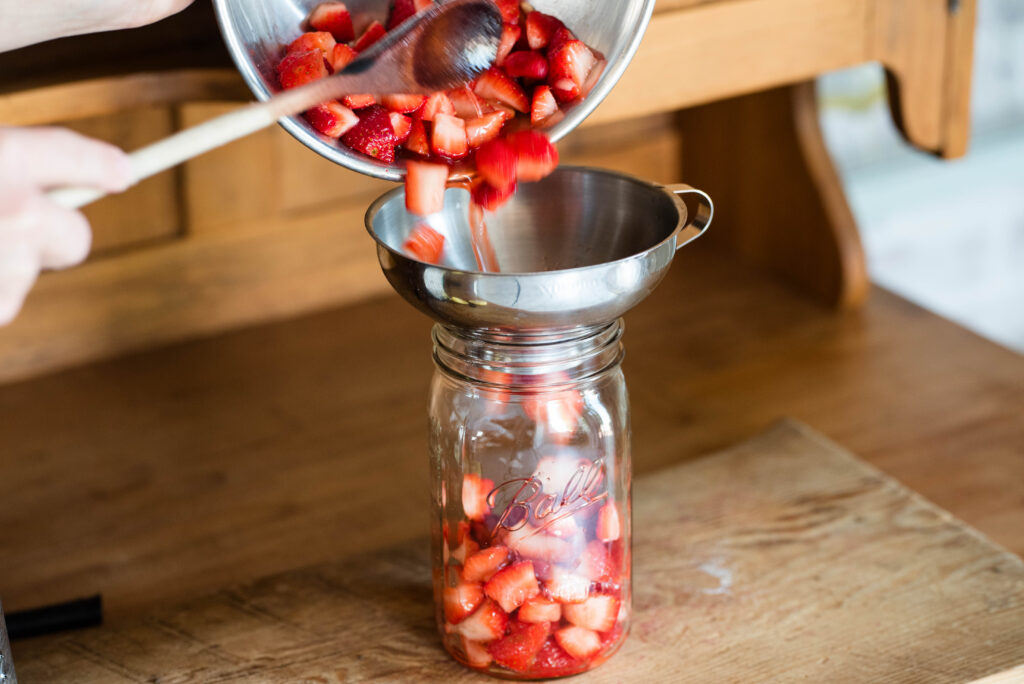
Scoop berries into a clean, sterilized jar with a funnel.
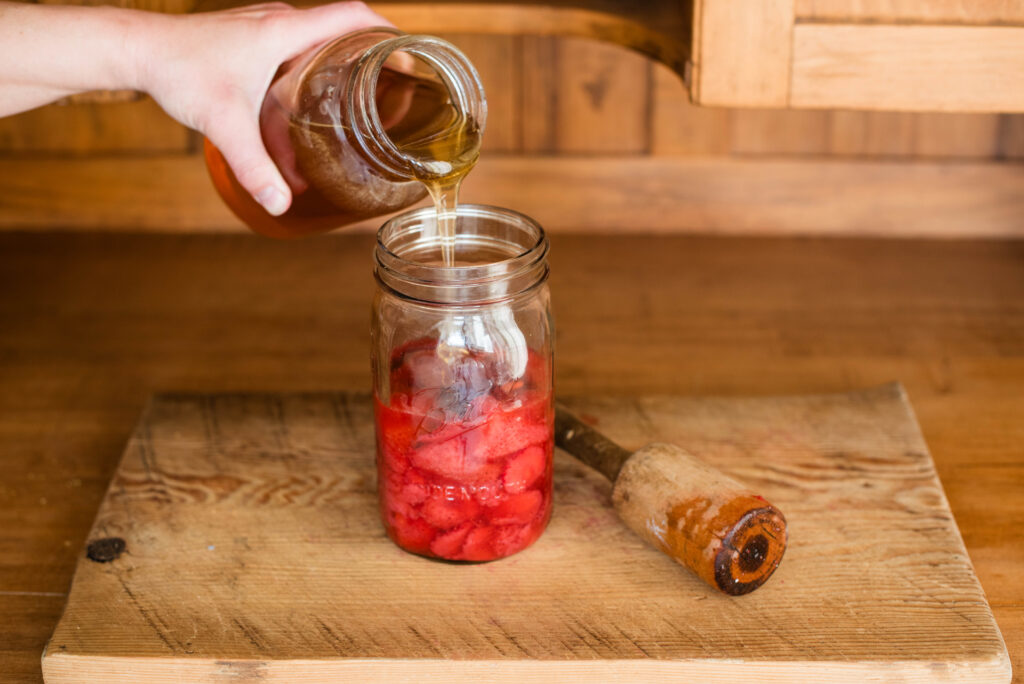
Pour in enough honey to cover the berries. More honey is used for fresh berries verses frozen.
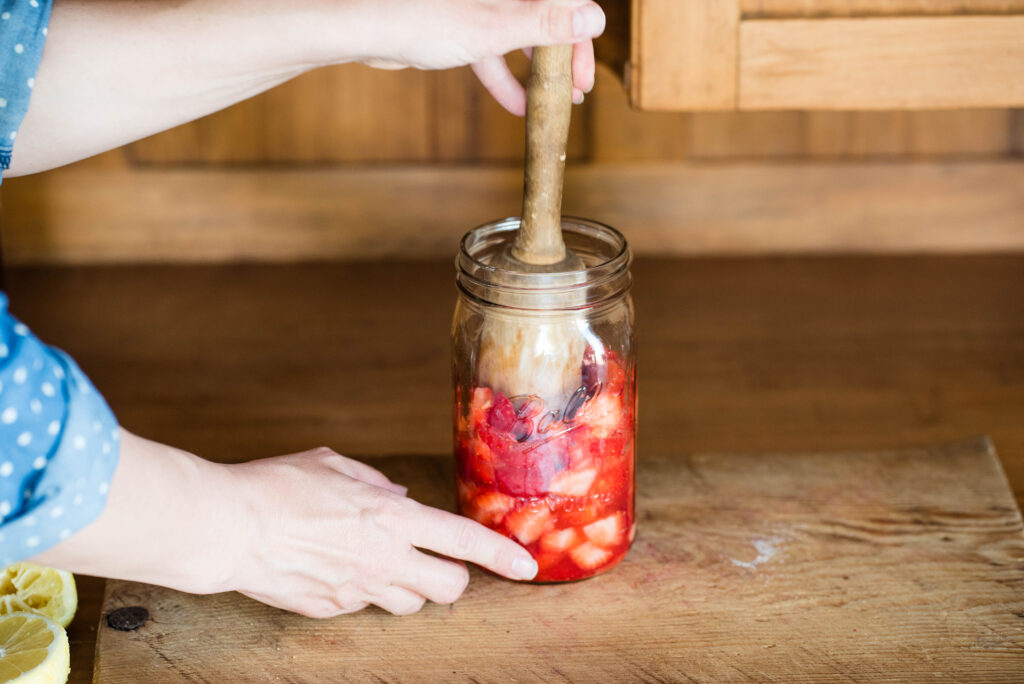
Use a kraut pounder or stir spoon to mix honey into berries and to release their juices.
Fully submerge berries under the liquid with a fermentation weight. Place on a countertop out of direct sunlight.
Third Method | Strawberry Shrub
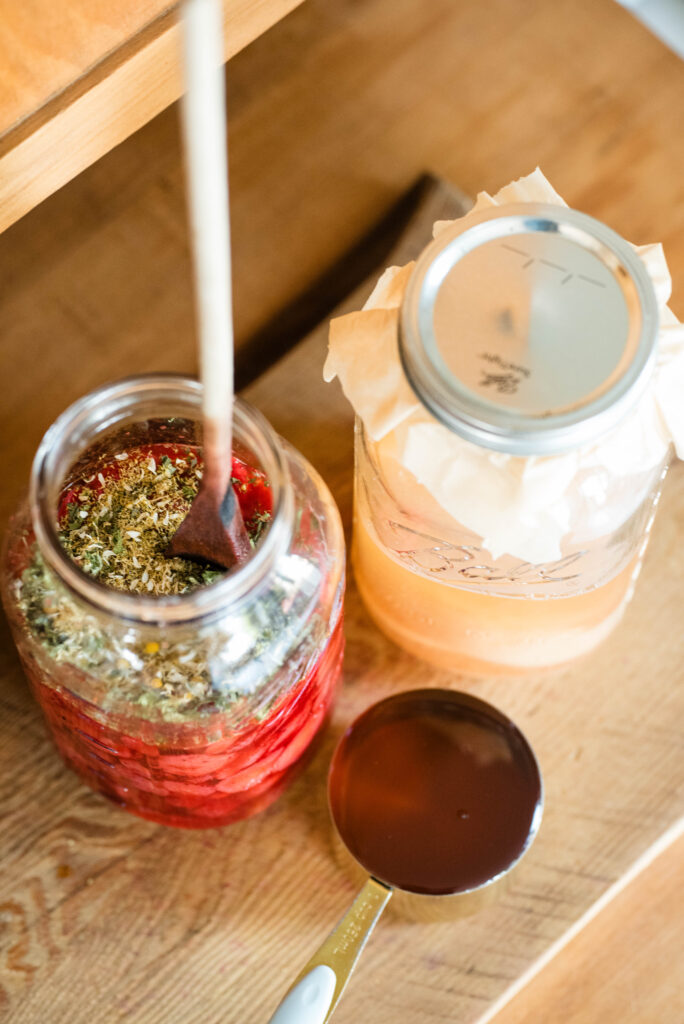
Fill a clean sterilized half gallon jar halfway with fresh or frozen strawberries. Add additional herbs or flavoring such as lemon peel, fresh basil, or fresh or dried mint and chamomile.
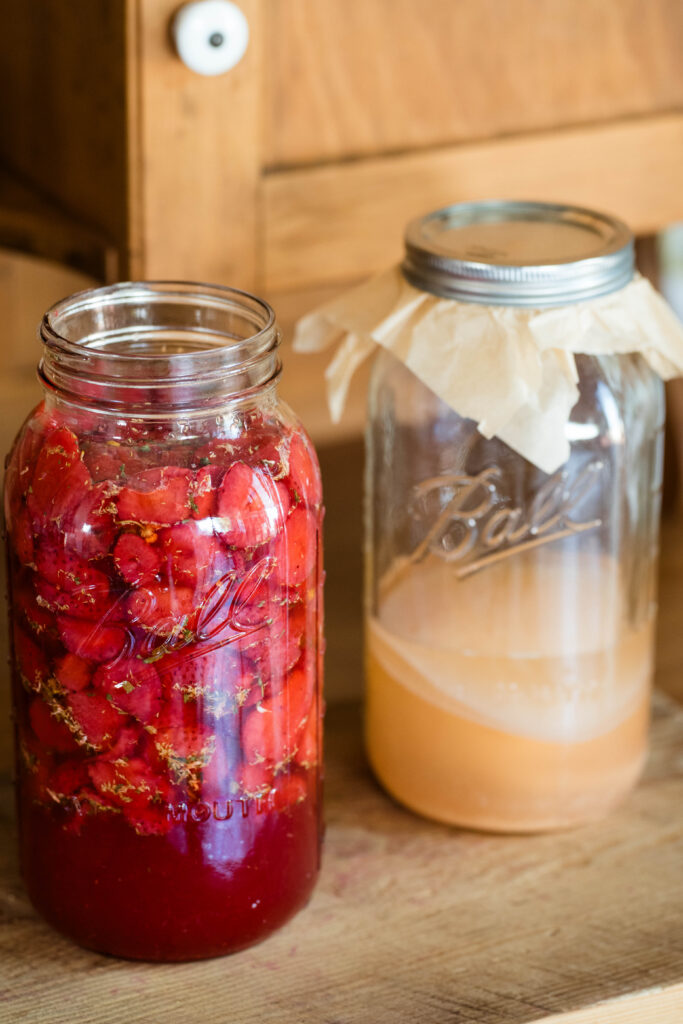
Pour in honey and raw apple cider vinegar. Stir together and place on countertop out of direct sunlight.
For shrub, you can use a fermentation weight, although it’s not necessary.
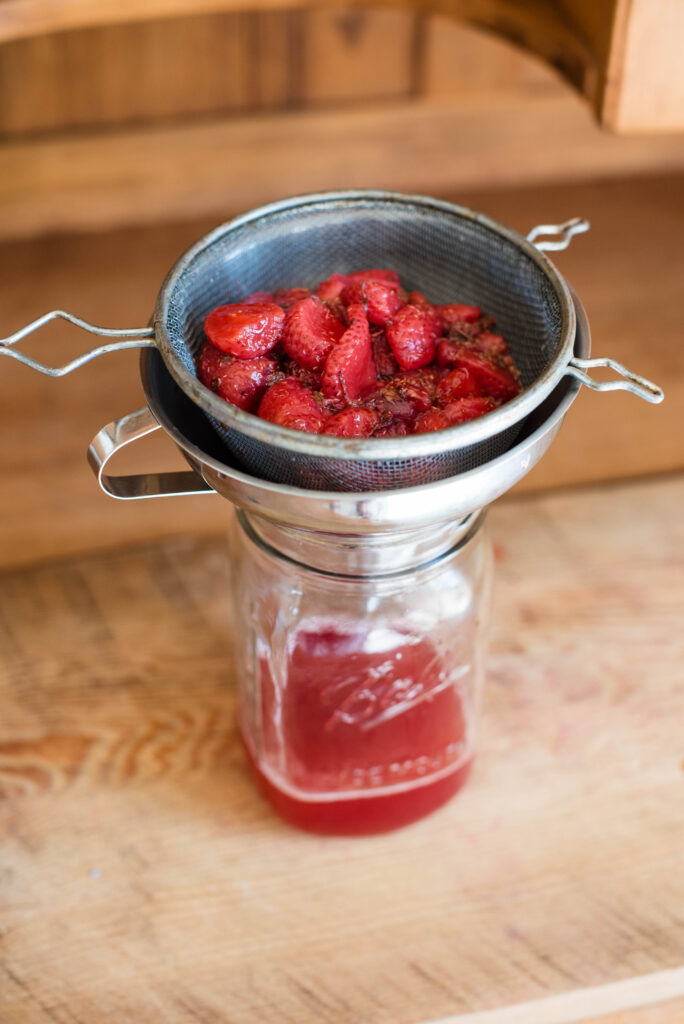
After a minimum of a week, store in the refrigerator until ready to use. You can strain the fruit from the liquid right away or wait.
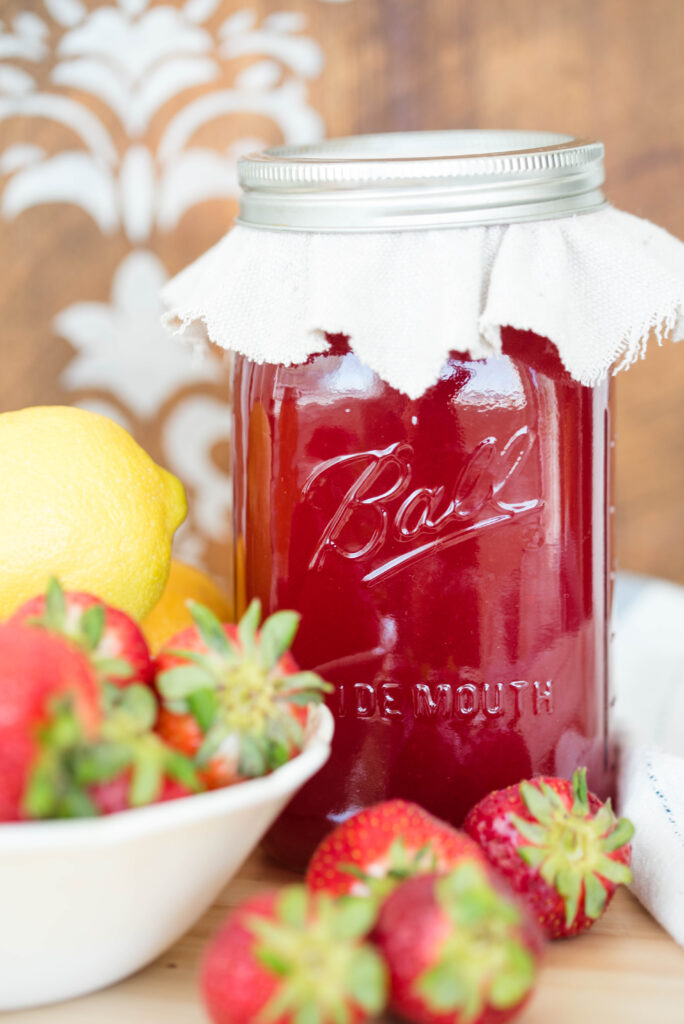
Use shrub as a dye-free flavoring in water, homemade gatorade, or cocktails. It’s perfect as a unique gift for family and friends as well.
How to Use Fermented Strawberries with Honey
Now those beautiful red bubbly jars patiently wait for a delicious use. So how should you eat your fermented strawberries with honey? Here are some ideas.
Simple side dish – Scoop right out of the jar for an easy side dish for work and school lunches or a simple dessert for supper.
Ice cream topper – Whip up a batch of homemade no-churn vanilla ice cream and serve with a topping of your special preserved berries.
Pancakes and waffles – Serve as is on top of stacks of pancakes and waffles or turn your fermented berries into a warm sauce for serving. Add honey or maple syrup to sweeten.
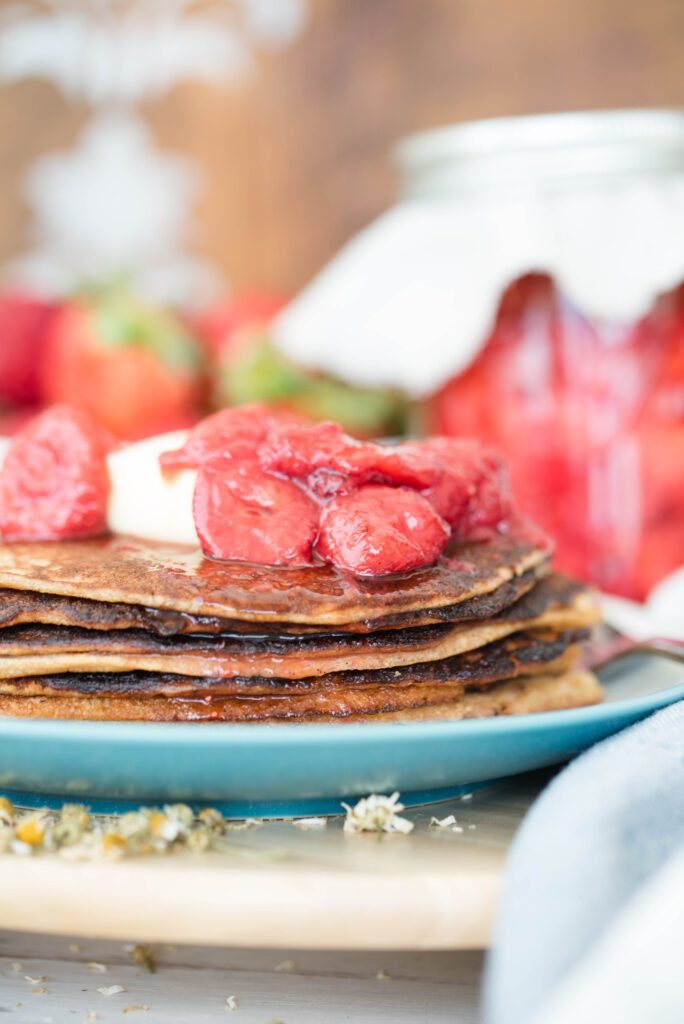
Salsas and chutney’s – The more savory version made with salt is perfect for strawberry salsa and chutney’s for Taco Tuesday night or all your other Mexican cuisine choices. Sounds delish!!
If you have any other ideas for fermented strawberries with honey, share them in the comments below!
FAQ’s
Are strawberries fermented with sugar or salt?
The simple answer is either one. It depends on how you want to use the final fermented product. Sugar fermented strawberries are good for topping ice cream, pancakes, etc. Salt fermented strawberries go well in salsas, salad dressings, sauces for meat, etc.
Should strawberries be fermented in the refrigerator?
No, strawberries only initially ferment at room temperature, about 60-75 degrees Fahrenheit. Then, once they reach your desired fizziness and taste preference after approximately 1-4 days, then they can be placed in the fridge to slow further fermentation.
How long do fermented strawberries last in the fridge?
With fermentation, strawberries stored in the fridge are safe to consume for quite a long while. However, for best flavor and texture, they are best eaten within 1-3 months. Fermented strawberries can also be frozen.

More Recipes From Becky’s Kitchen
How To Make Low-Sugar Strawberry Jam
How to Make No-Churn Homemade Vanilla Ice Cream
How to Make Homemade Shrub | A Dye-Free Beverage Flavoring
If you try fermenting strawberries and love it, come back and leave the recipes a 5-star review! Tag me with your photos on Instagram @beckybuttlesamericana
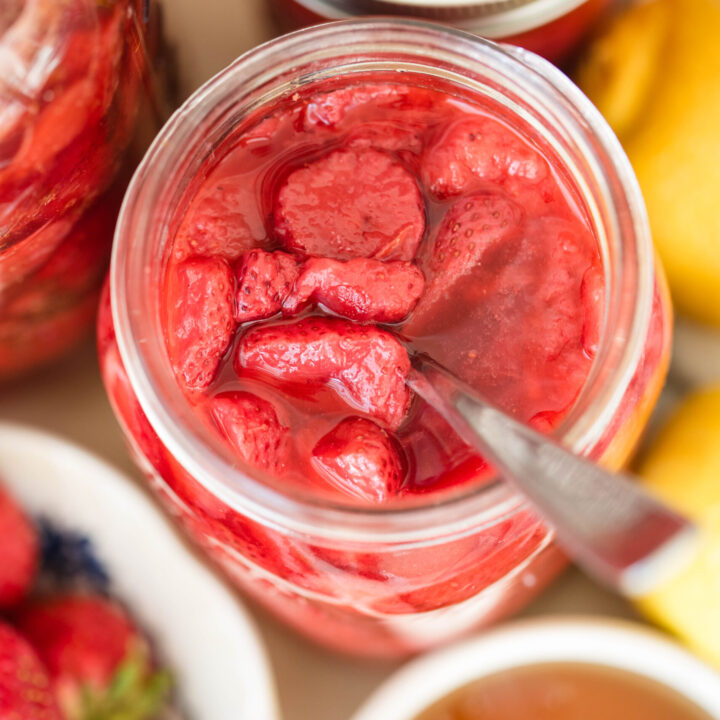
Easy Fermented Strawberries with Honey | 3 Methods
Fermented strawberries with honey are a delicious way to enjoy their fresh summer taste long after the season passes. In the heat of summer, this method preserves strawberries quick and easy without cooking over a hot stovetop. Once you try it, you'll come back to this delicious preservation method every summer!
Ingredients
Strawberries with Honey
- 1 quart size jar of strawberries fresh or frozen
- Enough raw honey to fully cover berries
- Lemon peel from one lemon (optional)
- 1 tablespoon whey (optional)
Strawberries with Salt & Honey
- 1 quart of fresh or frozen strawberries
- 1/2-1 teaspoon salt
- Enough raw honey to fully cover berries
- Lemon juice from 1/2 of a lemon (optional)
Strawberry Shrub
- 1-1 1/2 quarts fresh or frozen strawberries
- 1-2 cups raw honey
- 2 cups raw apple cider vinegar
- Herbs of choice (mint, chamomile, basil, etc.) (optional)
Instructions
First Method | Strawberries with Honey
Place whole fresh or frozen strawberries and lemon peel (optional) in a clean sterilized quart size jar.
Pour in honey until all the berries are completely covered. Add whey if desired for longer term storage (optional).
Stir well to incorporate the honey with the berries. You will use less honey with frozen strawberries since more juices are released.
Fully submerge the berries under the liquid with a fermentation weight. Place on a countertop out of direct sunlight.
Second Method | Strawberries with Salt & Honey
In a mixing bowl, stir together berries, lemon juice (optional) and salt.
Scoop berries into a clean, sterilized jar with a funnel.
Pour in enough honey to cover the berries. More honey is used for fresh berries verses frozen.
Use a kraut pounder or stir spoon to mix honey into berries and to release their juices.
Fully submerge berries under the liquid with a fermentation weight. Place on a countertop out of direct sunlight.
Third Method | Strawberry Shrub
Fill a clean sterilized half gallon jar halfway with fresh or frozen strawberries. Add additional herbs or flavoring such as lemon peel, fresh basil, or fresh or dried mint and chamomile.
Pour in honey and raw apple cider vinegar. Stir together and place on countertop out of direct sunlight.
For shrub, you can use a fermentation weight, although it's not necessary.
After a minimum of a week, store in the refrigerator until ready to use. You can strain the fruit from the liquid right away or wait.
Use shrub as a dye-free flavoring in water, homemade gatorade, or cocktails. It's perfect as a unique gift for family and friends as well.
Notes
- While frozen strawberries can be used, you'll have the best flavor with fresh berries. Choose ones without blemishes and soft spots since they are already exposed to microbes that spoil. Also, organic strawberries are the way to go since they contain no pesticides that harm human health or kill the naturally occurring yeast and bacteria on their skin needed for fermenting. Conventionally grown strawberries are always on EWG's Dirty Dozen list.
- Soft skinned fruit like strawberries ferment into alcohol very quickly given the right temperature. While they need to start their fermentation process at room temperature (60-75 degrees Fahrenheit), taste after 12 hours to gauge where the flavor is at. Ferment a few hours longer if you want a slightly tangier flavor then move to the refrigerator to slow the fermentation process.
- To preserve the flavor even longer without the berries turning to alcohol, add a little whey from a dairy ferment in with the honey. It balances out the yeast.
- Prevent contamination by thoroughly cleaning and sterilizing all equipment including jars before using.
- Do not place strawberries near any other fermented culture like saurkraut, kombucha, sourdough, beer, etc. The microbes from each could cross-contaminate and create an imbalance that could alter the final product.
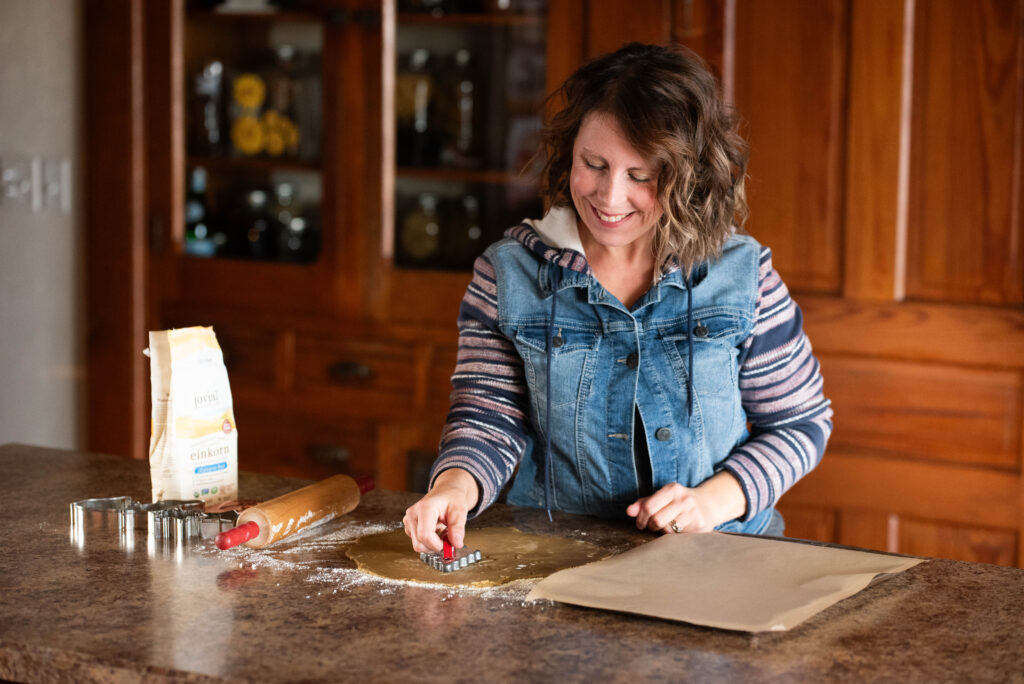
I’m a wife and homemaker inspiring old-fashioned skills for a homemade, self-sufficient lifestyle, always with a warm beverage in hand. Homemade Recipes. Gardening. Preserving. Healthy Living.
Want More Recipes from Becky?
Sign up to receive exclusive recipes only for subscribers! Plus you’ll get the latest blog posts straight to your inbox!