How To Make Pickled Rhubarb
This pickled rhubarb recipe is the perfect way to turn a springtime harvest into the traditional taste of summer. Notably tangy and delicious, it’s a fresh alternative to a sweet rhubarb dessert. Your new favorite BBQ condiment will soon be a regular in your preservation lineup!
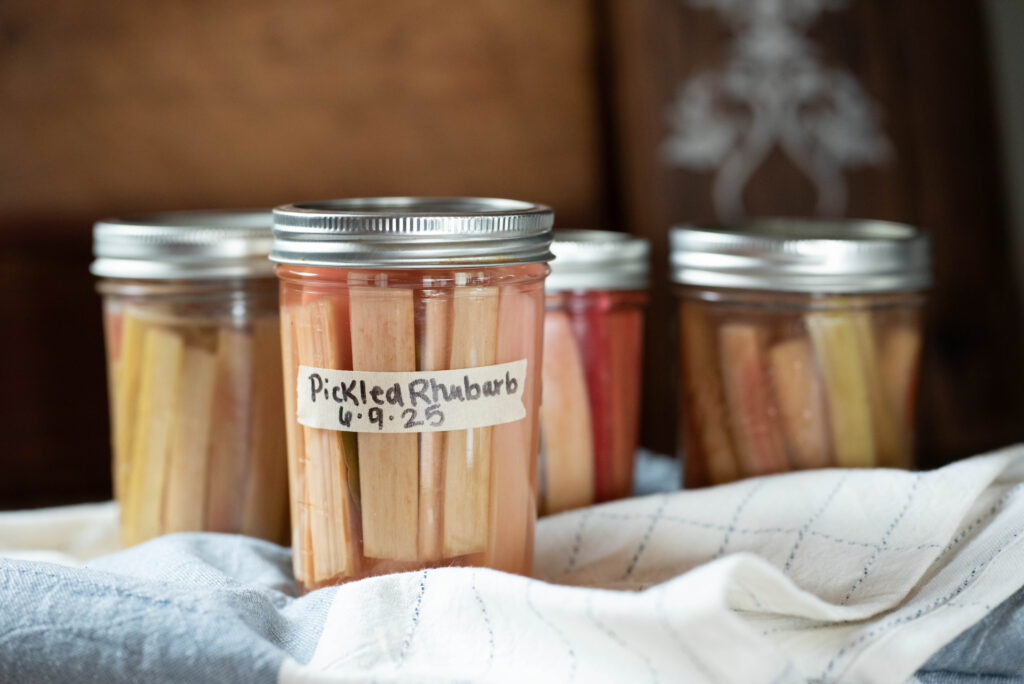
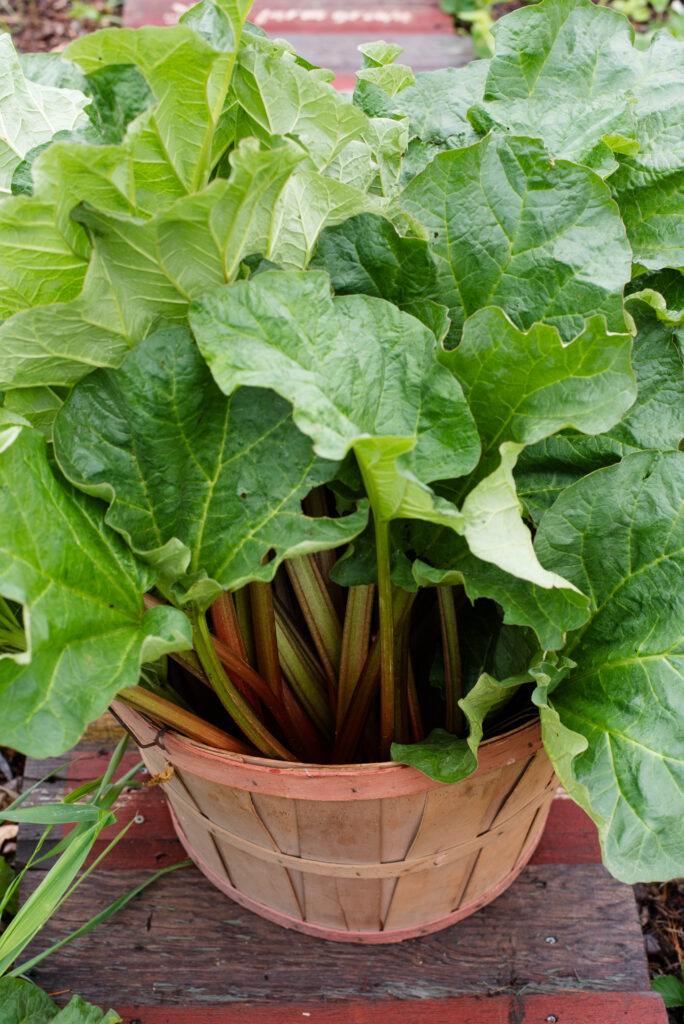
Did you know rhubarb is a vegetable? I always thought it was a fruit, especially since I’ve only had it in desserts.
But in the past couple years, I’ve really had a desire to find healthier alternatives to what I call free Vitamin C. After all, it comes back in abundance year after year with little to no maintenance. That tart crispy stalk has to be good for something other than a sweet treat, right?
Yes! I finally found healthy inspiration when my April issue of Homestead Living arrived in my mail. One article included a recipe for pickled rhubarb. I had no idea I could do that with rhubarb. So I gave it a try with my first harvest. Luke and I are honestly hooked!
We’ve both tried it straight out of the jar and on top of hamburgers and breakfast sausage. I also envision it being served with BBQ pulled pork and slices of cheese on a charcuterie board.
History of the Rhubarb Plant
Being an avid gardener and now writing about food tends to make me curious about the history of plants. Did all our fruits and vegetables magically appear at some point in history? Of course not, but it’s always fun to try and discover the origins of my favorite foods.
Rhubarb is native to Southern Siberia. It’s use dates back about 5,000 years when the ancient Chinese used it as a medicinal herb. Known as a perennial in the buckwheat family, it was traded for centuries as a remedy for stomach aches and fevers.
The English are the first known to eat rhubarb. While they unsuccessfully started by eating the leaves, it would later be discovered that the stalks were better suited to consumption. The leaves are toxic since they contain a high amount of oxalic acid.
Eventually the cost of sugar made its way down and rhubarb would soon be made into delicious pies and tarts, thus being nicknamed the “pie plant.” Sounds delicious to me!
Settlers from Europe brought the plant to America before 1800, which now proliferates gardens every spring.
What Are the Health Benefits of Rhubarb?
According to WebMD, the health benefits of rhubarb are plentiful. I’m right to call it free Vitamin C, but there’s many other heathy properties as well.
It’s full of antioxidants which clear out free radicals that cause inflammation, diseases such as cancer and overall damage the human body. Rhubarb also contains lots of Vitamin K, which is necessary for maintaining strong bones. And it’s loaded with fiber making it excellent for proper digestion.
Rhubarb also contains many other nutrients including:
- Calcium
- Vitamin A
- Vitamin C
- Vitamin K
- Potassium
- Folate
- Manganese
- Magnesium
Needless to say, make sure to harvest all the rhubarb you possibly can from your patch or from family and friends!
Why You’ll Love This Recipe
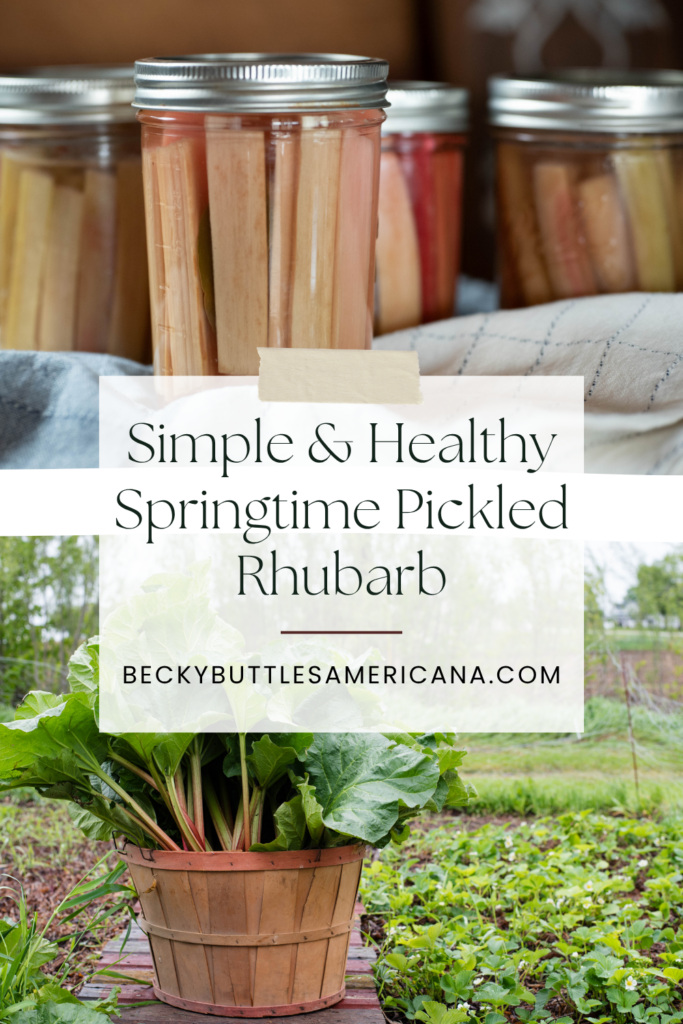
It’s Simple: Pickled rhubarb only requires a few basic ingredients that are common pantry staples in most homes. That also makes it cost effective; especially important with the current cost of food.
It’s Healthy: Most recipes for rhubarb are traditionally over-sweet desserts. This recipe is a delicious and healthy way to preserve an abundant of amount of rhubarb.
It’s Quick: Unlike canning or blanching for the freezer, pickling rhubarb is a really quick preservation method. Depending on how many jars you are doing, a small batch can be processed in about 20 minutes or less.
Helpful Hints for Pickled Rhubarb
- The first couple of harvests have the best flavor for making pickled rhubarb, although you can make it with future harvests and it will still taste great.
- There are several flavor variations you can try so be creative! I’ve made mine with and without allspice. Add onions and dill like a traditional cucumber pickle. There’s recipes with fruit rinds and bay leaves. Sage, rosemary and thyme sound delicious as well.
- This recipe can be doubled or tripled depending on how many jars you’d like to make. Do a test run to make sure you like it before making several jars. That way you won’t have to throw away so much if your family doesn’t like it.
- If you use apple cider vinegar, it needs to be store-bought verses homemade. While I love my homemade apple cider vinegar, unless you test it with pH test strips, the acidity is unknown. To properly pickle produce, you need a 5% vinegar solution to prevent mold from growing on top.
How to Make Pickled Rhubarb
What You’ll Need
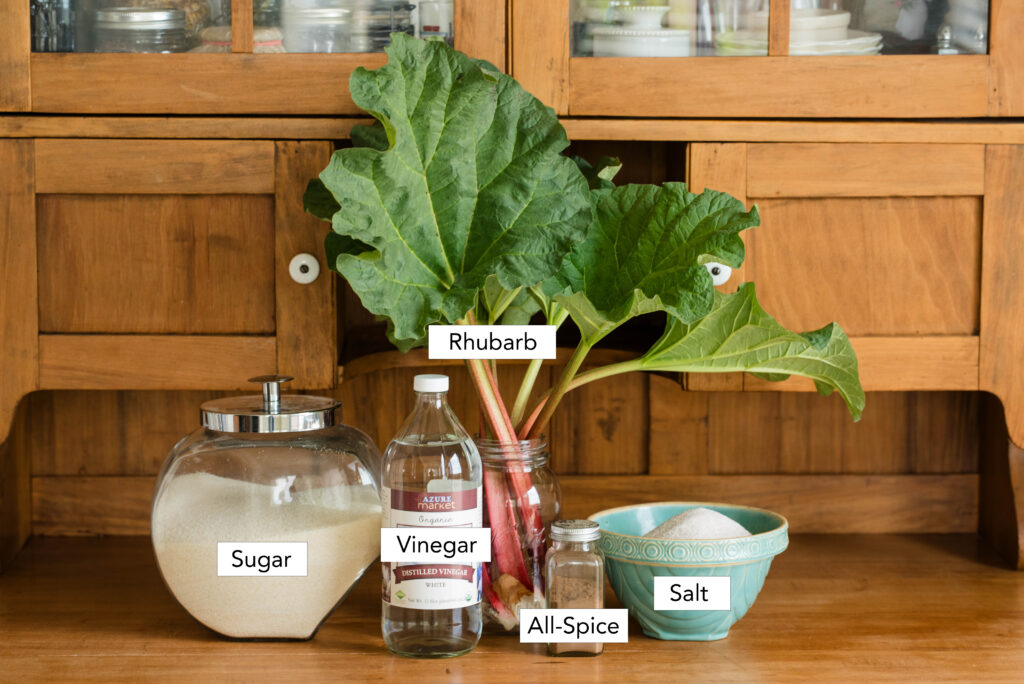
- Harvest of rhubarb
- Apple cider or white vinegar
- Sugar
- Salt
- All spice (optional)
- Onion or garlic (optional)
- Dill (fresh or dried-optional)
- 2 Pint jars with lids and rings
- Cutting board
- Sharp knife
- Medium sized saucepan
- Spoon for stirring
- Measuring cups and spoons
Step-by-Step Instructions
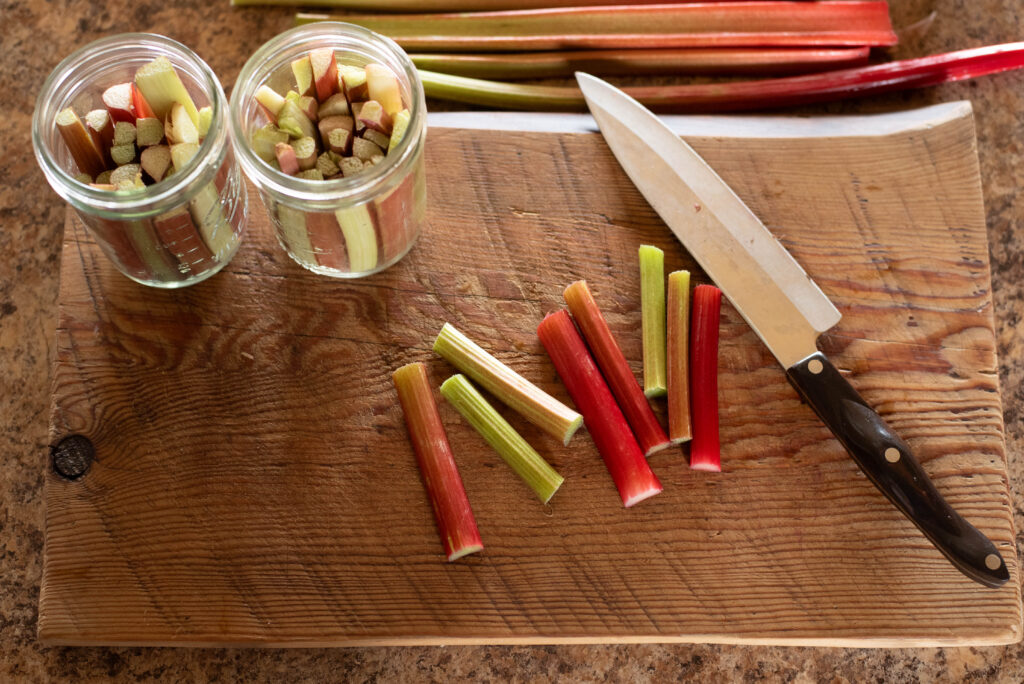
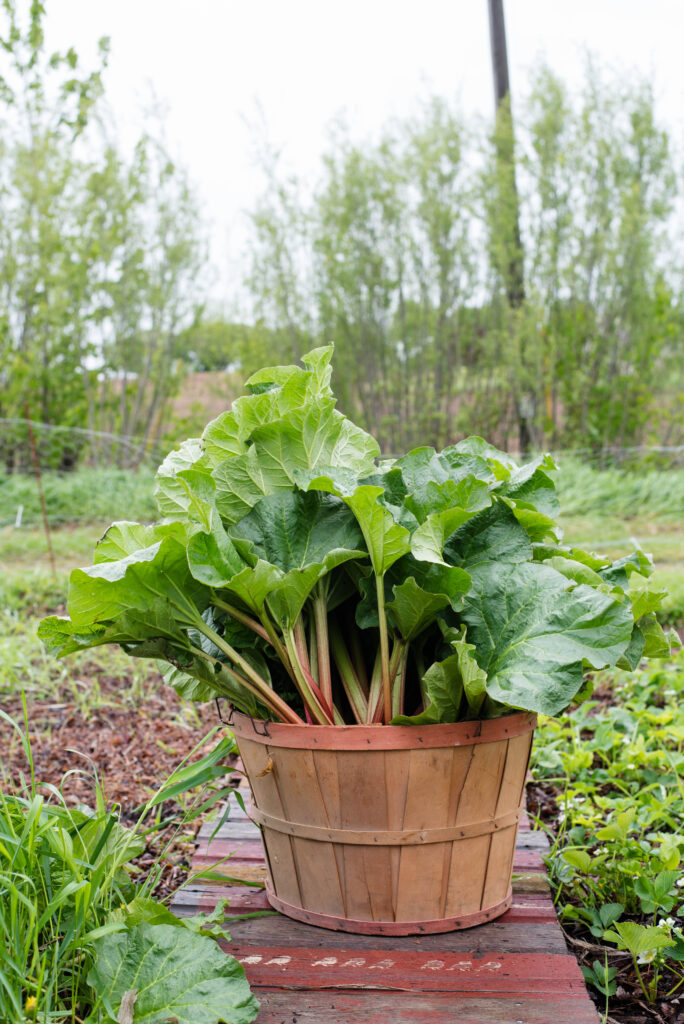
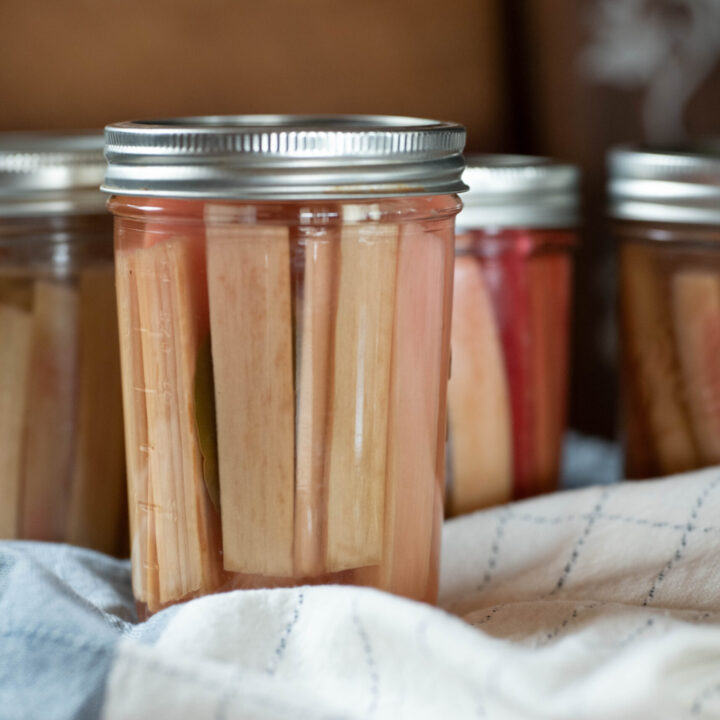
Start by harvesting about 10-12 stalks of rhubarb. Trim off leaves and ends, rinse and cut into 3 1/2-4 inch slices. You’ll need enough for two pint jars. Trim so that the stalks fit slightly below the rim of the jar.
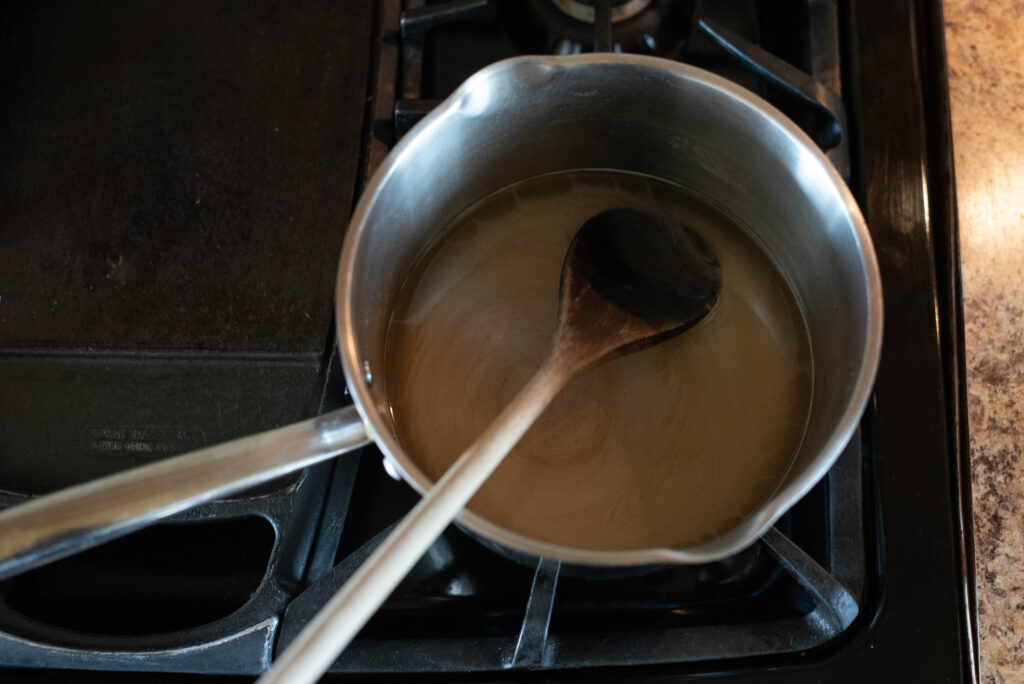
Next, combine water, vinegar, salt, sugar and spices together in a medium saucepan. If you’re using the allspice, add the whole berries to the pan. If you don’t have whole allspice berries, add a teaspoon of ground allspice to a teabag or cheesecloth to steep with the other ingredients. Bring mixture to a warm enough temperature to dissolve salt and sugar. Mixture doesn’t need to boil.
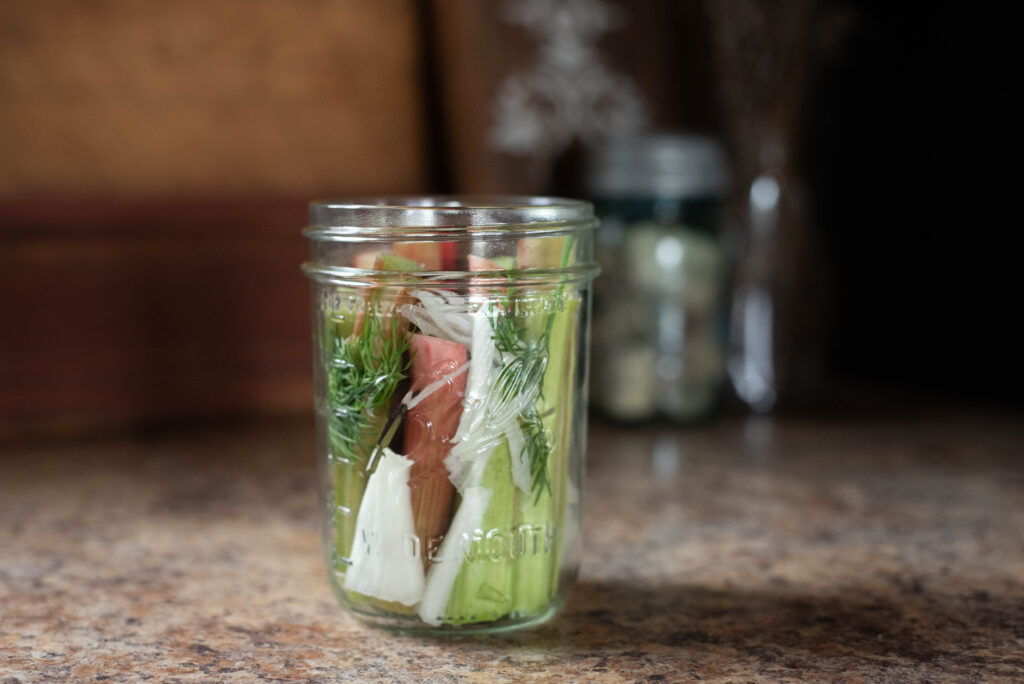
While the mixture is warming up, tightly pack the jars with the rhubarb stalks and other flavorings if using.
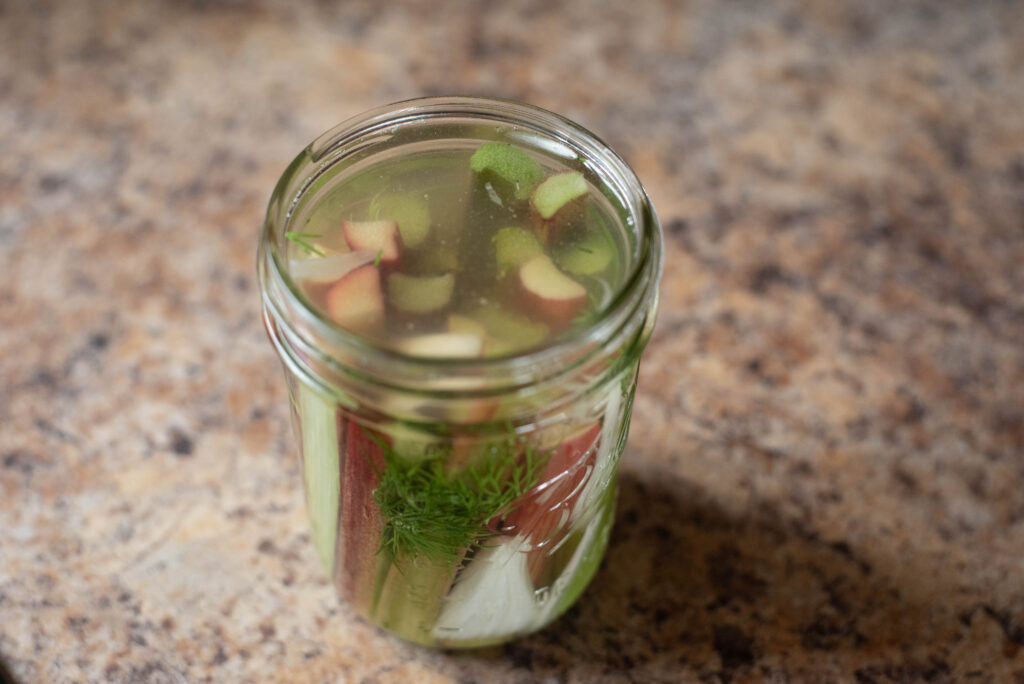
Once the vinegar solution is warmed up and salt and sugar are completely dissolved, pour over rhubarb stalks so that all are fully covered with liquid.
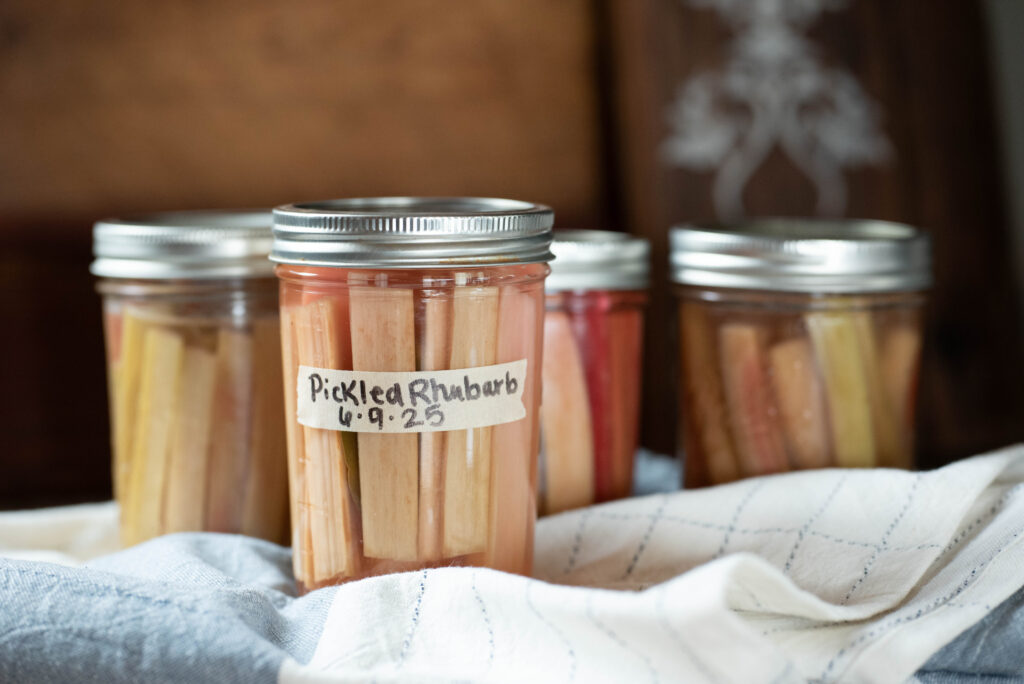
Allow jars to cool for several hours. Then cover with lids and rings and label each jar with the date and what it is. Wait 48 hours until serving.
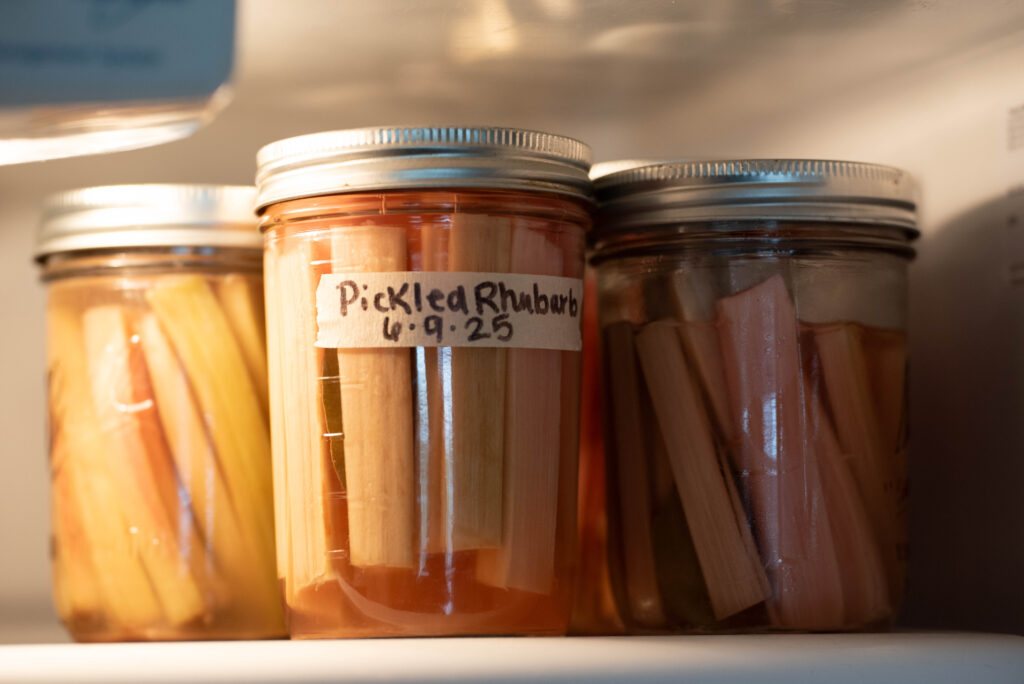
Store jars in the refrigerator until ready to serve. It’s recommended to use within six months, although I’ve kept jars of pickled items longer and they’re perfectly okay.
FAQ’s
Does the size of each stalk make a difference in flavor?
Not likely, however for uniformity in texture and use, cutting the thicker stalks down to a thinner size is helpful.
Can regular vinegar be used instead of apple cider vinegar and vice versa?
Yes, you can use either one depending on what you have in your pantry. Both offer a pickled flavor when combined with the water, salt and sugar. If you’re using apple cider vinegar, make sure it’s store-bought. The vinegar you use needs to be 5% acidity, and homemade apple cider vinegar has an unknown pH. This ensures no mold grown on top.
Can quart-sized jars be made instead of pint-sized?
Yes, but if you cut the rhubarb into larger pieces, be mindful that smaller sizes serve better on a hamburger or charcuterie board.
How long can pickled rhubarb be stored in the refrigerator?
Six months is recommended for the best flavor although I’ve stored jars of pickled items longer than that and they’ve tasted great. It’s a personal preference.
If you try this recipe and love it, please come on back and leave it a 5-star review! Let me know in the comments if you have any delicious flavor combinations others would like to try. Tag me with your photos on Instagram @beckybuttlesamericana.
Happy Spring!
-Becky
Pickled Rhubarb
Turn a springtime harvest into the traditional taste of summer with this pickled rhubarb recipe. Notably tangy and delicious, it's a fresh alternative to a sweet rhubarb dessert.
Ingredients
- 10-12 stalks of rhubarb
- 1/2 cup water
- 1 tablespoon salt
- 1 tablespoon sugar
- 6 allspice berries or 1 teaspoons ground allspice (optional)
- 2/3 cup white vinegar
- Sliced onions and fresh or dried dill (optional)
Instructions
- Start by harvesting about 10-12 stalks of rhubarb. Trim off leaves and ends, rinse and cut into 3 1/2-4 inch slices. You'll need enough for two pint jars. Trim so that the stalks fit slightly below the rim of the jar.
- Next, combine water, vinegar, salt, sugar and spices together in a medium saucepan. If you're using the allspice, add the whole berries to the pan. If you don't have whole allspice berries, add a teaspoon of ground allspice to a teabag or cheesecloth to steep with the other ingredients. Bring mixture to a warm enough temperature to dissolve salt and sugar. Mixture doesn't need to boil.
- While the mixture is warming up, tightly pack the jars with the rhubarb stalks and other flavorings if using.
- Once the vinegar solution is warmed up and salt and sugar are completely dissolved, pour over rhubarb stalks so that all are fully covered with liquid.
- Allow jars to cool for several hours. Then cover with lids and rings and label each jar with the date and what it is. Wait 48 hours until serving.
- Store jars in the refrigerator until ready to serve. It's recommended to use within six months, although I've kept jars of pickled items longer and they're perfectly okay.
Notes
- The first couple of harvests have the best flavor for making pickled rhubarb, although you can make it with future harvests and it will still taste great.
- There are several flavor variations you can try so be creative! I've made mine with and without allspice. Add onions and dill like a traditional cucumber pickle. There's recipes with fruit rinds and bay leaves. Sage, rosemary and thyme sound delicious as well.
- This recipe can be doubled or tripled depending on how many jars you'd like to make. Do a test run to make sure you like it before making several jars. That way you won't have to throw away so much if your family doesn't like it.
- If you use apple cider vinegar, it needs to be store-bought verses homemade. While I love my homemade apple cider vinegar, unless you test it with pH test strips, the acidity is unknown. To properly pickle produce, you need a 5% vinegar solution to prevent mold from growing on top.
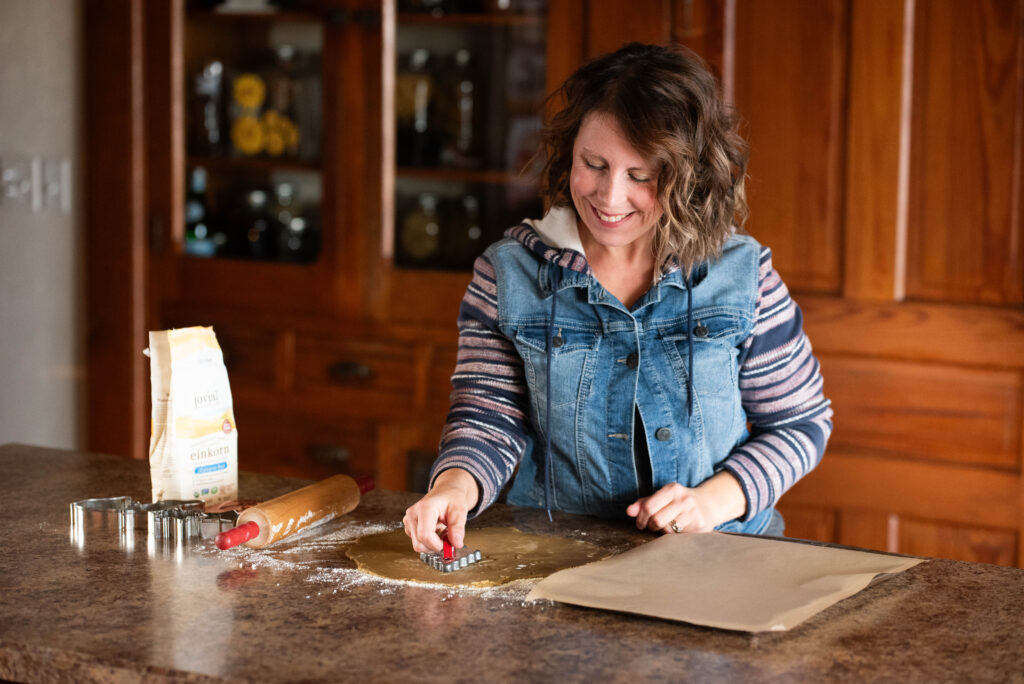
I’m a wife and homemaker inspiring old-fashioned skills for a homemade, self-sufficient lifestyle, always with a warm beverage in hand. Homemade Recipes. Gardening. Preserving. Healthy Living.
Want More Recipes from Becky?
Sign up to receive exclusive recipes only for subscribers! Plus you’ll get the latest blog posts straight to your inbox!